Select Language:
Top Countries with the Largest Muslim Populations in 2025
1. Indonesia Leads as the Most Muslim-Dense Country
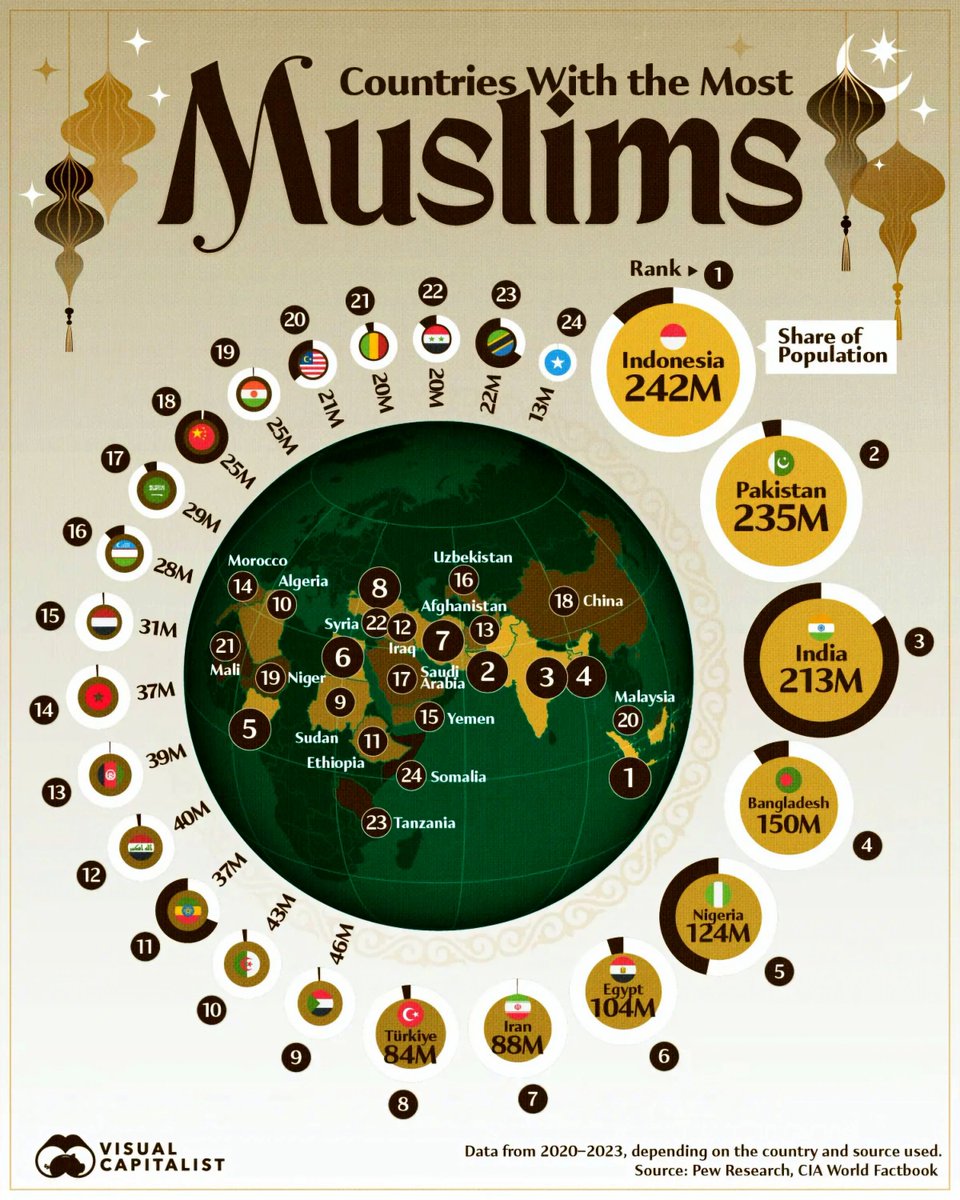
With approximately 242 million Muslims, Indonesia remains the world’s largest Muslim-majority nation. Its vibrant Islamic culture, rich traditions, and diverse population contribute to its prominence on this list. Indonesia’s influence in global Islamic discourse continues to grow, reinforcing its role as a key player within the Muslim world.
2. Pakistan Continues Its Rapid Growth
Pakistan secures the second spot, boasting around 235 million Muslims. The country’s deep Islamic roots and demographic momentum have sustained its position as the second-largest Muslim population globally. Urban centers like Karachi and Lahore remain vibrant hubs of Islamic culture and faith.
3. India Ranks Third With Over 213 Million Muslims
India’s Muslim community is noteworthy, numbering around 213 million. Despite religious diversity, India’s Muslim population plays a significant role in the nation’s socio-economic landscape. Cities like Mumbai, Delhi, and Hyderabad are renowned for their Islamic heritage and influence.
4. Bangladesh Holds a Crucial Muslims Demographic
With roughly 150 million Muslims, Bangladesh continues to be a vital part of the Islamic world. The country’s history, culture, and political landscape are deeply intertwined with Islam, which influences everyday life and governance.
5. Nigeria: Africa’s Largest Muslim Population
Nigeria’s Muslim community, estimated at 124 million, demonstrates the increasing influence of Islam across the continent. The northern regions are predominantly Muslim, and religious dialogue remains a central theme in Nigeria’s politics and society.
6. Egypt: The Cradle of Islamic Civilization
Egypt’s approximately 104 million Muslims continue to preserve Islamic scholarship, history, and culture. Cairo’s medieval mosques and Islamic universities remain significant centers of learning and faith.
7. Iran’s Growing Population
Iran houses about 88 million Muslims, predominantly Shia, shaping regional geopolitics and religious discourse. Iran’s Islamic revolution continues to influence religious practices both within and beyond its borders.
8. Turkey: A Blend of Tradition and Modernity
With 84 million Muslims, Turkey stands at the crossroads of Asia and Europe. Its unique secular-Islamic identity influences modern religious practices and political policies, making it a significant player in Islamic affairs.
9. Sudan and Algeria: North African Powerhouses
Sudan’s population of around 46 million and Algeria’s 43 million Muslims highlight the strength of Islam in North Africa. Both countries have rich Islamic histories, with ongoing cultural and religious developments.
10. Iraq and Afghanistan: Conflict and Faith
Iraq (40 million Muslims) and Afghanistan (39 million) remain centers of Islamic spirituality amidst ongoing geopolitical challenges. Their religious landscapes often influence regional stability and international diplomacy.
11. Other Notable Countries with Significant Muslim Populations
- Morocco & Saudi Arabia: Each with approximately 37 million Muslims, Morocco’s Islamic culture influences Africa’s Atlantic coast, while Saudi Arabia remains the spiritual heartland of Islam.
- Yemen & Uzbekistan: Yemen hosts over 31 million Muslims, whereas Uzbekistan has about 28 million, both contributing to regional Islamic traditions.
- China & Syria: China’s Muslim population stands around 29 million, primarily among ethnic minorities, while Syria’s 20 million Muslims reflect its complex religious landscape.
- Mali & the United States: Mali’s 21 million Muslims symbolize West Africa’s Islamic heritage, and the U.S. numbers approximately 20 million Muslims, illustrating rapid growth and increasing diversity in America.
12. Rising Muslim Populations in Sub-Saharan Africa and Asia
The Muslim populations in countries like Niger (25 million), Ethiopia (25 million), Tanzania (22 million), and Somalia (13 million) illustrate the continent’s expanding Islamic communities, influencing regional and global Islamic culture.
Note: All data is sourced from the Pew Research Center, CIA World Factbook, and Visual Capitalist, updated for 2025. Figures are estimates rounded for clarity.
[Image shows a global map highlighting the distribution of Muslim populations across countries.]
 ChatGPT
 Perplexity
 Gemini AI
 Grok AI