Select Language:
Top Countries with the Largest Christian Populations in 2025: Insights and Predictions
-
United States Maintains Its Leading Position
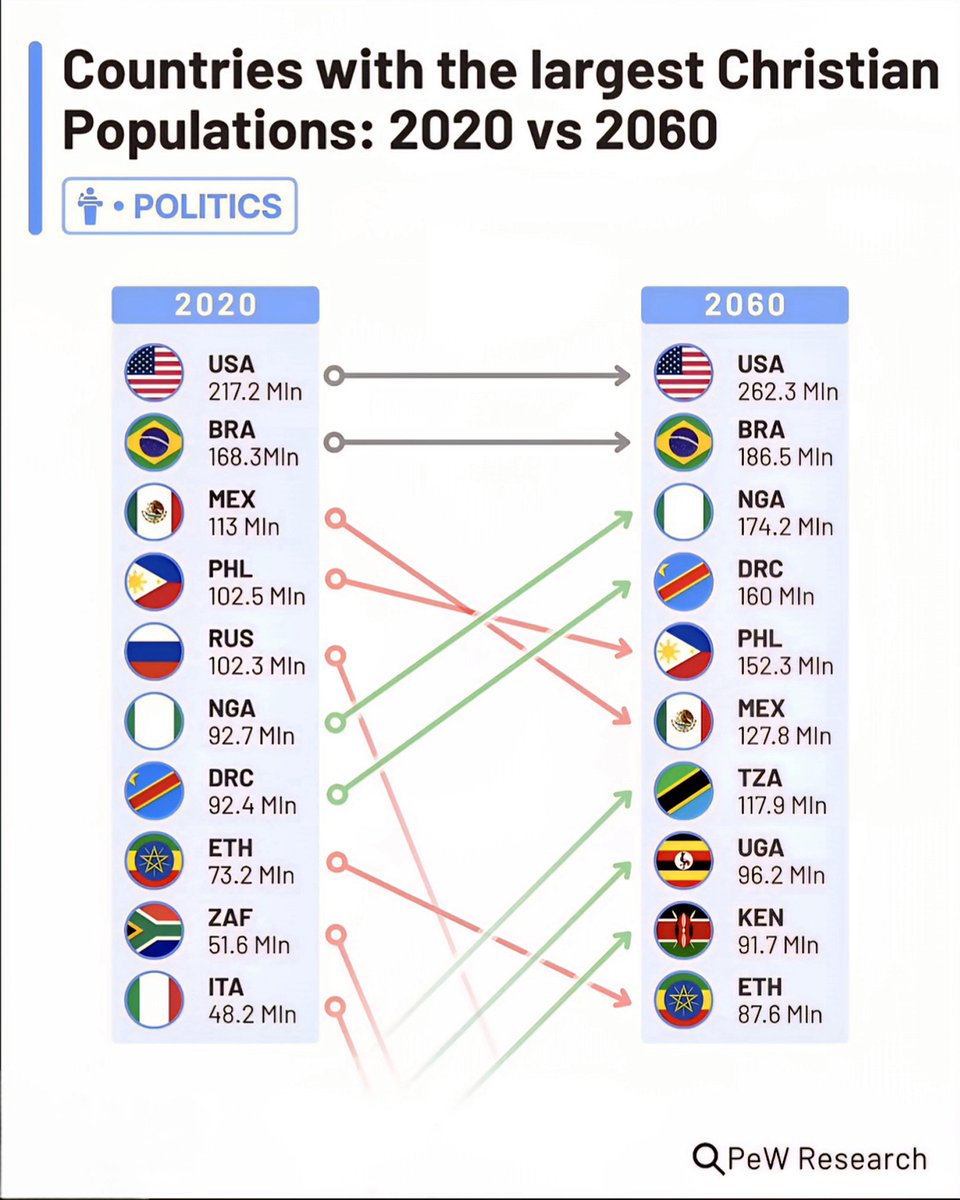
In 2025, the United States remains at the forefront with an estimated 227 million Christians, reflecting consistent growth from its 2020 figure of 217.2 million. The U.S. continues to evolve as a diverse religious landscape, with Christianity remaining a major influence across the nation’s social and cultural fabric. The steady increase underscores ongoing religious engagement despite broader secular trends in some regions.
-
Brazil Continues Its Spiritual Expansion
Brazil’s Christian population has grown to approximately 170 million, up from 168.3 million in 2020. This South American giant maintains its status as one of the world’s most populated Christian nations. The growth is driven by both natural population increase and high rates of religious participation, especially within evangelical communities, which are flourishing across the country.
-
Mexico’s Religious Growth Remains Strong
Mexico boasts around 117 million Christians, a slight rise from 113 million in 2020. The country continues to see robust growth in evangelical and Catholic communities, reinforcing its position as a vital hub of Christianity in Latin America. Religious identity remains deeply woven into Mexico’s national identity and cultural traditions.
-
The Philippines’ Religious Surge
The Philippines, predominantly Catholic, now has an estimated 154 million Christians in 2025, a significant increase from 102.5 million in 2020. Its population growth combined with high religious adherence has propelled the nation’s Christian demographic to new heights, making it a key player in global Christianity.
-
Nigeria’s Explosive Growth Sets New Records
Nigeria’s Christian population has surged to approximately 175 million, nearly doubling from 92.7 million in 2020. Driven by high birth rates and active religious communities, Nigeria is rapidly rising as one of the world’s most important Christian nations, particularly in West Africa.
-
The Democratic Republic of the Congo Booms
With a Christian population now close to 161 million, up from 92.4 million in 2020, the DRC continues its significant growth trajectory. Christianity plays a central role in Congolese society, with churches expanding rapidly and influencing social and political spheres.
-
Ethiopia’s Steady Population Increase
Ethiopia’s Christian population has increased to about 88 million from 73.2 million in 2020. The dominant Ethiopian Orthodox Church continues to grow, maintaining deep historical roots and expanding its influence across the nation.
-
Emerging Leaders in Africa and Asia
- Tanzania (117.9 million in 2060): Projected to experience substantial growth in Christian adherents, rising from more modest numbers to become a prominent Christian country.
- Uganda (96.2 million in 2060): The nation’s religious landscape is expanding, fueled by high growth rates.
- Kenya (91.7 million in 2060): Evidence points to rapid Christian demographic increase, underscoring Africa’s prominent role in global Christianity.
- Philippines (152.3 million in 2060): Continues its upward trajectory, reinforcing its status as a major Christian hub in Asia.
-
European Countries See Declines or Stabilization
In 2025, Italy’s Christian population remains around 48 million, highlighting Europe’s ongoing decline in religious adherence. Despite this, many communities still maintain vibrant religious practices; however, overall growth has stabilized or declined compared to the booming figures elsewhere.
-
Future Trends and Global Implications
The global Christian landscape is shifting rapidly, with African nations leading the demographic surge. Countries like Nigeria, DRC, Ethiopia, and Kenya are expected to dominate the world stage in terms of Christian population counts by 2060, impacting global religious, cultural, and political dynamics. Meanwhile, traditional centers in Europe and parts of Asia continue to experience stagnation or decline, highlighting changing patterns of faith worldwide.
Sources: Pew Research Center (2025 projections)
Note: The figures and predictions may vary based on shifting demographics, migration trends, and religious conversions.
 ChatGPT
 Perplexity
 Gemini AI
 Grok AI