Select Language:
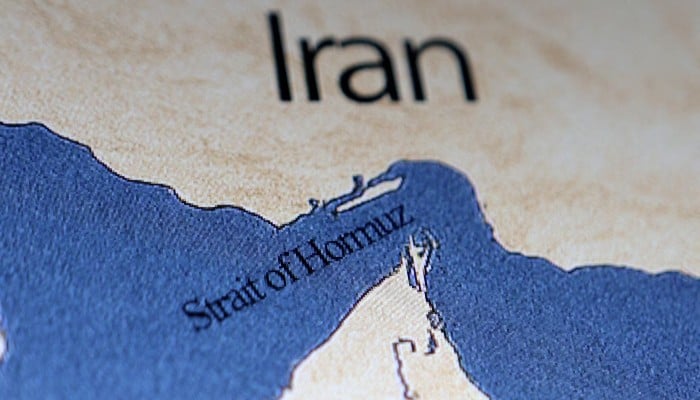
A map illustrating the Strait of Hormuz and Iran is depicted in this image taken on June 22, 2025. — Reuters
– Claimed zone extends near a UAE port.
– Ships are instructed to seek Iranian approval.
– UAE accelerates development of Hormuz bypass pipeline.
A senior UAE official dismissed Iran’s assertion of control over Emirati waters in the contested Strait of Hormuz as fantasy, following a statement by an Iranian authority overseeing the strait.
“The regime is attempting to create a new reality, emerging from a clear military setback. However, any efforts to control the Strait of Hormuz or infringe upon the UAE’s maritime sovereignty are merely illusions,” stated UAE presidential adviser Anwar Gargash on X.
Iran’s newly established body managing the Strait of Hormuz claimed its jurisdiction extends into waters south of Fujairah, a UAE port equipped with oil infrastructure designed to circumvent the strategic waterway.
Since hostilities between Israel and the US erupted on February 28, Iran has taken effective control of shipping traffic through Hormuz, a critical global trade artery. The country has kept the strait largely closed since the conflict began and is demanding tolls for passing ships. It insists that vessels require permission from Iranian armed forces to traverse the waterway.
On Wednesday, Iran’s Persian Gulf Strait Authority posted a map and announced that it has defined “the regulatory jurisdiction for strait management.” This area stretches from “Kuh-e Mubarak in Iran down to Fujairah in the UAE, and from the tip of Qeshm Island in Iran to Umm Al-Quwain in the UAE.” The authority specified that “transit through this region for passing through the Hormuz Strait must be coordinated with, and authorized by, the Persian Gulf Strait Authority.”
Relations between Iran and the UAE remain tense, especially after Tehran launched missile and drone strikes against Gulf nations in retaliation for US-Israeli assaults. The UAE has opposed Iran’s control over the strait and called for joint measures to preserve navigation freedom.
In response, the UAE announced plans to expedite the construction of a new oil pipeline bypassing Hormuz via Fujairah port. The West-East Pipeline aims to double ADNOC’s export capacity through this port and is expected to be operational next year.
Iran has repeatedly accused neighboring countries of allowing US forces to launch attacks from their territories. Gulf nations deny these accusations, asserting they would not permit their land or airspace to be used for attacks against Iran.
Recently, Iran’s Revolutionary Guard reported permitting 26 ships, including oil tankers and other vessels, to pass through the strait in the past 24 hours. Last week, Iran stated that over 30 ships, some Chinese, had been authorized to transit, highlighting Iran’s ongoing assertion of control over the strategic lane.
 ChatGPT
 Perplexity
 Gemini AI
 Grok AI