Select Language:
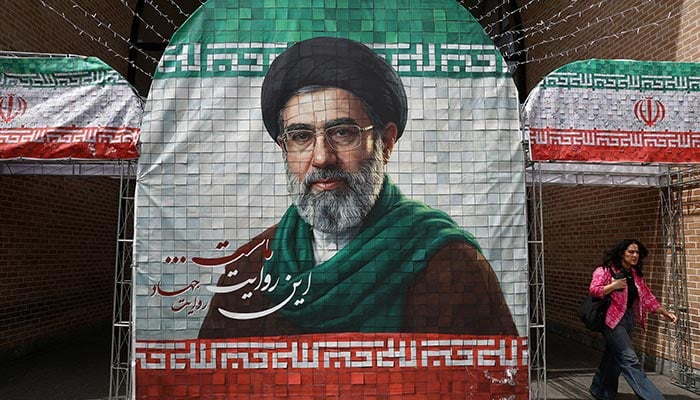
A woman walks past a banner featuring a photo of Iran’s new Supreme Leader Mojtaba Khamenei in Tehran, May 8, 2026. — Reuters
– The United States is pushing for Iran’s highly enriched uranium to be exported abroad.
– President Trump has assured Israeli officials that this will happen.
– The Iranian Supreme Leader insists the uranium must stay within Iran’s borders, according to sources.
—
Iran’s Supreme Leader has issued a directive stating that the country’s near-weapon-grade uranium should not be transferred out of the nation, according to two high-level Iranian sources. This stance marks a hardened position in Tehran regarding one of the key U.S. demands in ongoing peace negotiations.
This order from Ayatollah Mojtaba Khamenei could increase frustration for President Donald Trump and add complexity to efforts to end the U.S.-Israeli conflict with Iran.
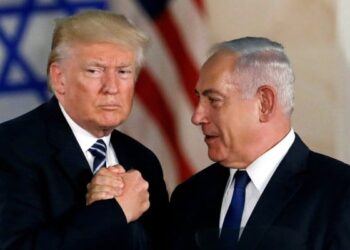
Israeli officials have told Reuters that Trump has assured Israel that Iran’s stockpile of highly enriched uranium, which is necessary for nuclear weapons development, will be exported from Iran. They indicate that any peace agreement would need to include provisions addressing this issue.
Prime Minister Benjamin Netanyahu has declared that he won’t consider the conflict resolved until Iran removes its enriched uranium, ceases support for proxy militias, and eliminates its ballistic missile capabilities.
“The directive from the Supreme Leader, along with the consensus within the establishment, is that the stockpile of enriched uranium should not leave the country,” a top Iranian source, who requested anonymity due to the sensitivity, stated.
Iranian officials believe that exporting the uranium would make the country more vulnerable to future attacks from the U.S. and Israel. Khamenei is the ultimate authority on critical state decisions.
Neither the U.S. White House nor Iran’s foreign ministry responded to requests for comment.
—
There remains deep suspicion among Iran’s top officials. A fragile ceasefire is currently in place since the conflict erupted with U.S.-Israeli strikes on Iran on February 28, after which Iran launched attacks against Gulf states hosting U.S. military bases, leading to clashes between Israel and Hezbollah in Lebanon.
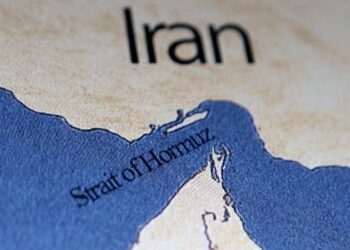
However, significant breakthroughs in peace negotiations have yet to occur. U.S. sanctions continue to blockade Iranian ports and restrict Iran’s control over the Strait of Hormuz, a crucial route for global oil shipments, complicating talks brokered by Pakistan.
Sources say there is widespread mistrust in Iran that the recent pause in hostilities might be a tactical ploy by Washington to appear peaceful before resuming airstrikes.
Iran’s chief peace negotiator, Mohammad Baqer Qalibaf, remarked Wednesday that “obvious and hidden moves by the enemy” suggest the U.S. is preparing new attacks.
President Trump stated Wednesday that the U.S. was prepared to escalate military actions against Iran if no peaceful agreement is reached, but indicated that America might delay for a few days to obtain better responses.
While some negotiations are narrowing gaps, disagreements persist over Iran’s nuclear program, particularly regarding the handling of its uranium stockpiles and Tehran’s insistence on its right to enrichment.
—
Iranian officials have reiterated that their priority is to secure an enduring end to the war and reliable guarantees that the U.S. and Israel will not launch additional attacks. They emphasize that only once such assurances are assured would Iran consider detailed talks on its nuclear activities, which Iran maintains are for peaceful purposes and deny any intent to develop nuclear weapons.
Israel is widely believed to possess nuclear weapons but has neither confirmed nor denied this, maintaining a policy of ambiguity.
Before hostilities escalated, Iran indicated a willingness to ship out half of its uranium stockpile, which has been enriched to 60%, a level far exceeding civilian needs.
However, sources suggest that Iran adjusted its stance following repeated threats from Trump of military strikes.
Israeli officials remain uncertain whether Trump will order an attack or authorize Israel to act independently. Tehran has pledged a severe response if attacked.
Some solutions have been proposed, such as diluting the uranium stockpile under International Atomic Energy Agency supervision.
According to IAEA estimates, Iran had approximately 440.9 kg of uranium enriched to 60% as of June 2025, when Israel and the U.S. conducted strikes on Iranian nuclear sites. The current amount remaining is uncertain.
IAEA Director Rafael Grossi stated in March that the remaining stock was primarily stored in tunnels at Iran’s Isfahan nuclear facility, with slightly over 200 kg believed to be there. Some uranium is also stored at Natanz, another major enrichment site.
Iran claims that some highly enriched uranium is necessary for medical applications and research reactors, noting they operate on small quantities of uranium enriched to about 20%.
 ChatGPT
 Perplexity
 Gemini AI
 Grok AI