Select Language:
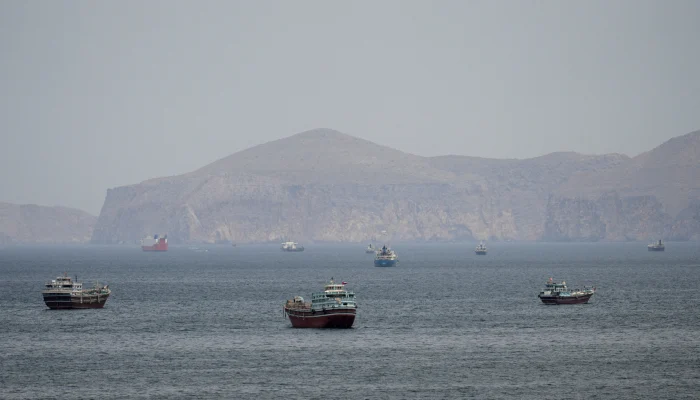
Two Chinese oil tankers have recently left the Strait of Hormuz, each transporting around 2 million barrels of crude, totaling approximately 4 million barrels. This development offers some optimism that the ongoing US-Israeli conflict with Iran might reach a peaceful resolution soon, especially after encouraging remarks from the U.S. administration.
President Donald Trump indicated on Tuesday that the conflict could end “very quickly,” while Vice President JD Vance highlighted significant progress in negotiations with Tehran. Vance expressed confidence during a White House briefing, stating, “We’re in a pretty good spot here.” Trump, a day earlier, had paused plans to renew hostilities following Iran’s new proposal to end the strife, saying, “I was just about to make the decision to act today.” He also claimed that Iranian leaders are eager for a deal but warned that if no agreement is reached soon, a U.S. attack could still occur within days.
The U.S. has been working to conclude the nearly three-month-old conflict initiated with Israel. Trump has repeatedly claimed that an agreement with Iran was close and has threatened severe military strikes if Iran refused to cooperate. Domestically, Trump faces mounting political pressure to reopen the Strait of Hormuz, a vital artery for global oil supplies. High gasoline prices and poor approval ratings ahead of November congressional elections have added to the urgency.
This conflict has severely disrupted global energy markets, blocking hundreds of tankers from leaving the Gulf and damaging regional energy infrastructure. Data from LSEG and Kpler indicates that two supertankers, carrying Iraqi crude and among a handful of vessels, recently exited the Gulf, passing through the narrow strait with an estimated 4 million barrels of oil.
Oil prices responded positively to the recent signals from Washington and the Gulf region, with Brent crude decreasing to as low as $110.16 per barrel before recouping much of its losses. Market analysts, such as Toshitaka Tazawa from Fujitomi Securities, noted that investors are eager to see whether Washington and Tehran can find common ground and secure a peace agreement, although U.S. foreign policy remains fluid.
Vance acknowledged at the White House that negotiating with Iran presents difficulties, partly due to internal divisions within Iran’s leadership. “Sometimes it’s not entirely clear what Iran’s negotiating position is,” he said, emphasizing the U.S. effort to establish clear red lines. He also stressed that part of Trump’s strategy is to prevent the proliferation of nuclear arms in the region.
Iran’s parliament foreign affairs chief, Ebrahim Azizi, suggested on X (formerly Twitter) that Trump’s decision to pause an attack stemmed from the realization that Iran would respond decisively if attacked. Iran’s latest peace proposal reportedly involves a comprehensive end to hostilities across multiple fronts, including Lebanon, the withdrawal of U.S. forces from nearby areas, and reparations for damages caused by U.S.-Israeli strikes. Tehran also seeks the removal of sanctions, release of frozen funds, and an end to the U.S. marine blockade, according to Deputy Foreign Minister Kazem Gharibabadi as cited by IRNA.
Much of Iran’s previous proposal remains unchanged from its last offer, which Trump dismissed last week as “garbage.”
The ceasefire, initiated after devastating US-Israeli airstrikes that caused thousands of Iranian casualties and destruction in Lebanon, has mostly held. Nonetheless, recent drone launches from Iraq targeting Gulf nations such as Saudi Arabia and Kuwait continue to pose threats. The conflict was launched by the U.S. and Israel to curtail Iran’s regional influence, dismantle its nuclear program, destroy missile capabilities, and foster regime change. Despite efforts, Iran still maintains significant nuclear stockpiles and missile and drone threats, and its leadership shows resilience against the superpower’s pressures.
 ChatGPT
 Perplexity
 Gemini AI
 Grok AI