Select Language:
- Putin looks for increased Chinese backing following Trump’s visit to Beijing.
- Xi and Putin anticipated to discuss the “Power of Siberia 2” gas pipeline.
- Kremlin states leaders will address regional and global issues.
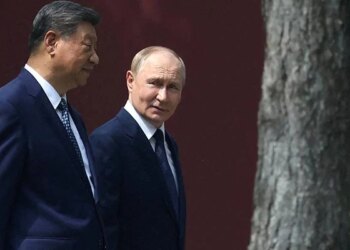
Russian President Vladimir Putin arrived in Beijing late Tuesday for talks with Chinese President Xi Jinping, a longtime friend, aiming to affirm their strong relationship just days after Donald Trump’s visit to China.
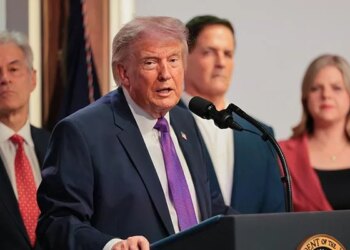
Putin’s trip confirmation came hours after Trump’s stop, which was China’s first visit by a U.S. president in almost ten years, with the goal of stabilizing tense relations.
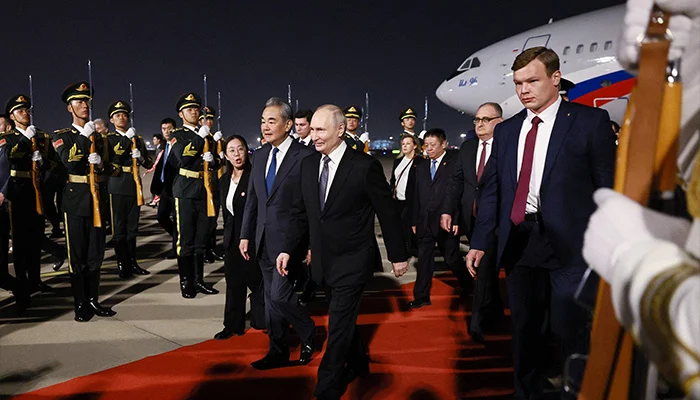
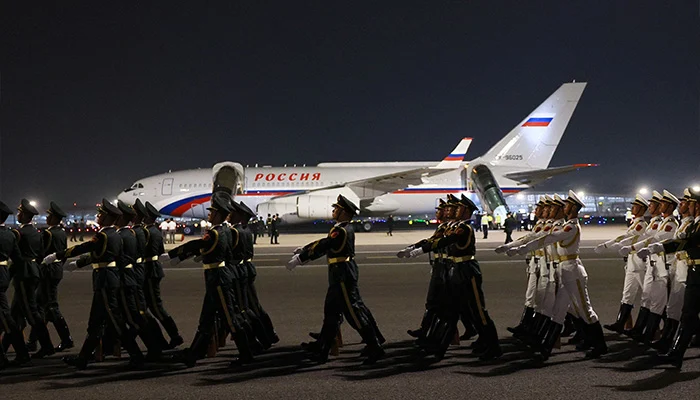
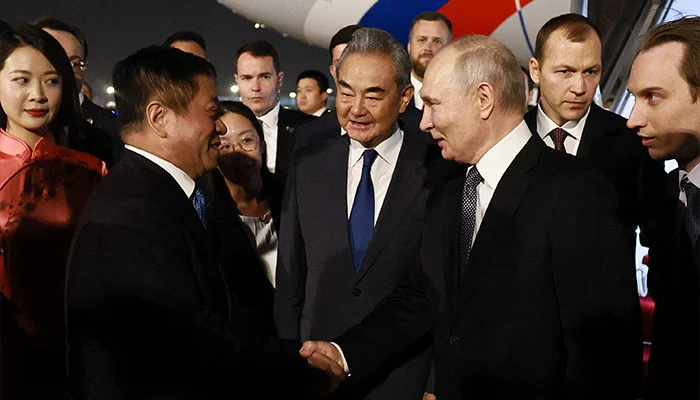
He landed at Beijing Capital International Airport around 11:15 p.m. (3:15 p.m. GMT) on Tuesday, where Chinese Foreign Minister Wang Yi and a military band welcomed him.
This visit mirrored Trump’s arrival closely, with both leaders emerging onto red carpets amid chants of “welcome”—this time, with Russian flags, rather than American.
The two are scheduled to discuss ways to deepen Russia-China strategic ties and exchange views on significant international and regional matters, according to a Kremlin statement.
Their alliance has strengthened since Russia invaded Ukraine in 2022, with Putin visiting Beijing annually as Russia faces worldwide diplomatic isolation.
Despite the friendly language, their relationship isn’t equal — Moscow relies heavily on Beijing, which is the main buyer of Russian oil under sanctions.
Possible topics for discussion include the construction of the “Power of Siberia 2” natural gas pipeline from Russia to China via Mongolia, serving as an overland alternative to marine imports from the Middle East, a project Moscow is eager to begin.
To set a positive tone, Xi and Putin exchanged heartfelt letters on Sunday commemorating 30 years of their countries’ strategic partnership.
Chinese Foreign Ministry spokeswoman Guo Jiakun praised the “lasting friendship” between the nations on Tuesday.
In a video message to the Chinese people, Putin declared that bilateral relations are at an “unprecedented level,” with trade ongoing growth.
“The closely strategic alliance between Russia and China plays an essential role in global stability. We aim for peace and widespread prosperity without targeting any third country,” Putin stated, without mentioning specific nations.
They are also expected to sign a joint declaration after their discussions.
Old friends greet each other
Xi welcomed Putin warmly as an “old friend” during his last visit to Beijing in September 2025, language not used with Trump last week.
In turn, Putin called Xi his “dear friend,” and intends to reinforce that their relationship remains unaffected by Trump’s visit.
Although Putin’s visit might lack Trump’s grandeur, “the Xi-Putin bond doesn’t need showy displays,” noted Patricia Kim from the Brookings Institution in Washington.
Both leaders see their ties as “stronger and more stable” than those between China and the U.S.
While China advocates for a diplomatic solution to the Ukraine conflict, it has so far refrained from condemning Russia’s military actions, positioning itself as neutral.
Trump and Xi discussed Ukraine last week, but no breakthroughs resulted.
Kim added, “Xi will probably brief Putin on his summit with Trump,” suggesting that Moscow remains confident no agreements were made that would undermine Russian interests.
Energy interests and oil plans
Putin hopes China will deepen economic support, especially after Trump claimed during his visit on Fox News that Beijing agreed to purchase US oil to satisfy its “insatiable” energy needs.
Russia depends on Chinese demand to fund its Ukraine conflict, and Lyle Morris from Asia Society explained that Putin is eager to hear Xi’s thoughts on China’s next moves in the Middle East, especially since Trump has indicated that Beijing should take a leading role.
Regarding the US-Israel-Iran tensions, their priorities might differ. China favors quicker resolution of the Strait of Hormuz issues to keep global trade flowing, while Russia benefits economically from the ongoing turmoil in Iran, which has relaxed sanctions against its energy sector, said James Char of Singapore’s Nanyang Technological University.
Sergei Lavrov, Russia’s Foreign Minister, mentioned in April that Moscow could compensate for China’s energy shortages resulting from Middle Eastern conflicts.
Experts like Joseph Webster suggest that stronger energy ties are likely to be a focus, with China seeking more Russian energy, especially as Russia shifts energy exports eastward in response to Ukraine’s attacks on its infrastructure.
 ChatGPT
 Perplexity
 Gemini AI
 Grok AI