Select Language:
President Trump announced plans for a significant new assault on Iran scheduled for Tuesday but chose to hold off as hopes emerged for achieving a long-sought agreement to end the conflict. He credited his decision to the influence of Gulf Arab allies, who urged restraint while negotiations continued, especially since Iran has threatened reciprocal attacks in response to the near six-week ceasefire maintained by the U.S. and Israel.
Trump revealed that he had prepared a fresh attack for Tuesday after Iran rejected his proposed terms for a deal. Drawing attention to the urgency, he shared on his Truth Social platform that leaders from Qatar, Saudi Arabia, and the UAE requested him to pause military actions, given ongoing diplomatic talks. Nonetheless, he maintained that he had instructed the U.S. military to stay prepared to launch a comprehensive strike on Iran at a moment’s notice if an acceptable agreement isn’t reached.
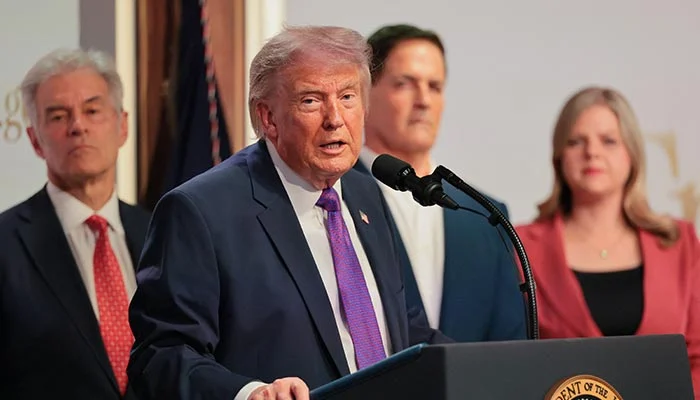
Later at a White House event, Trump spoke of a promising development: Arab allies reportedly believe an agreement that would prevent Iran from acquiring nuclear weapons is close. He expressed a willingness to settle peacefully if possible, stating, “There’s a very good chance they can work something out. If we can do that without bombing the hell out of them, I’d be very happy.”
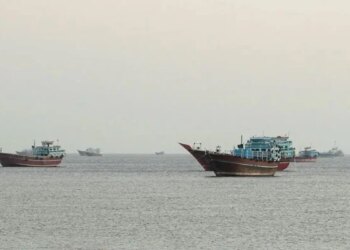
Iran has repeatedly rejected Trump’s peace proposals and has exerted control over the Strait of Hormuz, a critical waterway into the Gulf, which has caused oil prices worldwide to rise sharply. Tehran’s foreign ministry spokesman, Esmaeil Baqaei, confirmed communication channels through Pakistan but emphasized Iran’s concerns.
The country’s leaders, including moderate President Masoud Pezeshkian—part of a government increasingly dominated by hardliners—assert that dialogue does not equate to surrender. Iran demands the release of frozen assets, lifting of longstanding sanctions, and compensation for damages caused by the war.
Reports indicate that the U.S. has rejected releasing more than a small portion of Iran’s blocked funds or offering reparations, but recent negotiations suggest Washington has taken a small step by agreeing to lift some oil sanctions during talks.
Iran’s recent proposal called for ending all fronts of the conflict, including Israel’s activities in Lebanon, and for an end to U.S. naval blockades on Iranian ports that have been in place since April 13. The country also emphasized its intent to continue controlling the Strait of Hormuz, a vital energy route, which Iran has largely kept shut since the conflict started.
Furthermore, Iran has established a new body, the Persian Gulf Strait Authority, to oversee the Strait’s management and to provide real-time updates. The Revolutionary Guards announced plans to regulate internet cables passing through the strait, further asserting control over the strategic waterway.
Meanwhile, the U.S. Treasury extended a sanctions waiver for Russian oil shipments by 30 days to help stabilize oil prices amid Moscow’s ongoing conflict with Ukraine.
 ChatGPT
 Perplexity
 Gemini AI
 Grok AI