Select Language:
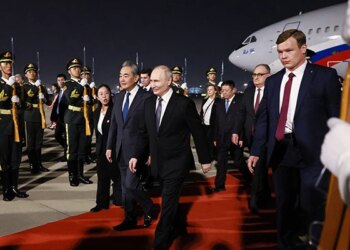
President Xi Jinping praised the strong and unwavering partnership between China and Russia during discussions with Vladimir Putin on Wednesday, emphasizing their alliance just days after Donald Trump’s visit to China. The visit comes amid heightened attention on their evolving relationship, especially following Trump’s recent trip, which lacked significant breakthroughs like assistance in reopening the Strait of Hormuz.
Due to widespread Western sanctions impacting Russia’s energy revenues and increasing dependence on China, Putin’s position has become somewhat fragile. Meanwhile, ongoing tensions over Iran have disrupted crude oil and natural gas shipments, providing Putin with an opportunity to promote Russian energy supplies as alternative options. Experts suggest Putin might focus on advancing the “Power of Siberia 2” gas pipeline, intended to deliver Russian natural gas to China via Mongolia—offering a land route as opposed to sea shipments from the Middle East.
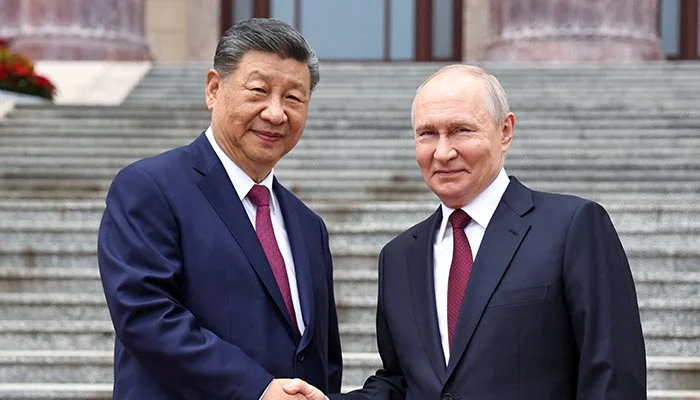
In Beijing’s grand Great Hall of the People, the leaders quickly highlighted their countries’ close ties as they renewed their “friendly cooperation” treaty. Xi expressed that Beijing and Moscow have “steadily deepened political mutual trust and strategic coordination,” with resilience that remains unbreakable. Putin, in turn, affirmed that their relationship has reached an “unprecedentedly high level,” despite external challenges, without specifying any third-party nations. Xi also subtly criticized the United States by warning against “unilateral and hegemonic countercurrents,” which some interpret as a veiled rebuke of U.S. policies.
As the U.S. under Trump sought to strengthen alliances, China has hosted numerous world leaders, and Moscow’s support for Beijing has deepened since Russia’s invasion of Ukraine in 2022. Putin’s annual visits to Beijing reflect the growing closeness, even as his trip aims to be less showy than Trump’s and more focused on substantive cooperation. Xi referred to Putin as an “old friend,” a term not used for Trump during his recent visit, underscoring the strength of their bond. Both leaders see their relationship as more “structurally solid” and stable than China’s ties with the U.S.
While Beijing advocates for negotiations to end the Ukraine conflict and has not condemned Russia’s military actions, its neutrality is nuanced by its reliance on Russian energy exports. Moscow, heavily dependent on Chinese markets, is unlikely to push Russia away but seeks to maintain support.
Concerning the Middle East, Russia aims to leverage the energy crisis caused by the closing of the Strait of Hormuz, positioning itself as a key energy supplier in response to regional conflicts. Russia’s top diplomat Sergei Lavrov indicated that Moscow might compensate for China’s energy shortages amid the Middle East turmoil. Conversely, China emphasizes the urgency of ending the conflict, warning that continued hostilities in the region are “inadvisable,” highlighting their interest in stabilizing vital waterways to support their economic interests.
 ChatGPT
 Perplexity
 Gemini AI
 Grok AI