Select Language:
Revised content in American English, human-like and plagiarism-free:
- Pakistan and Qatar assist in refining the proposal.
- Israel prefers to restart the conflict.
- Iran is reviewing an updated peace draft.
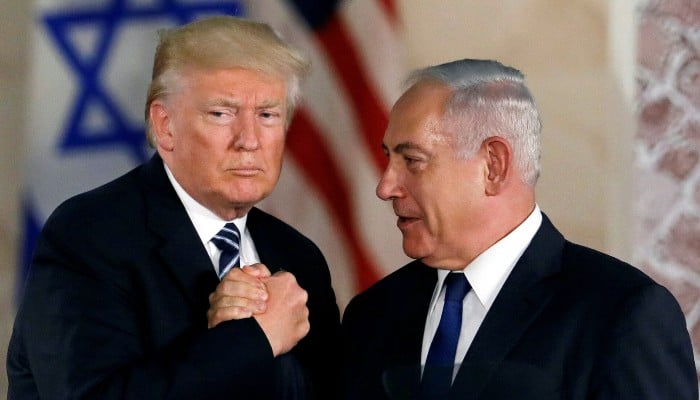
An adjusted Iran peace plan, developed through cooperation between Pakistan and Qatar, sparked a heated phone call between U.S. President Donald Trump and Israeli Prime Minister Benjamin Netanyahu, according to Axios. Both Washington and Tehran are considering potential agreements to bring the conflict to an end.
The report indicated that Qatar and Pakistan, with advice from other regional mediators, worked on a revised peace letter aiming to close gaps between the US and Iran. Meanwhile, Trump is weighing whether to authorize a major military strike or to continue negotiations.
Meanwhile, Netanyahu remains highly doubtful of the talks’ prospects, advocating to restart hostilities in order to damage Iran’s military strength further and weaken the ruling regime by targeting essential infrastructure.
Trump, on the other hand, maintains confidence that an agreement is possible, warning that hostilities could resume if negotiations fall apart.
“The only question is whether we finish the job or they’ll end up signing some document. We’ll see what happens,” Trump said Wednesday at the Coast Guard Academy.
He further stated that the US and Iran are “on the verge” of a deal, but the situation could shift towards conflict. Trump also assured that Netanyahu would follow his lead on Iran, noting their strong relationship.
Recent days have seen efforts by Pakistan, Qatar, Saudi Arabia, Turkey, and Egypt to tidy up the proposal. One source mentioned no separate Qatari draft exists; rather, Qatar is working to bridge the gaps left by the previous Pakistani plan.
A Qatari diplomat told Axios that Doha “supports ongoing Pakistan-led mediation efforts” and continues to promote de-escalation “for the good of the region and its people.”
Iran’s Foreign Ministry affirmed that discussions are ongoing based on “Iran’s 14-point proposal,” with Interior Minister Mohsin Naqvi in Tehran to assist in mediating — his second visit in less than a week.
This initiative mainly aims to obtain clearer Iranian commitments on its nuclear program and specific US guarantees regarding the gradual release of frozen Iranian assets, according to an Arab official speaking with Axios.
However, it remains uncertain whether Iran will accept the new draft or significantly alter its stance.
Axios also reported that Trump had a lengthy and challenging call with Netanyahu on Tuesday evening. A US official briefed on the call said Trump told Netanyahu that mediators are working on a “letter of intent” promising an official end to the war and a 30-day window for negotiations on Iran’s nuclear program and the Strait of Hormuz reopening.
Two Israeli sources stated that Trump and Netanyahu did not see eye to eye on the next steps, and a US source commented that Netanyahu was “fired up” after the call.
Iran’s Foreign Ministry spokesperson said negotiations would only succeed if the US halts “piracy” against Iranian ships and releases frozen assets, while Israel would need to end its conflict in Lebanon.
Trump indicated the war could flare up again “very quickly” if the US doesn’t get the right answers but expressed willingness to give negotiations a few additional days.
“If waiting a few days can save lives, that’s a good thing,” he stated.
Neither the White House nor Israel’s Prime Minister’s Office responded to Axios’s requests for comment.
Another Israeli source mentioned Netanyahu plans to visit Washington soon to meet with Trump.
 ChatGPT
 Perplexity
 Gemini AI
 Grok AI