Select Language:
The UAE has announced that its new crude oil pipeline, designed to bypass the Strait of Hormuz, is approximately 50% complete. ADNOC’s leader indicated that it could take at least four months for global oil flows to resume to 80% of pre-conflict levels once the Iran war concludes. Tehran has kept the critical waterway largely shut to all ships except its own since U.S.-Israeli strikes on February 28, causing energy prices and inflation to spike and raising fears of an economic downturn.
Last week, the Abu Dhabi Media Office disclosed details of the West-East Pipeline project, revealing that Crown Prince Sheikh Khaled bin Mohamed bin Zayed instructed ADNOC to expedite building the pipeline. The goal is to double export capacity through the Fujairah port by 2027. Sultan Al Jaber, ADNOC’s CEO, stated during a live stream with the Atlantic Council that the project is nearly halfway finished and that momentum is accelerating toward the 2027 target.
Al Jaber emphasized that a significant amount of the world’s energy currently passes through too few choke points, which motivated the UAE’s decision over a decade ago to invest in infrastructure that circumvents the Strait of Hormuz. The existing Abu Dhabi Crude Oil Pipeline (ADCOP), capable of transporting up to 1.8 million barrels daily, has been vital for maximizing exports from the Gulf of Oman outside the Strait.
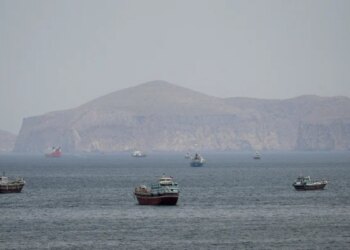
Iran has extended its control over the waterway, attacking vessels and asserting authority over the UAE’s Gulf of Oman coastline. Meanwhile, the U.S. has placed its own blockade on Iranian ports and attempted, but failed, to reopen the chokepoint.
UAE and other Gulf Arab nations, hosting U.S. military bases, have faced attacks during the ongoing conflict, even after a fragile ceasefire began on April 8. The UAE was targeted by over 3,000 missiles and drones aimed at civilian infrastructure, including ADNOC facilities. Damage assessments are ongoing, and returning full operational capacity could take weeks or even months, according to Al Jaber. He described the attacks as retaliation for the UAE’s development model.
Even if the conflict ends immediately, Al Jaber warned that oil flow through the Strait likely won’t fully recover until sometime in 2027’s first or second quarter. He expressed concern that if a single country can hold the waterway hostage, the principle of free navigation is compromised, potentially leading to a decade of heightened efforts to defend it and avoid economic fallout.
Following its withdrawal from OPEC on May 1, the UAE is no longer bound by production quotas. Al Jaber characterized the decision as a strategic move driven by global energy needs, stressing it was not directed against any specific party nor intended to damage relationships. He highlighted that the energy sector remains dangerously underfunded, with current upstream investments around $400 billion annually barely offsetting natural declines. He pointed out that global spare crude capacity, currently approximately 3 million barrels per day, should be closer to 5 million barrels.
Looking ahead, Al Jaber warned that artificial intelligence (AI) will intensify demands on the energy grid, and the world is underestimating the energy-intensive aspects of this technological revolution. He likened the AI race to an “electron race,” where rapid decision-making can mean the difference between stability and disruption during crises.
The UAE remains committed to deepening its investments in the United States. ADNOC, along with its international arm XRG and renewable energy investor Masdar (where Al Jaber is chairman), has already committed $85 billion across 19 states. Al Jaber concluded that the UAE and the U.S. are not just trade partners but co-investors shaping the economy of the coming century.
 ChatGPT
 Perplexity
 Gemini AI
 Grok AI