Select Language:
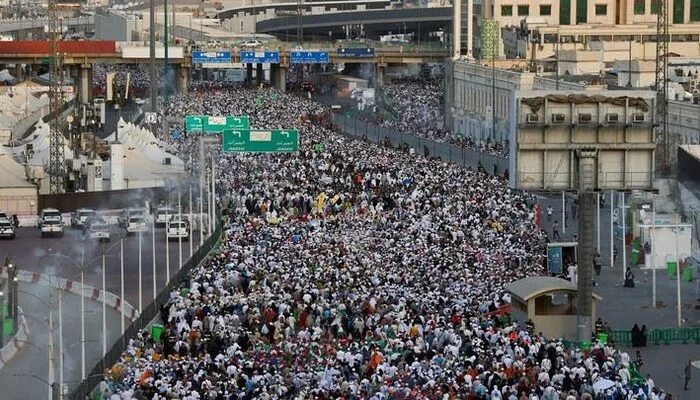
Thousands of Muslims started leaving Makkah on Friday after completing the Hajj pilgrimage in extreme heat, despite the ongoing conflict spreading across the Middle East. Over 1.7 million people from 165 countries participated in this massive religious event, set against the backdrop of tensions caused by recent U.S.-Israeli strikes on Iran. Since the outbreak of hostilities in February, Tehran has responded with numerous drone and missile attacks targeting infrastructure and energy facilities throughout the Gulf, including in Saudi Arabia.
About 30,000 Iranians traveled to Makkah this year, roughly a third of the initial estimate of 86,000, with Iran’s state news agency IRNA attributing the decline to the “wartime situation.” Ahmed Mamdouh, a 37-year-old Egyptian, expressed disbelief at completing the pilgrimage for the first time, fighting back tears as he said, “I’m very grateful I finished the rituals safely. The Hajj is exhausting, especially under such hot weather.” Algerian pilgrim Al-Zaoui, aged 74, linked arms with his wife and shared, “Performing the Hajj together was our dream, and after 50 years of marriage, it became a reality.”
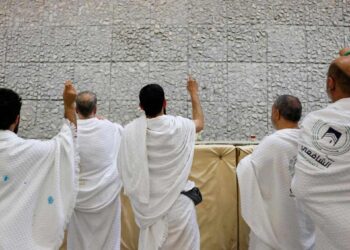
On this day, pilgrims will complete the third day of a ritual in Mina’s valley, where they throw pebbles at pillars representing the devil. Afterwards, they travel by bus to the Grand Mosque in Makkah for the farewell tawaf—walking seven times around the Kaaba, the sacred black cube at the center of the mosque that symbolizes Islam.
Performing Hajj, one of the five pillars of Islam, is a duty for every Muslim who has the means, and it involves a series of outdoor rituals spread over several days, often in intense temperatures. After over 1,300 pilgrims died during the 2024 Hajj—when temperatures exceeded 50°C—Saudi authorities implemented measures to reduce heat exposure, including additional shaded areas and thousands of health workers. The Saudi Red Crescent reported assisting over 83,000 people since the Hajj season began.
 ChatGPT
 Perplexity
 Gemini AI
 Grok AI