Select Language:
During this week’s peak temperatures of 45°C in Makkah, Saudi Arabian healthcare professionals have increasingly turned to drones to deliver supplies across numerous clinics caring for heat-exposed pilgrims during Hajj.
The rituals of Hajj have remained largely unchanged for centuries. However, technological advancements—such as artificial intelligence, drones, and mobile applications—are revolutionizing the pilgrimage experience for both visitors and officials by providing essential services, logistical support, and crowd management solutions.
Instead of navigating clogged roads with over 1.5 million pilgrims, drones have become a vital tool, ensuring that the 127 clinics distributed across Makkah, Mina, and Arafat stay stocked with medical necessities.
Fahd Al-Bathi, COO of the National Unified Procurement Company (Nupco), explained, “Our main objective is to deliver swift service to God’s guests during this season.” Preparations for the healthcare needs during Hajj commenced nine months in advance.
Standing before a color-coded map highlighting medical centers, Nupco’s Turki Al-Obaidi mentioned that his teams operate around the clock during Hajj.
“Our staff must deliver care promptly, especially with such enormous crowds,” he emphasized.
Before drones, medical supply drivers sometimes spent over an hour en route to clinics running low on essentials. Now, operations are centralized at a large facility that supplies drones with medicines and other critical items.
“We’re integrating innovative solutions to ensure the safe, rapid, and high-quality delivery of medical supplies,” said Al-Bathi.
In the operations center, staff monitor drone routes meticulously on a large data display, while others use electric scooters for quick movement around the site. Drones are just one part of a broader tech-driven effort to manage Hajj more effectively amidst the intense desert heat.
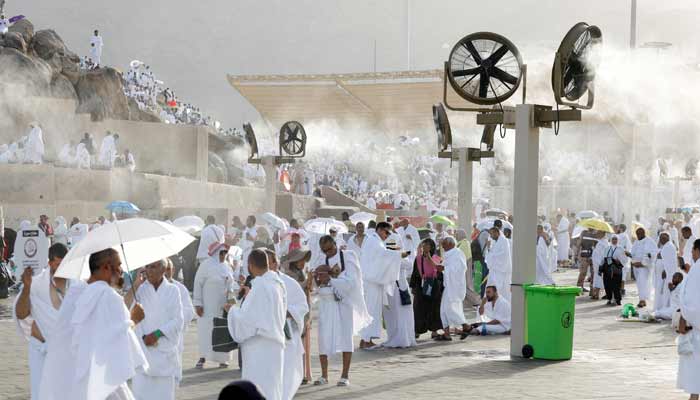
Artificial intelligence is also employed to oversee footage from thousands of cameras installed throughout Makkah, supplementing traditional cooling methods like giant fans, water trucks, and misting systems aimed at keeping crowds comfortable.
“Heat exhaustion remains one of the primary concerns during Hajj,” noted a Saudi health official.
 ChatGPT
 Perplexity
 Gemini AI
 Grok AI