Select Language:
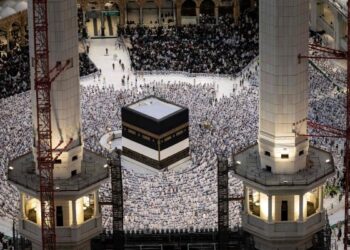
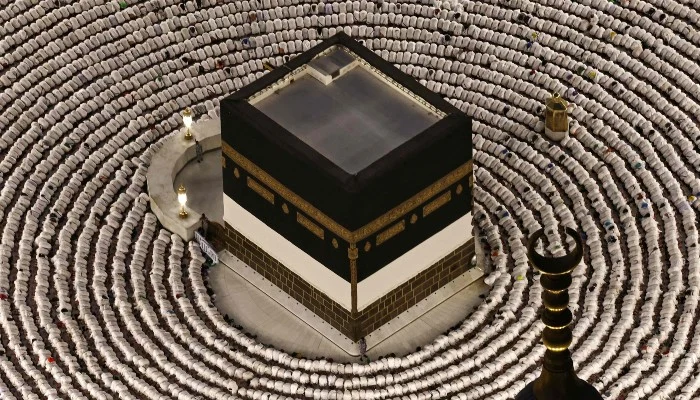
Over 1.5 million Muslims gathered in a large tent city in Mecca on Monday for the annual Hajj pilgrimage, amid hopes for an end to Middle Eastern conflicts. The pilgrims, dressed in white robes, arrived in Mina after completing the tawaf—walking seven times around the Kaaba at the Grand Mosque in Mecca—either on foot or by bus. The Hajj commenced despite ongoing geopolitical tensions, with U.S. President Donald Trump issuing mixed signals about potential ceasefire extensions with Iran and plans to reopen the Strait of Hormuz. Saudi officials highlighted that this year saw more international pilgrims than in 2025, signaling increased participation even amid uncertainty.
To ensure safety, the Saudi defense ministry shared footage of advanced anti-aircraft systems positioned near Mecca, aimed at protecting the holy sites from aerial threats, ensuring the pilgrims’ peace of mind. Many pilgrims shared their hopes for peace, with Mohammed Chahada, an Egyptian in his 50s, remarking, “The war in Iran has impacted the entire world. Nobody desires war or harm to others.”
The Hajj, a fundamental pillar of Islam required once in a lifetime for those capable, involves several rituals. Men wear a seamless, white, shroud-like garment symbolizing unity, while women wear loose dresses that cover everything except faces and hands. The initial ritual involves walking seven times around the Kaaba followed by seven laps between the hills of Safa and Marwa. Subsequently, pilgrims travel to Mina, about five kilometers away, before proceeding to Mount Arafat for the main event, where Prophet Muhammad delivered his final sermon.
The pilgrimage, conducted outdoors under soaring temperatures expected to reach over 40°C this week, takes place against a tense political backdrop. Despite harsh conditions, many pilgrims are filled with joy; Jreish Mohammed, a 68-year-old from Morocco, expressed, “I’ve wanted to perform this pilgrimage for 40 or 50 years. This year, my dream has come true.”
 ChatGPT
 Perplexity
 Gemini AI
 Grok AI