Select Language:
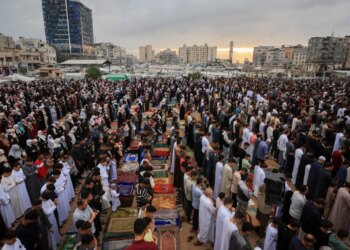
Pilgrims assemble in Mina for a significant ceremonial ritual. Eid ul-Adha commences following the completion of Hajj rites. During the peak days, pilgrims face extreme temperatures reaching up to 44°C in Makkah and Mina, performing outdoor rituals under the scorching desert sun.
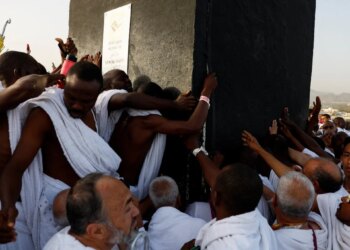
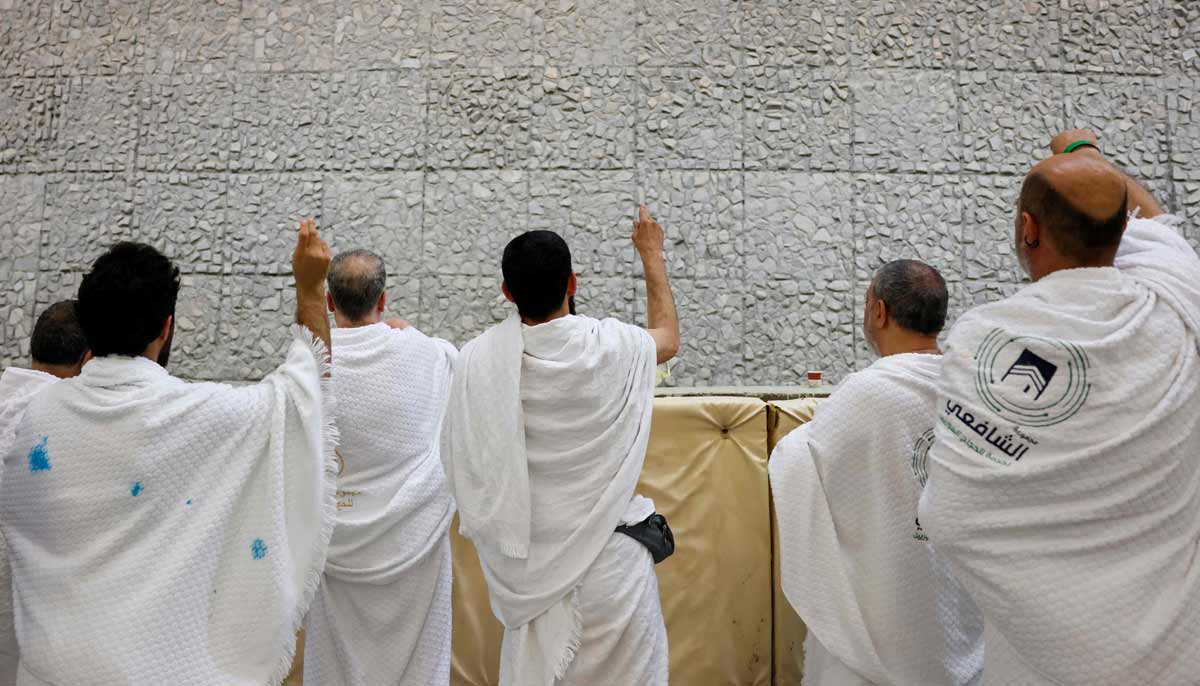
On Wednesday, devout Muslims symbolically threw pebbles at representations of the devil in Mina, marking a key moment in the Hajj pilgrimage amid intense heat and ongoing regional tensions. Early that morning, large crowds gathered in Mina, southeast of Makkah, to reenact the Prophet Ibrahim’s (AS) act of stoning Satan at three different sites—an act representing his rejection of evil’s temptations when asked to sacrifice his son Ismael.
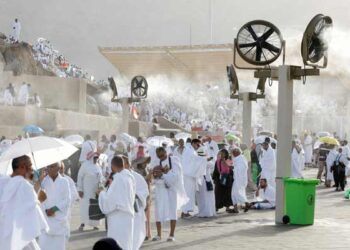
Clad in white, the pilgrims braved the blistering heat, with temperatures hitting 44°C in Makkah and Mina on that day. Despite such harsh conditions, authorities implemented enhanced measures to prevent heat-related incidents, including deploying giant fans, mist sprayers, cooled pavements, and trucks dispensing drinking water.
This year’s Hajj drew over 1.7 million participants, a slight increase from 2025, even amidst regional conflicts involving drone and missile attacks targeting Saudi Arabia and neighboring Gulf countries. The Strait of Hormuz, a vital channel for around 20% of the world’s oil exports, remains largely blocked due to the unstable US-Iran peace talks, impacting regional energy supplies and causing price surges.
Despite the physical hardships faced during these days-long outdoor rituals, many pilgrims expressed joy upon completing their pilgrimage. For many, performing Hajj remains a fundamental Islamic obligation that must be fulfilled at least once in a lifetime if able. Iraqi pilgrim Adnan Hamad, 58, shared his feelings, saying, “I can’t believe I’ve finished the Hajj rituals,” while his daughters dressed in white abayas looked on happily. “Every step was worth it despite the extreme hardship,” he added.
Egyptian pilgrim Marwa Dahchouri described the act of stoning the devil as an “utterly unique experience,” likening it to a glimpse of paradise or becoming a small part of it. The previous day, pilgrims prayed atop Mount Arafat—believed to be the site of Prophet Muhammad’s (PBUH) final sermon—and then spent the night at Muzdalifah, where they gathered pebbles for the stoning ritual.
Following this, the pilgrims return to Makkah for a final tawaf around the Kaaba—the cube-shaped structure at the center of the Grand Mosque toward which Muslims direct their prayers. The last day of Hajj coincides with Eid ul-Adha, a festival commemorating Abraham’s willingness to sacrifice his son before an angel intervened and provided a ram in place of Ismael.
The festival is widely celebrated in the Muslim world, typically involving the slaughter of a sheep, some of which is donated to those in need, symbolizing their willingness to follow Abraham’s example of faith and obedience.
 ChatGPT
 Perplexity
 Gemini AI
 Grok AI