Select Language:
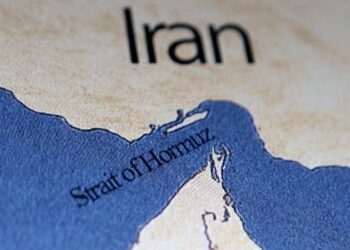
Three months after engaging in a conflict with Iran, President Donald Trump finds himself facing a difficult question: is he losing the broader war? While he may have claimed victories on the battlefield—diminishing Iran’s missile capabilities, sinking parts of its navy, and killing key leaders—the realities on the ground tell a more complicated story. Iran’s control over the Strait of Hormuz, its persistent resistance to nuclear restrictions, and its resilient theocratic regime remain largely unchallenged. Many critics argue that Trump’s tactical gains haven’t translated into a strategic win, especially as diplomatic efforts veer between uncertain negotiations and threats of renewed strikes, which risk provoking Iranian retaliation across the region.
The risk now is that the United States and its Gulf allies might find themselves worse off after the conflict, while Iran, despite military and economic penalties, could end up wielding greater influence—having demonstrated its ability to cut off a significant portion of the planet’s oil and gas supplies. Some experts suggest that there might still be an opportunity for Trump to secure a face-saving exit if negotiations somehow turn in his favor, but many warn of a bleak outlook if the current trajectory persists.
Many analysts argue that what was initially meant to be a brief operation has morphed into a prolonged strategic failure. Aaron David Miller, a former Middle East negotiator, explained that the effort, originally intended as a short-term display of strength, now threatens to become a long-term quagmire. This matters greatly to Trump, who often views himself through the lens of perceived success or failure, and who finds himself commanding the world’s most powerful military against a nation that remains confident in its resilience.
Without a clear endgame, Trump might be reluctant to compromise—resisting concessions that could be interpreted as retreating from his maximalist demands or repeating the 2015 nuclear deal, which he later rejected. Alternatively, he might attempt to shift attention elsewhere, possibly targeting Cuba, which he has indicated as a new focus, hoping for an easier victory. However, some aides acknowledge that Trump may be underestimating the challenges this would pose, much as they believe he misjudged Iran, assuming that the recent raid on Venezuela’s president would mirror earlier operations.
Despite these setbacks, Trump has defenders. Alexander Gray, a former adviser during his first term and CEO of a strategic consultancy, maintains that the military strikes represented a strategic success—damaging Iran’s military capacity, enhancing US influence in the Gulf, and creating uncertainty over Iran’s nuclear ambitions. Still, frustration with controlling the narrative appears to be growing. Trump has publicly criticized critics and accused the media of treason, highlighting his sensitivity to negative coverage.
The conflict has extended far beyond its initial six-week target, with battles of words and military actions lasting three times as long. While many Americans, especially his political base, have supported him through the crisis, cracks are forming among Republican lawmakers who were once mostly unified in backing his approach. Initial strikes severely compromised Iran’s missile stockpiles, sank parts of its navy, and killed prominent leaders, but Iran responded by closing the Strait of Hormuz and attacking Israel and Gulf nations. Trump responded with a blockade, which also failed to force Iran into submission.
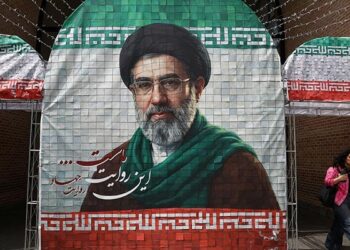
Iranian leadership has portrayed Trump’s campaign as a crushing defeat, though observers suggest that Iranian officials have exaggerated their own military strength. Trump had aimed to achieve several key objectives: disabling Iran’s nuclear program, ending its regional threats, and enabling the Iranian people to overthrow their government. None of these goals have been realized, and many analysts believe they are unlikely to be achieved. Iran has survived the US assault and learned how to exert considerable control over Gulf shipping—confidence that appears to embolden them to endure additional economic pain.
Tehran’s nuclear ambitions remain unhalted; a stockpile of highly enriched uranium still exists underground, and Iran refuses to send its near-weapon-grade uranium abroad. There is concern among analysts that Iran may accelerate efforts to develop nuclear weapons, much like North Korea has done, as a form of strategic protection. Additionally, Iran’s support for proxy groups remains largely unchanged, and the newly hardened leadership suggests continued regional threat.
Furthermore, the crisis has strained alliances with European nations, most of which have refused to assist in the war effort, and revealed lessons for China and Russia about US military shortcomings against asymmetric tactics and depleting weapon supplies. Some experts contend that US influence has suffered an even more decisive blow than during the Vietnam or Afghanistan withdrawals, with Donald Kagan arguing that no return to the pre-conflict status quo is likely—meaning no victory that undoes the harm inflicted.
 ChatGPT
 Perplexity
 Gemini AI
 Grok AI