Select Language:
Iran announces plans to respond to what it describes as “armed piracy,” as tensions escalate. According to IRNA, Iran has rejected initiating new talks, citing the U.S. blockade and recent hostile rhetoric. Meanwhile, Islamabad is preparing for a second round of negotiations.
On Monday, fears heightened that the fragile ceasefire between the U.S. and Iran might not last, following the U.S. claim of seizing an Iranian cargo vessel attempting to breach the blockade. Iran has promised retaliation. Efforts to establish a more durable peace appear uncertain, as Iran declined to participate in additional negotiations that the U.S. hoped to start before the ceasefire’s deadline on Tuesday.
The U.S. continues its blockade of Iranian ports, while Iran has intermittently reimposed its own restrictions on maritime traffic through the Strait of Hormuz, which typically accounts for about 20% of global oil shipments.
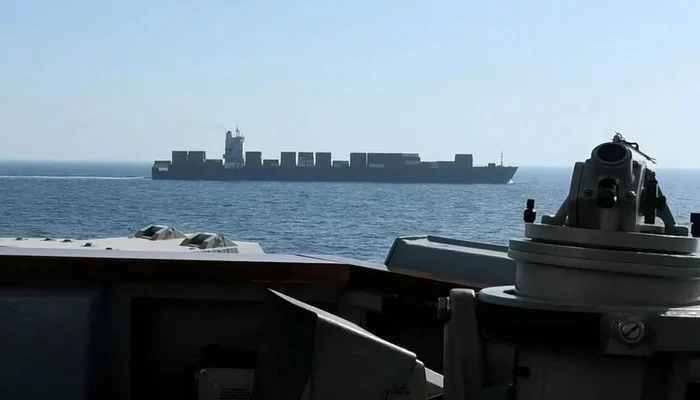
Sunday saw the U.S. military fire on an Iranian-flagged cargo ship heading toward Bandar Abbas port, with President Trump announcing on social media, “We have full custody of their ship, and we are inspecting its contents!”
Iran’s military stated that the vessel was en route from China. A military spokesperson warned that Iran would soon retaliate against what it called US military “armed piracy.”
As traders weigh the impact of ongoing disruptions, oil prices surged and stock markets faltered, reflecting concerns over continued minimal traffic through the Gulf.
Iranian state media reported that Tehran has rejected new peace negotiations, criticizing the ongoing blockade, hostile rhetoric, and what they describe as the U.S. pushing for narrow, superficial deals that could drag on for years.
Iran’s First Vice President, Mohammadreza Aref, emphasized, “You can’t restrict Iran’s oil exports and then expect everyone else to enjoy free security.” He added that the choice is clear: a free oil market for all or the potential for significant costs for everyone.
Earlier, Trump warned that the U.S. would destroy Iran’s infrastructure if Tehran refused his terms, continuing a pattern of aggressive ultimatums.
Iran has threatened to target power stations and desalination plants in Gulf Arab neighbors if attacked by the U.S.
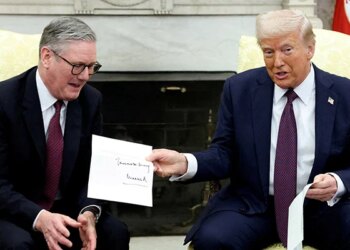
President Trump stated that his envoys are scheduled to arrive in Islamabad on Monday evening, one day before the two-week ceasefire expires. A White House official mentioned Vice President JD Vance would lead the delegation, supported by Trump’s envoy Steve Witkoff and Jared Kushner. However, Trump later indicated Vance would not participate.
Pakistan, acting as the mediator, appears to be gearing up for the talks. Two large U.S. C-17 cargo planes landed at an airbase on Sunday, carrying security gear and vehicles. The city of Islamabad has suspended public transportation and heavy freight, with barbed wire placed near the Serena Hotel, where last week’s discussions took place, which has now evacuated all guests.
The ongoing conflict, now in its eighth week, has severely interrupted global energy supplies, causing oil prices to soar due to the near-closure of the Strait of Hormuz.
Since February 28, the war has resulted in thousands of casualties from U.S.-Israeli strikes on Iran and an Israeli invasion of Lebanon. Iran has responded with missile and drone attacks on Israeli and nearby Arab nations hosting U.S. bases.
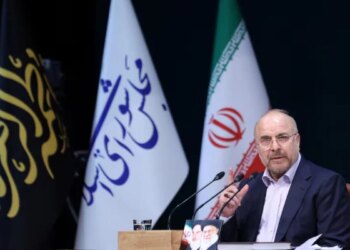
Iran’s parliamentary speaker, Mohammad Baqer Qalibaf, who has led Iran’s negotiation efforts, noted that while progress has been made, significant differences remain on nuclear issues and access to the Strait.
European allies, often criticized by Trump for not supporting his military efforts, are concerned that Washington’s negotiating team aims for a quick, superficial deal that might require extensive, technical follow-up talks over months or years.
 ChatGPT
 Perplexity
 Gemini AI
 Grok AI