Select Language:
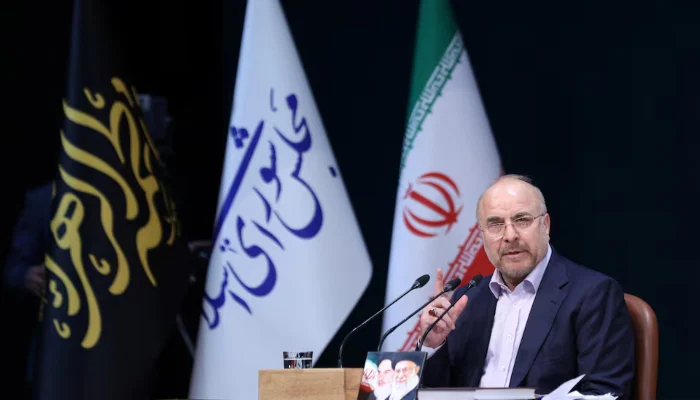
Iran states that the Strait of Hormuz won’t reopen until the U.S. lifts its naval blockade on Iranian ports, according to Tehran. A senior official also warned that a comprehensive peace agreement remains “quite a distance” away. Mohammad Bagher Ghalibaf, the speaker of Iran’s parliament, said during a televised speech that there has been “progress” in talks with Washington, but many gaps and key issues still need resolution.
Ghalibaf, who is part of Tehran’s negotiating team in the discussions aimed at ending the conflict initiated by Israel and the U.S. against Iran, noted, “We’re still far from the final negotiations.” The two-week ceasefire is set to conclude on Wednesday unless extended.
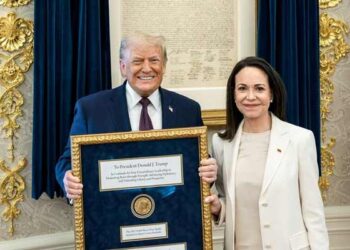
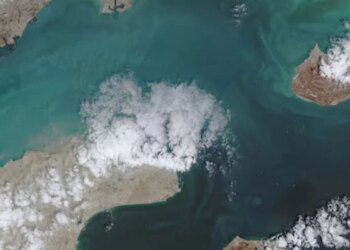
Meanwhile, U.S. President Donald Trump indicated that “very good” talks are ongoing with Iran, but he cautioned Tehran against attempting to “blackmail” the United States. On Friday, Iran declared the Strait of Hormuz, which typically handles about 20% of global oil and liquefied natural gas shipments, open after a ceasefire was reached in Israel’s conflict with Iran’s ally Hezbollah in Lebanon. This initially boosted global markets and caused oil prices to drop sharply, but Trump reaffirmed that the blockade of Iranian ports would persist until a broader peace deal is achieved. Consequently, Tehran announced the Strait would be closed once more.
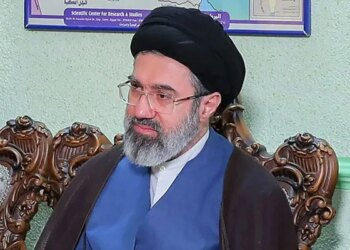
Ghalibaf emphasized, “If the U.S. does not lift the blockade, maritime traffic through the Strait of Hormuz will be restricted.” Iran’s Supreme Leader, Mojtaba Khamenei, who has yet to make a public appearance since assuming power, issued a written statement reaffirming that Iran’s navy is “ready” to confront the United States.
Trump, speaking to reporters at the White House, accused Iran of acting “a little cunning” with recent moves and warned them not to try to “blackmail” Washington by changing their stance on the Strait of Hormuz.
Iran’s Revolutionary Guard announced that any vessels attempting to pass through the strait without permission “will be considered collusion with the enemy, and those vessels will be targeted.” Early Saturday, a few oil and gas tankers crossed during the brief reopening, as tracking data showed, but others retreated, and by late afternoon, traffic in the waterway was minimal.
A UK maritime security agency reported that the Revolutionary Guards fired at one tanker, and security firm Vanguard Tech said the force threatened to “destroy” an empty cruise ship fleeing the Gulf. There was also a report of a vessel being struck by an unknown projectile, causing damage to containers but no fire.
India’s foreign ministry summoned Iran’s ambassador in New Delhi to protest an incident involving two Indian-flagged ships in the strait.
On the diplomatic front, Egypt and Pakistan, involved in mediation efforts, sounded optimistic on Saturday. Foreign Minister Badr Abdelatty expressed hope that Cairo and Islamabad could secure a final agreement “within the next few days.”
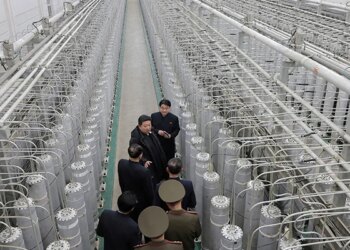
Key sticking points in negotiations include Iran’s stockpile of near-weapons-grade enriched uranium and the future of the Strait of Hormuz. Trump claimed Iran agreed to hand over about 440 kilograms of enriched uranium, asserting, “We’re going to retrieve it with excavators.” However, Iran’s foreign ministry has stated that the uranium, believed to be buried under rubble from U.S. bombings last June, “will not be transferred anywhere,” and the idea of surrendering it “has never been raised during negotiations.”
The regional conflict erupted on February 28 with surprise U.S.-Israeli attacks targeting Iran, despite ongoing negotiations at the time. The violence escalated quickly, with Iran striking neighboring Gulf countries and Hezbollah dragging Lebanon into the conflict by launching rockets at Israel.
Additionally, a French peacekeeper was killed and three others injured in an ambush in Lebanon on Saturday, which French President Emmanuel Macron attributed to Hezbollah—a charge the group denied. The UN Secretary-General Antonio Guterres condemned the attack, stating that initial UN observations suggest Hezbollah was responsible.
 ChatGPT
 Perplexity
 Gemini AI
 Grok AI