Select Language:
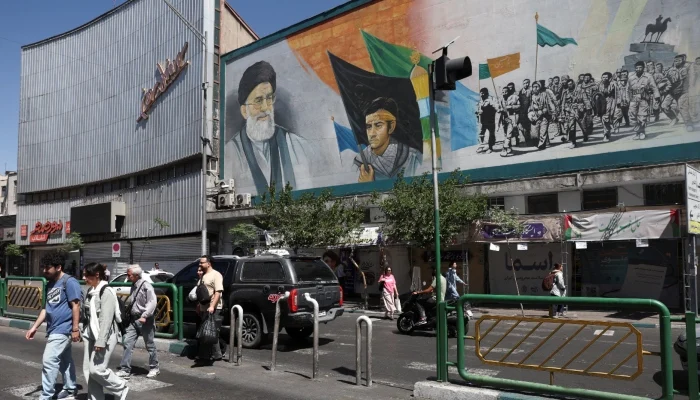
People walk past a mural featuring Iran’s late Supreme Leader Ayatollah Ali Khamenei and the former leader of the Islamic Revolution, Ayatollah Ruhollah Khomeini (not shown), in Tehran, Iran, May 25, 2026. — Reuters
– Missile sites and mine-laying boats targeted in attacks.
– Recent strikes cast doubt on US-Iran negotiations.
– Oil markets react sharply after US operations in southern Iran.
US forces launched attacks on missile installations and boats attempting to plant mines in southern Iran, according to US Central Command. These actions threaten a fragile ceasefire and raise questions about the prospects for a diplomatic resolution to the ongoing Middle East conflict.
The timing coincided with top Iranian officials arriving in Doha for renewed negotiations to de-escalate the long-standing conflict, amidst increased hostilities from Israel’s military against Iran-backed Hezbollah in southern Lebanon.
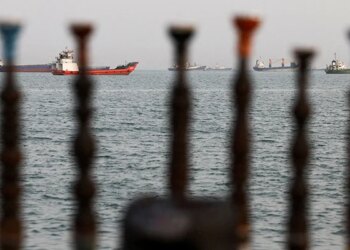
Oil prices showed volatility after the strikes, with concerns rising over the potential disruption of the Strait of Hormuz, a critical chokepoint for global oil supplies, due to an Iranian sea blockade.
US Central Command spokesperson Tim Hawkins explained, “US forces carried out self-defense strikes in southern Iran today to defend our personnel from threats posed by Iranian forces.” He noted that targets included missile launch sites and boats attempting to deploy mines, but did not provide specific details.
Iran’s state broadcaster IRIB reported loud explosions near Bandar Abbas around midnight local time (2030 GMT Monday). The authorities assured that the situation remained normal and were investigating the cause of the blasts.
These developments jeopardize a ceasefire that has been in place since April 8, amid ongoing efforts by the US and Iran to reach an agreement ending a conflict that has severely disrupted energy markets worldwide.
Oil prices Tuesday morning stayed below $100, with West Texas Intermediate decreasing by more than 5%, while international Brent crude saw slight increases.
An additional setback to peace prospects came when Israeli Prime Minister Benjamin Netanyahu vowed to crush Hezbollah in Lebanon. Iran has insisted that any peace deal must include the conflict in Lebanon as well.
President Trump also suggested on social media that Iran should surrender its enriched uranium to the US for destruction or have it destroyed within Iran with international oversight. He wrote, “The Enriched Uranium (Nuclear Dust!) will either be immediately transferred to the United States for destruction or, preferably, destroyed on-site in coordination with Iran and witnessed by the Atomic Energy Commission or an equivalent agency.” The reference to the Atomic Energy Commission was unclear, as the agency was dissolved in 1974.
Earlier Monday, Trump pressed for a broader Arab coalition, urging countries like Saudi Arabia, the UAE, Qatar, Pakistan, Egypt, Turkey, Bahrain, and Jordan to join the Abraham Accords—a set of normalization agreements brokered in 2020 between Israel and several Arab nations. He claimed to have discussed efforts to end the war with their leaders over the weekend.
The US-Iran ceasefire persists as diplomats continue negotiations, though Iran continues to exert control over Gulf shipping through the Strait of Hormuz, with the US Navy attempting to blockade Iranian ports.
While some see the Abraham Accords as a step toward peace, they are deeply unpopular in many parts of the Middle East, particularly because they do not resolve the Israeli-Palestinian conflict. Gulf countries like Saudi Arabia and Qatar have stated they will not normalize relations with Israel unless an independent Palestinian state is established.
Anna Jacobs from the Arab Gulf States Institute in Washington commented, “Gulf security is more threatened than ever due to President Trump’s reckless decisions, and Arab states are unlikely to normalize ties with Israel under these circumstances.”
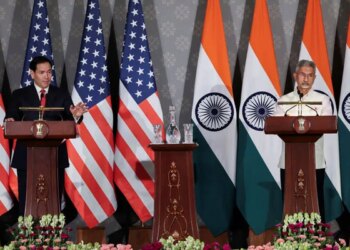
Secretary of State Marco Rubio hinted that a quick deal might be possible, stating, “We thought we might have some news last night, maybe today,” during a visit to New Delhi. However, Iran’s foreign ministry spokesperson Esmaeil Baqaei dampened hopes, saying, “While we have reached a large portion of an agreement, an imminent signing cannot be assured.”
Israeli Prime Minister Netanyahu announced that he has ordered military escalation in Lebanon, accusing Hezbollah of drone attacks against Israeli forces. He emphasized that any final agreement with Iran must fully eliminate its nuclear threat before peace can be achieved. Iranian officials maintain that nuclear negotiations have been postponed until after an initial agreement on their uranium enrichment program is reached.
 ChatGPT
 Perplexity
 Gemini AI
 Grok AI