Select Language:
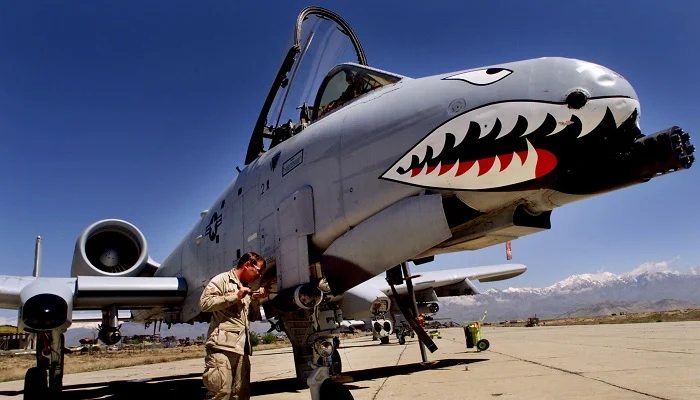
The U.S. Air Force has extended the operational life of its A-10 Thunderbolt II aircraft through 2030, maintaining its combat readiness even as the aging fleet continues to support recent operations in the Strait of Hormuz. During heightened tensions with Iran, one aircraft was lost under contested circumstances, with Iran claiming it was shot down, while U.S. officials described it as a crash, still under investigation.
Air Force Secretary Troy Meink announced that this extension aims to sustain combat capabilities while the defense manufacturing sector increases the production of newer aircraft models. This move continues a long-standing debate about the future of the A-10, which first took flight in 1976 and has been considered for retirement for more than twenty years.
The A-10 has been actively employed in current conflicts with Iran, notably using its powerful nose-mounted guns against ships in the Strait of Hormuz, according to U.S. Central Command. Some members of the Air Force argue the aircraft is outdated, slow, and costly to maintain, suggesting that retiring it could free up funds for modern weapon systems like hypersonic missiles. Critics, however, warn that eliminating the fleet without implementing a suitable replacement would leave ground forces vulnerable due to a lack of effective close air support.
The aircraft’s political resilience plays a significant role in its longevity. The majority of the fleet is based at Davis-Monthan Air Force Base in Tucson, Arizona, a location that bolsters the local economy and ranks among the top employers in the region. Arizona, a critical swing state, has become increasingly influential in national elections.
In 2021, Senator Mark Kelly of Arizona successfully opposed a Biden administration proposal to retire dozens of A-10s by securing language within defense legislation that blocked such retirements. Kelly emphasized the necessity of maintaining the aircraft until a suitable replacement is available for close air support missions.
While the Air Force has expressed concerns about the strain on maintenance personnel from preserving the entire fleet, the recent extension indicates that preserving combat capacity remains a priority, at least for the moment.
 ChatGPT
 Perplexity
 Gemini AI
 Grok AI