Select Language:
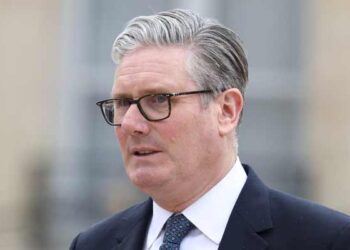
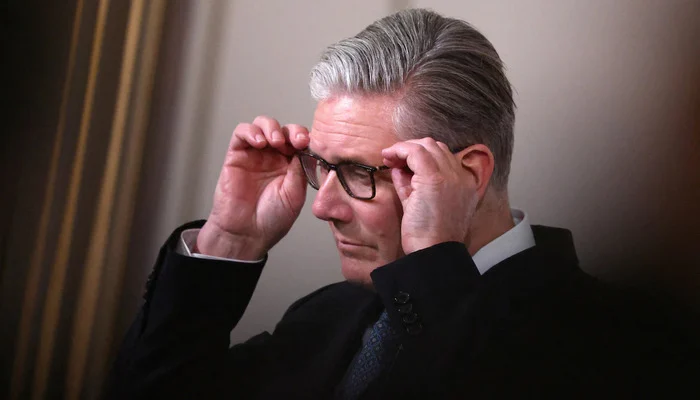
British Prime Minister Keir Starmer blamed foreign ministry officials Monday for the appointment of a U.S. ambassador, asserting they withheld crucial information about Labour veteran Peter Mandelson that could have prevented his hiring.
Under pressure to resign amid the scandal, Starmer has defended his involvement in the appointment, insisting he was unaware that officials had been advised not to grant security clearance to Mandelson. He expressed regret over choosing Mandelson, whom he dismissed last September after details surfaced about his connections to the late U.S. sex offender Jeffrey Epstein. This controversy has revived questions about Starmer’s judgment, especially after the government revealed last week that it had only recently discovered Mandelson had failed a security vetting procedure.
On Monday, Starmer voiced frustration that officials from the foreign ministry had failed to disclose that, in January 2025, they had ignored advice and granted Mandelson “developed vetting” clearance—a top-secret access status—without informing him.
“It’s hard to believe that all along, officials in the foreign office chose to hide this information from our most senior leaders,” Starmer told Parliament. “That’s not the way most people expect our politics, government, or accountability to function.”
He emphasized that he would not have appointed Mandelson if he had known about the security concerns, adding that he has taken steps to prevent similar issues in the future by restricting the foreign office’s ability to override vetting advice.
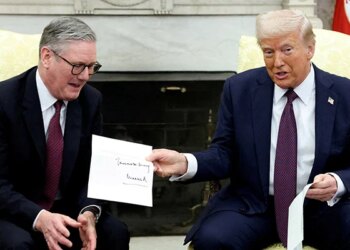
Mandelson’s appointment, initially praised as strategic due to his extensive trade experience and potential to sway the incoming U.S. administration under Trump, has instead become a political headache for Starmer. Trump even weighed in via Truth Social, calling the appointment a “really bad pick” and criticizing Starmer’s judgment.
Starmer acknowledged that if he had been aware his team had advised against Mandelson’s clearance, he wouldn’t have gone forward, and insisted he was not intentionally misleading Parliament. Previously, his official spokesperson stated that Starmer had no knowledge of the security concerns when discussing Mandelson’s appointment.
Following last week’s disclosures, which revealed that the foreign office had overridden warnings against Mandelson’s appointment, Starmer dismissed Olly Robbins—Britain’s top foreign ministry official—who authorized the vetting approval. Robbins, who has not yet issued a public statement, reportedly followed the standard protocol allowing the foreign office to overrule security advice.
Opposition critics accuse Starmer of dishonesty and incompetence, suggesting his position is no longer tenable. With the local elections just three weeks away—during which Labour risks significant losses—the scandal has intensified scrutiny over Starmer’s leadership, though no senior Labour members have called for him to step down.
Conservative opposition leader Kemi Badenoch criticized Starmer’s handling of the crisis, saying, “Leadership is about owning mistakes. Instead of accepting responsibility, he’s thrown his staff and officials under the bus.”
 ChatGPT
 Perplexity
 Gemini AI
 Grok AI