Select Language:
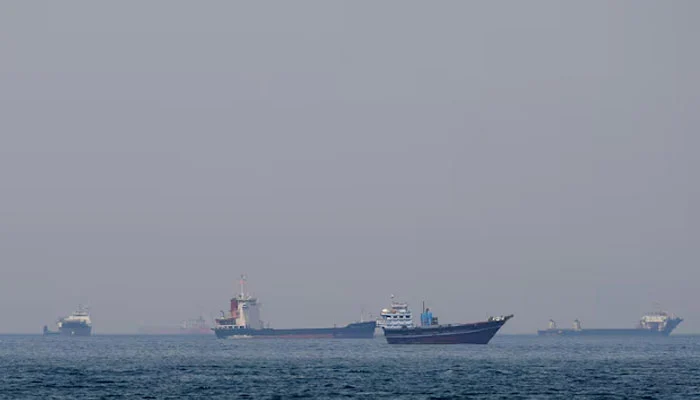
Shipping activity in the Strait of Hormuz largely paused on Tuesday, with only three vessels passing through in the last 24 hours according to shipping data. A U.S. blockade of Iranian ports has angered Tehran, leading it to impose its own restrictions on the strait, which has historically transported around 20% of the world’s oil and liquefied natural gas.
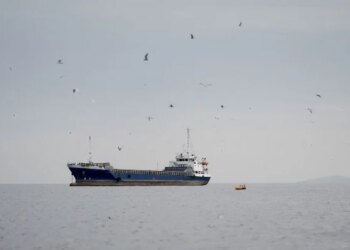
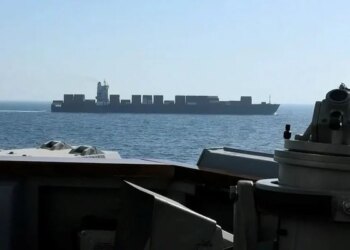
The Ean Spir oil tanker, whose flag and ownership remain unknown, transited the strait on Tuesday after stopping at an Iraqi port, as shown by MarineTraffic tracking data. Similarly, the Lian Star cargo vessel, also without known flag or ownership, sailed through from an Iranian port. Additionally, the Meda liquefied petroleum gas tanker, which previously called at a UAE port and also lacks transparent ownership, attempted to exit the Gulf again on Monday after turning back, based on satellite data from SynMax.
This volume represents only a tiny fraction of the approximately 140 ships that usually pass through daily before the escalation of U.S. and Israeli actions against Iran began on February 28. After Iran briefly announced reopening the strait last Friday, more than a dozen tankers moved through, only for Tehran to declare it closed again on Saturday amid reports of shots fired at vessels.
A shipping broker, BRS, noted this week that even vessels that appear compliant with transit requirements can find themselves in danger and be prevented from passing.
Tensions heightened Tuesday, risking a collapse of the US-Iran ceasefire, as Tehran refused to commit to new peace negotiations, and the U.S. military announced the seizure of a tanker linked to Iran in international waters.
Meanwhile, hundreds of ships and about 20,000 crew members are stranded in the Gulf, unable to sail. Arsenio Dominguez, the UN shipping agency’s secretary-general, told reporters at Singapore’s maritime week, “We cannot risk the lives of seafarers.” He added that last weekend, when some ships attempted to sail amidst the chaos, some were targeted, but fortunately, no casualties or vessel damage occurred.
Iran’s military claimed that an Iranian tanker entered its territorial waters from the Arabian Sea on Monday, with assistance from navy forces, despite US warnings and threats. BRS estimates that currently, 61 supertankers unrelated to Iran are trapped within the Gulf, 50 of which carry up to 2 million barrels of oil each.
In times when global oil demand is high, releasing even an additional 2 million barrels from the Middle East Gulf would be highly welcomed.
 ChatGPT
 Perplexity
 Gemini AI
 Grok AI