Select Language:
The State of Global Interest Rates in 2025
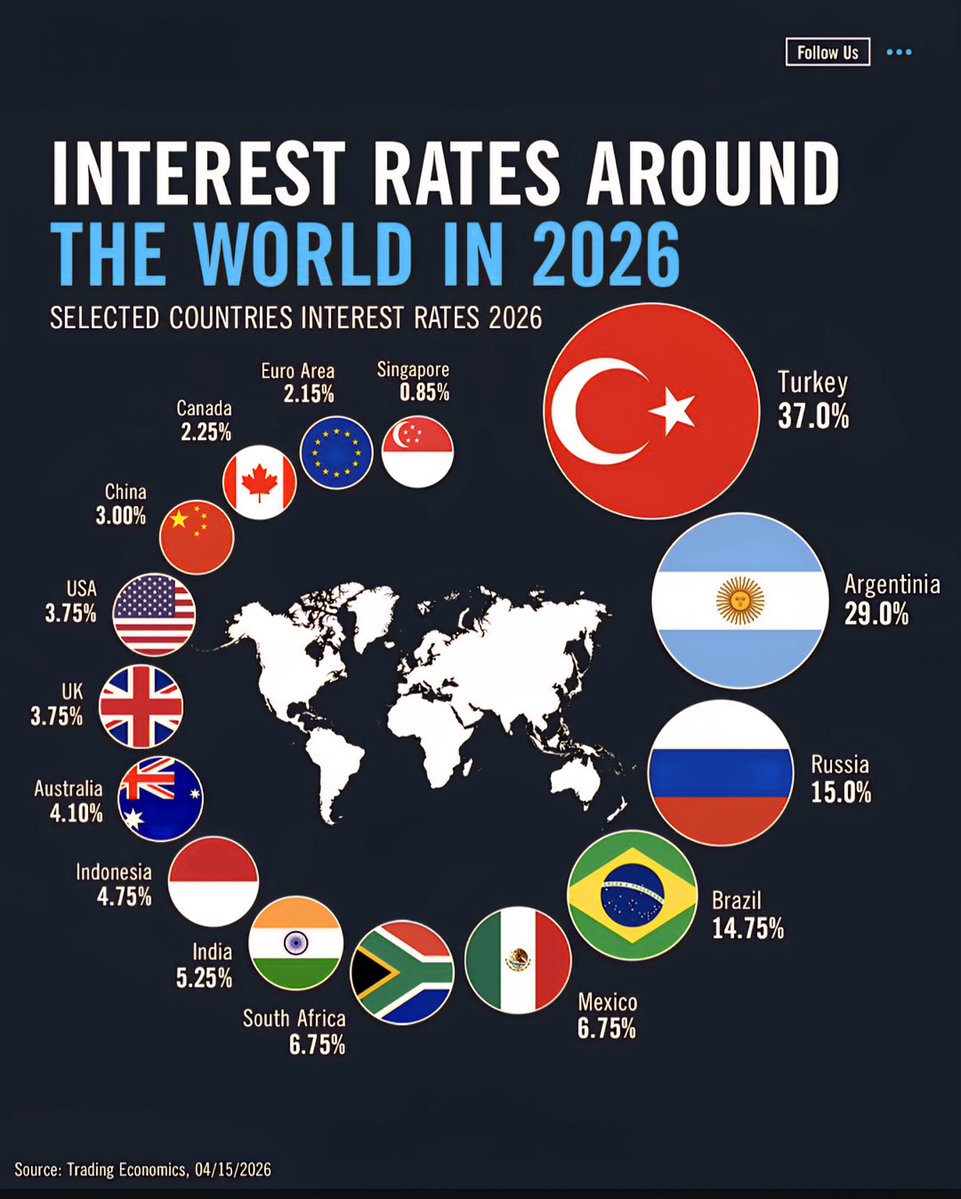
As the world navigates an evolving economic landscape in 2025, central banks across nations have adjusted interest rates to combat inflation, support growth, or stabilize their economies. Here’s a detailed look at how interest rates are shaping up across select countries this year, highlighting both extremes and moderates in the global financial sphere.
Turkey’s Sky-High Interest Rates Reflect Uncertain Economic Stability
In 2025, Turkey continues to grapple with soaring inflation, pushing its benchmark interest rate to an extraordinary 37.00%. This rate remains among the highest worldwide, a strategy the Central Bank of Turkey employs to curb persistent currency devaluation and inflationary pressures. Despite critics warning about the long-term economic impacts, such high rates aim to attract foreign capital and stabilize the Turkish lira. However, the effectiveness of this approach remains under scrutiny, with debates ongoing about its sustainability and implications for consumers and businesses.
Argentina’s Struggles Persist with Nearly 30% Rate
Argentina maintains its position among the nations with the highest interest rates at 29.00% in 2025. The country’s inflation remains stubbornly high, fueled by fiscal deficits and currency depreciation. The central bank’s decision to keep rates elevated aims to prevent capital flight and stabilize the peso. Nonetheless, these elevated rates continue to strain credit markets, making borrowing expensive for both consumers and businesses, exacerbating economic hardships.
Russia’s Moderate Rate Signaling Relative Stability
Russia’s interest rate stands at 15.00%, a notable reduction from previous years, signaling some degree of stabilization. The Central Bank of Russia has gradually eased monetary policy amidst signs of slowing inflation and cautious economic recovery. While geopolitical tensions still influence economic fundamentals, this moderate rate reflects an attempt to balance inflation control with fostering investment and consumer spending.
Brazil’s Efforts to Tame Inflation at 14.75%
Brazil’s central bank has maintained an aggressive stance, setting interest rates at 14.75% to counter stubborn inflation and stabilize the real. Despite economic growth challenges, high rates have been instrumental in anchoring inflation expectations. However, these levels increase borrowing costs for consumers and enterprises, potentially impacting growth and consumer confidence.
South Africa and Mexico Maintain Moderate Rates
Both South Africa and Mexico have set their rates at 6.75%. These moderate interest levels suggest cautious optimism as both countries aim to support economic activity without fueling excessive inflation. South Africa’s rate remains elevated compared to last year, reflecting economic uncertainties, whereas Mexico’s rate signals its efforts to sustain growth amid global challenges.
Growing Economies Like India and Indonesia Stabilize at Lower Rates
India’s interest rate stands at 5.25%, and Indonesia’s is at 4.75%. These countries continue their trajectory towards more accommodative monetary policies, recognizing the importance of affordable credit to support rapid economic growth. These moderate rates also indicate controlled inflation levels, aligning with their development strategies.
Developed Countries and Their Near-Record Low Rates
- Australia (4.10%): Australia’s reserve bank has maintained a relatively low rate, aiming to support economic recovery and employment.
- United States & United Kingdom (3.75%): Both major economies have kept rates steady, showing confidence in their respective recoveries while maintaining some buffer against inflation.
- China (3.00%): China’s policymakers continue to keep rates low, encouraging domestic consumption and investment amidst ongoing economic restructuring.
Canada and the Euro Area Keep Rates Slightly Above Zero
- Canada (2.25%): The Bank of Canada manages rates cautiously to sustain growth without igniting inflation.
- Euro Area (2.15%): European Central Bank maintains a low but stable rate, reflecting ongoing efforts to support the eurozone’s economic recovery post-pandemic.
Singapore’s Ultra-Low Rate Indicates an Open-Economy Strategy
At 0.85%, Singapore embodies an ultra-accommodative policy to attract investments and sustain its financial hub status. Such low rates also serve to fuel economic growth in a highly interconnected global economy.
Conclusion
The interest rate landscape of 2025 reveals a world of contrasts—from hyperinflation struggles in Turkey and Argentina to cautious moderation in advanced economies. Countries are tailoring monetary policies to their unique circumstances, influencing everything from borrowing costs to investment decisions. As geopolitical dynamics and economic fundamentals continue to evolve, these rates will likely shift, reflecting the ongoing balancing act faced by policymakers worldwide.
Source: Trading Economics, April 15, 2026
 ChatGPT
 Perplexity
 Gemini AI
 Grok AI