Select Language:
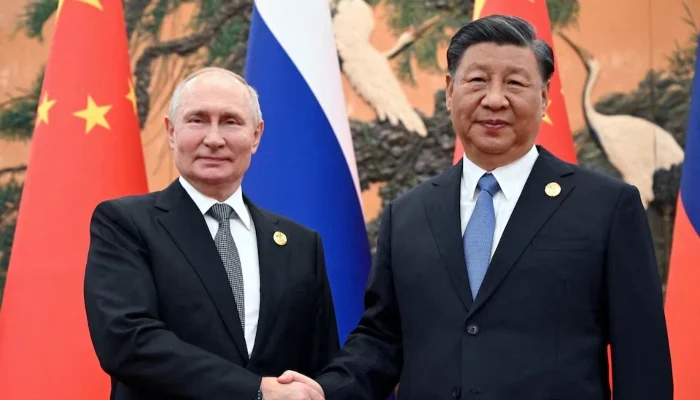
Russian President Vladimir Putin (left) greets Chinese President Xi Jinping during a meeting at the Belt and Road Forum in Beijing on October 18, 2023. — Reuters
– Putin and Xi Jinping are set to discuss strengthening their strategic partnership.
– They are expected to sign a joint declaration following their discussions.
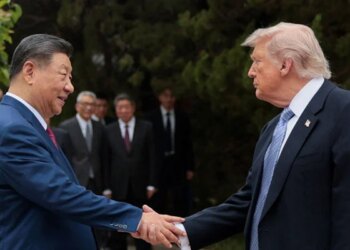
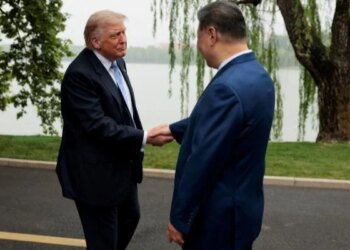
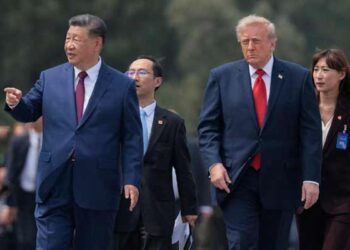
– The visit comes shortly after former President Donald Trump’s trip to China this week.
Putin is scheduled to visit China on May 19 for two days, according to the Kremlin, arriving shortly after U.S. President Donald Trump’s visit to Beijing. During his trip, Putin will focus on deepening the comprehensive partnership and strategic cooperation with Xi Jinping, as well as exchanging views on major international and regional issues. The leaders will also sign a joint declaration at the end of their meetings.
In addition, Putin plans to hold talks with Chinese Premier Li Qiang about boosting economic and trade ties. The announcement of Putin’s visit follows Trump’s visit to China, which ended on Friday with a lavish reception despite ongoing tensions over trade and geopolitics, including the Russia-Ukraine conflict.
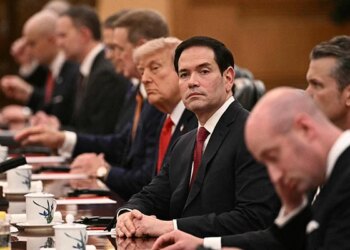
During his discussions with Xi, Trump addressed the prolonged Ukraine-Russia war and tensions with Iran, but he left China without reaching any breakthroughs on these issues. Negotiations to resolve the Ukraine conflict, brokered by the U.S., seem to be stalled since the outbreak of hostilities between Israel and Iran on February 28.
Before Trump’s visit, Ukrainian President Volodymyr Zelensky asked him to raise efforts to end the conflict during his talks with Xi. Russia has refused to consider a ceasefire or negotiations unless Ukraine agrees to its maximalist demands.
While China consistently advocates for negotiations to end the fighting, it has not condemned Russia’s military actions in Ukraine since February 2022 and claims neutrality. Beijing denies supplying weapons to Moscow and blames Western countries for prolonging the conflict by arming Ukraine. As the world’s leading importer of Russian fossil fuels, China remains Moscow’s primary economic partner, especially since Western sanctions targeted Russian oil and gas.
Trump departed China on Friday touting “fantastic” trade agreements, including a pledge from Beijing to buy 200 Boeing aircraft, along with U.S. oil and soybeans. However, specifics were vague, and China did not officially confirm any trade deal.
China’s response to the summit was more subdued compared to Trump’s praise of Xi as a “great leader” and “friend.” Meanwhile, Russia’s top diplomat, Sergey Lavrov, acknowledged the China-U.S. summit but emphasized that Moscow maintains closer ties with Beijing, describing their relationship as deeper and stronger than typical political or military alliances.
 ChatGPT
 Perplexity
 Gemini AI
 Grok AI