Select Language:
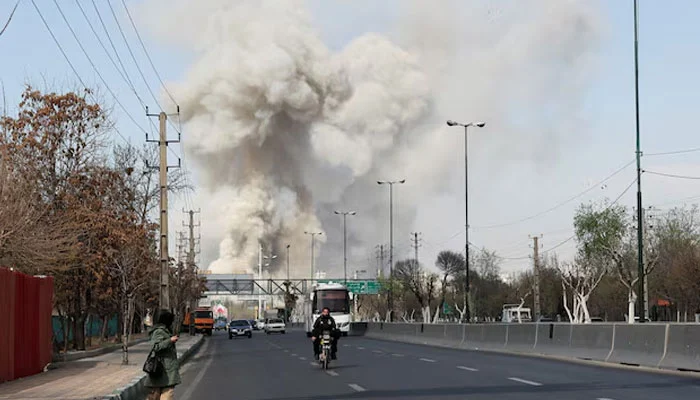
A second phase of Israel’s operations in Iran is underway, focusing on attacking underground ballistic missile facilities and related equipment, according to two military source familiar with the campaign. The first week of joint Israeli and U.S. strikes has targeted above-ground Iranian missile launchers capable of striking Israeli cities. The upcoming phase involves penetrating deep underground bunkers used for storing missiles and military gear.
One source indicated Israel’s goal is to disable Iran’s capacity to carry out aerial attacks by the war’s end while also targeting the country’s leadership. The Israeli military has not publicly confirmed plans to strike underground facilities but previously claimed control over much of Iran’s airspace during early attacks.
Recently, the military announced overnight airstrikes on a subterranean site used by Iran to store ballistic missiles and related missile storage facilities. It’s the first time Israel has publicly acknowledged targeting underground missile infrastructure since the joint U.S.-Israeli campaign began Saturday.
Iran’s missile stockpile estimates vary significantly—ranging from about 2,500 to as many as 6,000 missiles, depending on the source. The remaining stockpiles’ size could greatly influence how the conflict unfolds, as Iran continues launching missiles at Israel and other regional targets.
Strategic analysts, including Douglas Barrie from the UK’s International Institute for Strategic Studies, noted that Iran still possesses some land-attack cruise missiles and precision-guided low-flying weapons designed to evade radar detection.
Since Saturday, Israeli air operations have been extensive, intensifying after Hezbollah in Lebanon launched rockets at Israel, prompting substantial Israeli strikes as far north as Beirut. In some cases, Israeli jets have struck both Iran and Lebanon in one sortie—targeting Tehran and western Iran before returning to strike Hezbollah positions, according to sources with knowledge of the plans.
Since the start of the attacks, launches of ballistic missiles and drones from Iran have declined, a trend attributed partly to Israeli and U.S. strikes on Iranian launch sites and military infrastructure. Israel suggests Iran may also be holding back to conserve missile stocks for prolonged conflict.
Eran Lerman, a former Israeli deputy national security adviser, expressed that early expectations were for Iran’s regime to begin collapsing quickly following initial strikes. However, this has not yet happened, and he emphasized the need to further degrade Iran’s military and leadership capabilities.
 ChatGPT
 Perplexity
 Gemini AI
 Grok AI