Select Language:
- Supersonic missile designed to bypass ship defenses.
- Iran and China are also negotiating for anti-ballistic weapon systems.
- Transfer of missiles aims to circumvent UN arms embargo.
Iran is nearing an agreement with China to purchase anti-ship cruise missiles, according to six sources familiar with the negotiations, just as the US has positioned a large naval force near Iran’s coast amid the threat of potential military strikes.
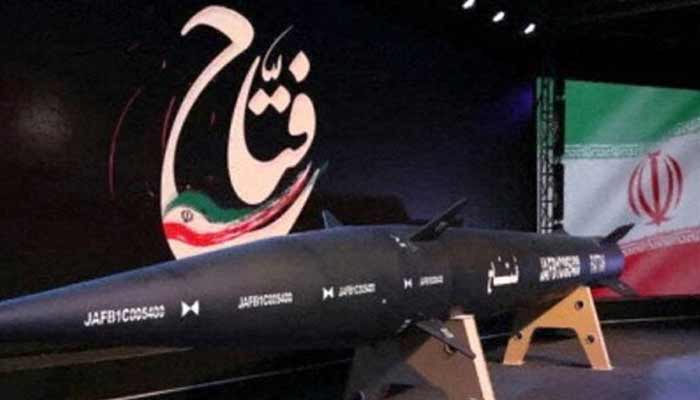
The talks for Chinese-made CM-302 missiles are close to finalization, although a delivery date has not yet been set, the sources said. These supersonic missiles can travel approximately 290 kilometers and are designed to evade ship-based defenses by flying low and at high speeds. Their deployment would significantly boost Iran’s offensive capabilities and threaten US naval forces in the region, experts noted.
The negotiations, which started at least two years ago, gained momentum after Israel and Iran engaged in a 12-day conflict in June, the sources added. Some of the officials involved in the talks include three Iranian government officials and three security personnel who have been briefed on the process.
In the final stages of negotiations last summer, senior Iranian military and government officials, including Deputy Defense Minister Massoud Oraei, traveled to China, according to two security officials. Oraei’s visit had not been publicly reported before.
“If Iran acquires the capability to launch supersonic attacks on ships, it would be a game-changer,” said Danny Citrinowicz, a former Israeli intelligence officer and now a senior researcher at Israel’s Institute for National Security Studies. “These missiles are very hard to intercept.”
Reuters could not confirm the number of missiles involved in the potential deal, how much Iran is prepared to pay, or whether China intends to proceed given the rising tensions in the region.
An Iranian Foreign Ministry official told Reuters, “Iran has security and military pacts with its allies, and now is the right time to utilize them.”
The Chinese UN delegation referred inquiries to Beijing’s Foreign Ministry, which has not responded to requests for comment. The U.S. administration also did not directly comment on the negotiations. A White House official stated that President Donald Trump has warned Iran that there’s a 10-day window to reach an agreement over its nuclear program or face tough action, referencing ongoing tensions.
The proposed arms transfer would include some of the most sophisticated military hardware China has supplied to Iran, violating a UN weapons embargo first enacted in 2006. The sanctions were lifted in 2015 as part of a nuclear deal and reimposed last September.
U.S. Forces Close to Iran
The potential arms deal highlights expanding military collaboration between China and Iran amidst escalating regional tensions, complicating U.S. efforts to limit Iran’s missile and nuclear programs. It also demonstrates China’s increasing willingness to project power in a region traditionally dominated by U.S. military influence.
During a September visit to Beijing, Chinese President Xi Jinping told Iranian President Masoud Pezeshkian that “China supports Iran in defending its sovereignty, territorial integrity, and dignity.”
China, Russia, and Iran jointly expressed opposition on October 18 to the reimposition of sanctions, calling the move flawed.
“Iran has become a battleground between the US on one side and Russia and China on the other,” said one official familiar with the missile negotiations.
This comes as the U.S. has assembled a naval force near Iran, including the aircraft carrier USS Abraham Lincoln and its strike group, as well as the USS Gerald R. Ford and its escorts, capable of supporting more than 5,000 personnel with over 150 aircraft combined.
“China does not want a pro-Western regime in Iran,” Citrinowicz explained. “They hope the current regime stays in power.”
On February 19, Trump warned Iran to reach an agreement on its nuclear program within 10 days or face military action. Preparations for prolonged operations against Iran have been reported, suggesting the possibility of weeks-long military activity if ordered.
Iran’s Arsenal Strengthens
The purchase of CM-302 missiles would significantly enhance Iran’s military capabilities, which have been diminished after last year’s conflict, said Pieter Wezeman from the Stockholm International Peace Research Institute.
Manufactured by China Aerospace Science and Industry Corporation (CASIC), the CM-302 is considered one of the world’s top anti-ship missiles, capable of sinking aircraft carriers or destroyers. It can be mounted on ships, aircraft, or ground vehicles and can also target land-based facilities.
CASIC did not respond to requests for comment.
Reports also indicate Iran is in talks to acquire Chinese surface-to-air missile systems, anti-ballistic weapons, and anti-satellite systems, the sources added.
 ChatGPT
 Perplexity
 Gemini AI
 Grok AI