Select Language:
Over the past 50 days, the Iran conflict has caused a global loss exceeding $50 billion in unproduced crude oil, with the repercussions expected to persist for months or even years. Analysts and Reuters estimates highlight these economic impacts.
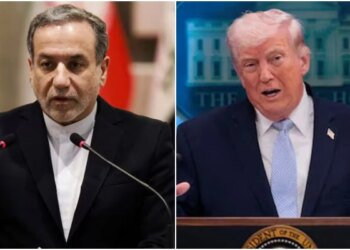
Iranian Foreign Minister Abbas Araghchi announced on Friday that the Strait of Hormuz has reopened following a ceasefire agreement reached in Lebanon, while U.S. President Donald Trump expressed optimism about a potential deal to end the Iran conflict soon, though no specific timeline has been specified.
Since the crisis erupted in late February, over 500 million barrels of crude oil and condensate have been removed from the international market—a disruption unmatched in recent history.
To put this into perspective, losing 500 million barrels of oil is equivalent to:
- Cutting global air travel demand for ten weeks,
- Ceasing all road vehicle travel worldwide for eleven days,
- Or depriving the global economy of oil for five days.
In the United States, this equates to nearly a month of national oil demand, with Europe experiencing over a month’s worth of oil consumption lost, according to Reuters. It also represents enough fuel to sustain the U.S. military’s operations for about six years based on its annual usage of approximately 80 million barrels. Additionally, this volume could power the world’s international shipping industry for around four months.
Key facts include:
- Gulf Arab nations reduced crude output by roughly 8 million barrels per day in March, a figure comparable to the combined production of ExxonMobil and Chevron, two leading oil companies.
- Exported jet fuel from major Gulf countries, including Saudi Arabia, Qatar, UAE, Kuwait, Bahrain, and Oman, dropped sharply from approximately 19.6 million barrels in February to just 4.1 million barrels in March and April combined. This reduction could fuel approximately 20,000 round-trip flights between New York’s JFK and London’s Heathrow.
- With oil prices averaging around $100 per barrel since the conflict’s start, this shortfall translates to around $50 billion in lost revenue, according to Johannes Rauball, senior crude analyst at Kpler. This loss corresponds to a 1% decrease in Germany’s annual GDP or roughly the entire GDP of small nations like Latvia or Estonia.
Recovery outlook:
Although Iran’s Foreign Minister indicated the Strait is open, restoring output and flow remains a slow process. April’s global onshore crude inventories have decreased by about 45 million barrels, and production interruptions since late March have reached around 12 million barrels per day.
Fields in Kuwait and Iraq, particularly in heavier crude zones, may take four to five months to regain their normal output levels, extending stock depletion through summer. Damage to refining facilities and Qatar’s Ras Laffan LNG complex could mean regional energy infrastructure restoration may take several years.
 ChatGPT
 Perplexity
 Gemini AI
 Grok AI