Select Language:
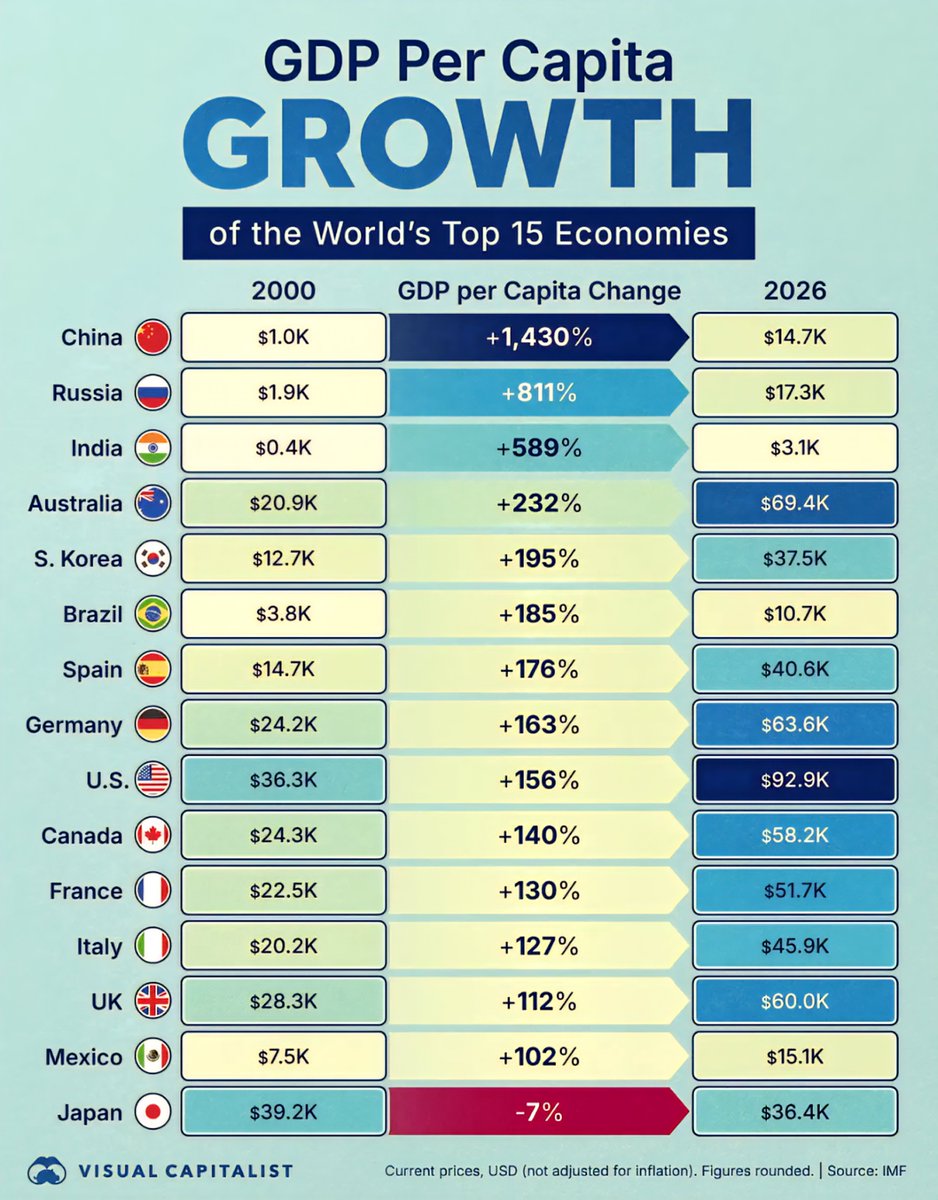
Top 15 Economies Show Promising Growth Trends in 2025
China: A Rapid Climb in Wealth
China has experienced an astonishing increase in its GDP per capita over the past 25 years. Back in 2000, the average citizen earned approximately $1,000 annually. Today, in 2025, that figure has skyrocketed to around $14,700, representing an impressive growth rate of 1,430%. This surge reflects China’s extensive economic reforms, infrastructure development, and expanding global trade influence, positioning it as a middle-income powerhouse with aspirations for high-income status in the near future.
Russia: Steady Growth Amid Global Shifts
Russia’s economic landscape has seen remarkable improvement. Data shows that in 2000, GDP per capita was approximately $1,900. By 2025, this had grown to approximately $17,300. With an 811% increase, Russia has significantly enhanced the average standard of living for its citizens, driven by energy exports, diversified industries, and foreign investment. Despite geopolitical challenges, the nation’s economy remains resilient and expanding.
India: Emerging as a Major Global Player
India’s economic ascent continues to impress. From a modest $400 in 2000, the average income has increased to roughly $3,100 in 2025, marking a 589% growth. As the world’s second-largest population, India’s expanding middle class and technology sectors are fueling this growth, signaling its rise towards a major economic influence on the world stage.
Australia: Consistent Growth in the Down Under
Australia’s GDP per capita has grown substantially, from about $20,900 in 2000 to nearly $69,400 in 2025. That’s a 232% rise, showcasing its stable economy backed by rich natural resources, robust financial services, and strong international trade partnerships. Australia remains one of the wealthiest nations in the world in terms of individual income levels.
South Korea: Tech Powerhouse Continues to Prosper
South Korea’s economy has seen a near doubling of its GDP per capita from $12,700 in 2000 to approximately $37,500 in 2025. With a growth rate of 195%, South Korea’s leadership in electronics, automotive manufacturing, and digital innovation continues to push its standard of living upward.
Brazil: Surpassing Expectations
Brazil has increased its GDP per capita from an estimated $3,800 in 2000 to around $10,700 now. With a 185% rise, Brazil remains South America’s largest economy, though it faces ongoing challenges. Its diversified economy, including agriculture, mining, and energy sectors, continues to support steady income growth.
Spain: A European Recovery Tale
Spain’s GDP per capita has grown from approximately $14,700 in 2000 to roughly $40,600 in 2025. With a 176% increase, Spain reflects a resilient economy recovering from past financial crises. Its thriving tourism, manufacturing, and export industries contribute significantly to citizens’ wealth.
Germany: Europe’s Economic Anchor
Germany’s economic strength is evident. From $24,200 in 2000, the GDP per capita has risen to around $63,600 in 2025, marking a 163% increase. As Europe’s largest economy, Germany’s advanced manufacturing, engineering, and export sectors keep incomes elevated.
United States: Continued Economic Leadership
The U.S. economy has expanded its GDP per capita from $36,300 in 2000 to approximately $92,900 in 2025—a 156% increase. As a global leader in technology, finance, and innovation, the American economy continues to drive wealth creation and economic influence worldwide.
Canada: North American Stability
Canada’s GDP per capita increased from about $24,300 in 2000 to nearly $58,200 in 2025. With a growth rate of 140%, its resource-rich economy and high-quality healthcare and education systems support a high standard of living.
France: A Stable European Power
France’s GDP per capita grew from roughly $22,500 in 2000 to about $51,700 in 2025, realizing a 130% increase. Its diverse economy, strong tourism sector, and social welfare programs contribute to ongoing prosperity.
Italy: Gradual Progress
Italy’s average income went from approximately $20,200 in 2000 to $45,900 in 2025. This 127% growth indicates recovery and growth, supported by manufacturing, luxury goods, and tourism sectors.
United Kingdom: Post-Brexit Resilience
The UK’s GDP per capita increased from around $28,300 in 2000 to approximately $60,000 in 2025—a 112% rise. Post-Brexit economic adjustments and a focus on finance and technology have helped sustain growth.
Mexico: Rising Influence in the Americas
Mexico’s economy has seen its GDP per capita grow from roughly $7,500 in 2000 to $15,100 in 2025, a 102% increase. Its manufacturing, exports, and services sectors are key drivers of this steady economic ascent.
Japan: A Slight Decline
Japan’s GDP per capita has experienced a slight dip, from $39,200 in 2000 to about $36,400 in 2025, a decrease of 7%. Ageing population challenges and slow growth have impacted its income levels despite technological prowess.
Note: All figures are based on current prices in USD and are not adjusted for inflation. Data sourced from the IMF via Visual Capitalist’s Voronoi projections.
This snapshot of global economic trends highlights the dynamic shifts across the world’s major economies, with many countries making significant strides in improving citizens’ prosperity, while some face headwinds that temper their growth trajectory.
 ChatGPT
 Perplexity
 Gemini AI
 Grok AI