Select Language:
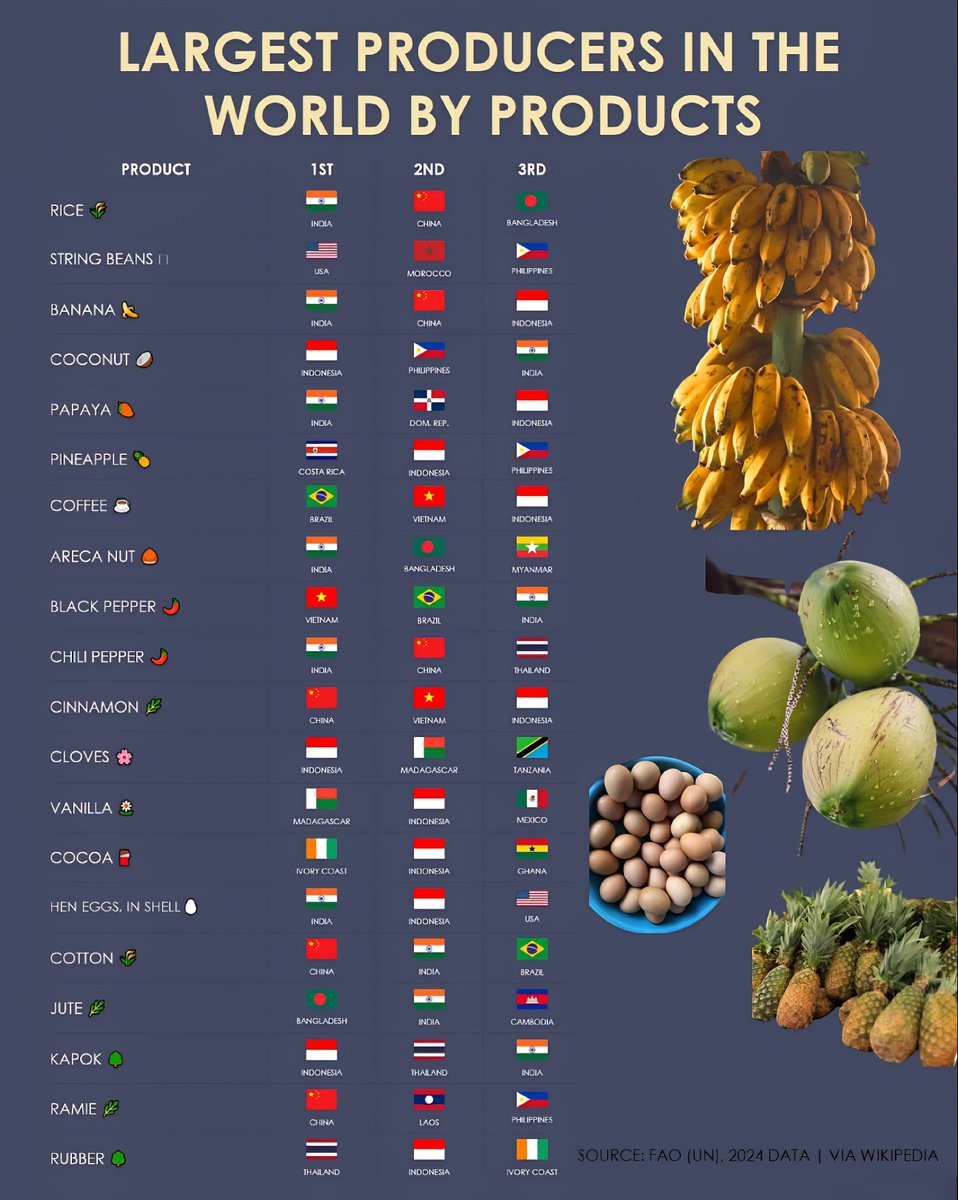
2025 Global Leaders in Agricultural and Product Production: The Top Countries
1. Rice Dominance: India Takes the Lead
India continues its reign as the world’s top rice producer, setting the pace for the global grain market. China follows closely as the second-largest producer, with Bangladesh rounding out the top three. The robust agricultural sectors in these nations contribute significantly to their economies and global food security.
2. U.S. Shines in String Beans Production
The United States is recognized as the leading producer of string beans, satisfying domestic demand and supporting export markets. Morocco claims the second spot, with the Philippines maintaining its third-place position. These countries have cultivated favorable climates and advanced farming techniques to excel in this crop.
3. Bananas: India Tops the Chart
India has cemented its status as the world’s largest banana producer, a staple fruit for millions. China is the second-largest, with Indonesia close behind. These countries’ tropical climates enable consistent and high-volume banana cultivation.
4. Indonesia and the Coconut Industry
Indonesia delivers the highest coconut production globally, exporting copra, oil, and other coconut derivatives worldwide. The Philippines takes second place, and India completes the trio. This industry is vital to these nations’ economies and daily livelihoods.
5. Papaya Production Powerhouses
India leads in papaya production, providing both fresh fruit and processed products. The Dominican Republic follows as the second-largest producer, with Indonesia in the third spot. The countries benefit from warm climates conducive to papaya cultivation.
6. Pineapple Producers: Costa Rica at the Forefront
Costa Rica remains the world’s top pineapple producer, with Indonesia and the Philippines offering significant supplies. The tropical terrain and favorable climate conditions give these nations a competitive edge in pineapple agriculture.
7. Coffee: The World’s Favorite Brew
Brazil stands as the global leader in coffee production, fueling demand worldwide. Vietnam is the second-largest producer, followed by Indonesia. These countries’ coffee sectors are crucial to their economies and the global coffee supply chain.
8. Areca Nut: Focused in Asia
India leads in areca nut production, a vital ingredient in traditional cultural practices. Bangladesh is the second-largest producer, with Myanmar also contributing significantly to the market.
9. Black Pepper: Vietnam’s Spicy Success
Vietnam has overtaken other nations as the top black pepper producer, with Brazil and India trailing behind. The spice trades are vital to the economies of these countries, especially Vietnam’s export-oriented black pepper industry.
10. Chili Peppers: India’s Fiery Field
India continues to dominate chili pepper production globally, followed by China and Thailand. The vibrant and spicy cuisine of these nations hinges on their chili cultivation, which also caters to international markets.
11. Cinnamon’s Eastern Roots
China leads cinnamon production, with Vietnam and Indonesia following. This aromatic spice is integral to regional cuisine and traditional medicine practices.
12. Clove Cultivation in Indonesia
Indonesia remains the top clove producer, with Madagascar and Tanzania also contributing to the global supply. Cloves are essential for flavoring, medicine, and traditional ceremonies.
13. Vanilla’s Madagascar Advantage
Madagascar continues to dominate vanilla production, supplying the world’s most coveted vanilla beans. Mexico and Indonesia are also key players, supporting both local economies and international markets.
14. Cocoa: The Heart of Chocolate
Ivory Coast leads global cocoa production, fueling the chocolate industry. Indonesia and Ghana are notable contributors, helping meet rising global demand for this sweet commodity.
15. Hen Eggs: India’s Leading Supplier
India produces the highest volume of eggs in shell, fueling both domestic consumption and export. Indonesia and the United States are also major producers, highlighting the importance of poultry farming.
16. Cotton: Textile’s Foundation
China remains the world’s largest cotton producer, with India and Brazil following. These countries supply raw material for a global textile industry and sustain millions of farming livelihoods.
17. Jute: Bangladesh’s Crops Prosperity
Bangladesh is the top jute producer, used extensively in packaging and textiles. India and Cambodia also contribute significantly to the global jute economy.
18. Kapok: Indonesia’s Fiber Focus
Indonesia leads in kapok production, a natural fiber used in bedding, insulation, and crafts. Thailand and India are key secondary producers, supporting regional industries.
19. Ramie: China’s Fiber Market
China’s ramie production outpaces other nations, feeding into the textile and composite industries. Laos and the Philippines follow suit in this natural fiber race.
20. Rubber: Thailand’s Dominance
Thailand remains the leading rubber producer, essential for tire manufacturing and numerous rubber products. Indonesia and Ivory Coast are significant regional contributors.
Source: FAO (UN), 2024 Data | Via Wikipedia
Note: This list reflects the latest data on the leading countries in various product productions as of 2025, highlighting the importance of these nations in the global agricultural and manufacturing sectors.
 ChatGPT
 Perplexity
 Gemini AI
 Grok AI