Select Language:
Building a successful city early on in Anno 117: Pax Romana can be tricky, especially for beginners. City-building games demand a careful balance of income, expenses, building houses, utilities, and resource management.
To give your city a strong start, it’s important to plan your layout carefully. The right setup will support your citizens and allow for growth later on. Here’s what you need to know about creating an effective early game layout in Anno 117.
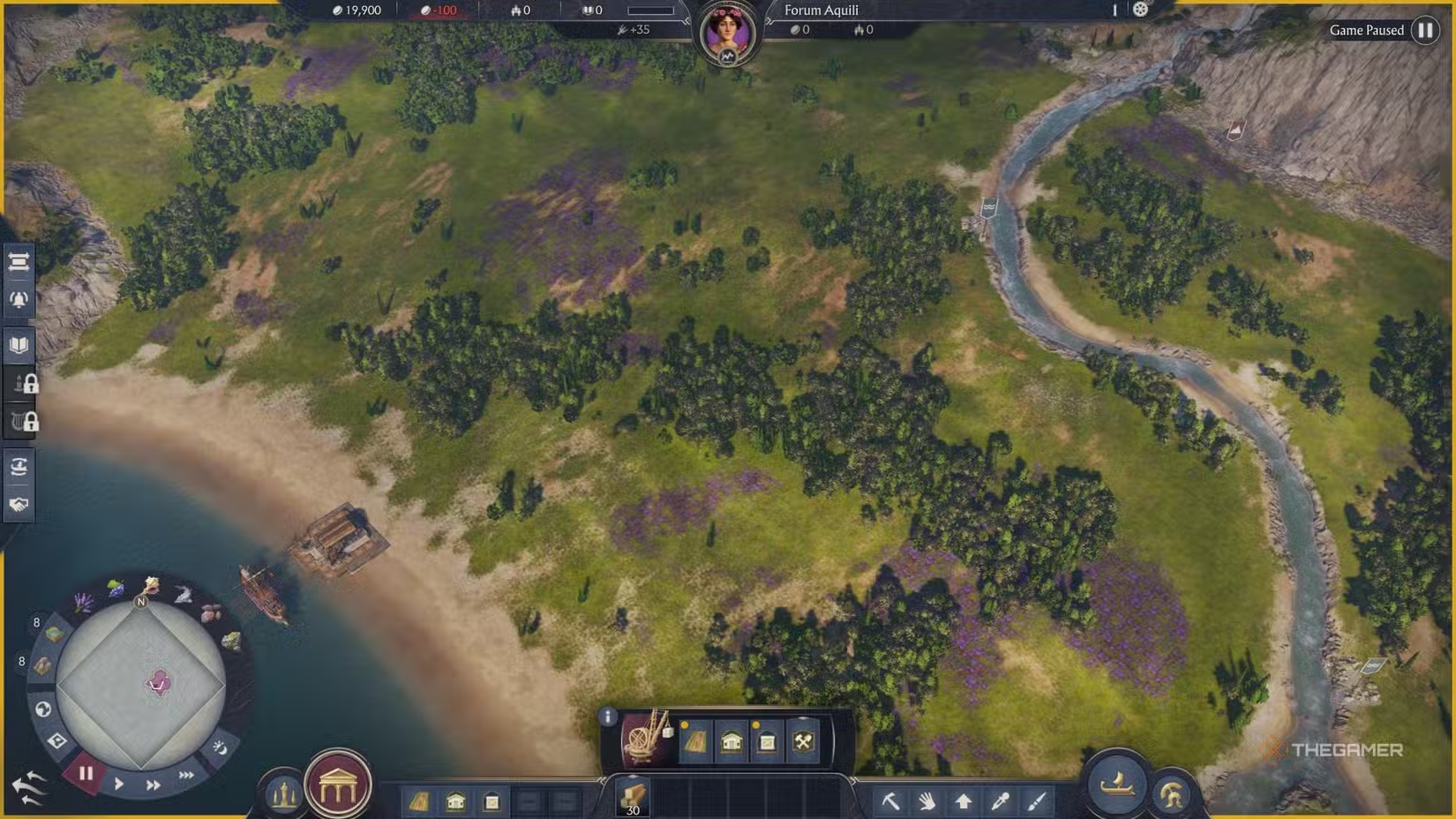
When you first arrive on your island, you’ll see a wide area filled with trees, rivers, mountains, coastlines, and sometimes marshland. All this space is meant to provide resources and room for expansion. Any resources that your land can’t supply should be imported from neighboring rivals.
A good early layout begins with narrow streets forming a large square, with a central plaza in the middle. Even if you don’t have many buildings initially, leave space for future additions. This helps keep everything organized and ready for development.
Next, allocate the land near the coast for fisheries, and place farms on the outskirts. Be cautious to keep resource-producing areas—such as coal mines and pig farms—away from your city to prevent pollution and congestion.
As your residential areas grow, build homes close to buildings that provide positive effects, like taverns, markets, and service buildings such as Vigil, Custodia, or entertainment venues. These will boost the happiness and efficiency of your residents. It’s important to keep negative-impact structures like certain production facilities out of residential zones.
Once your residents have their needs met and their happiness is high, they will upgrade to more advanced types, unlocking new resource and production options. Create a central zone that connects all buildings offering benefits—like markets, entertainment, and services—ensuring accessibility for everyone in your city.
Your initial street grid should form a large square with homes lining the streets. Keep resource-generating buildings like fisheries along the shore, and place farms on the outskirts. Avoid having resource facilities like coal or pig farms directly inside the city to reduce pollution and maintain clean living conditions.
Always review the effects of each new building before placing it. Many buildings impact the nearby residents’ happiness or health, and understanding these effects prevents long-term issues.
If you need to expand or replace buildings later, you can demolish and rebuild them elsewhere to make room for new public services or villas. As you become more familiar with how different buildings influence your city, planning your layout will become easier. If a building damages nearby residents, you can offset the negative effects with structures that provide positive effects, but it’s best to avoid doing so unless absolutely necessary.
 ChatGPT
 Perplexity
 Gemini AI
 Grok AI