
Select Language:
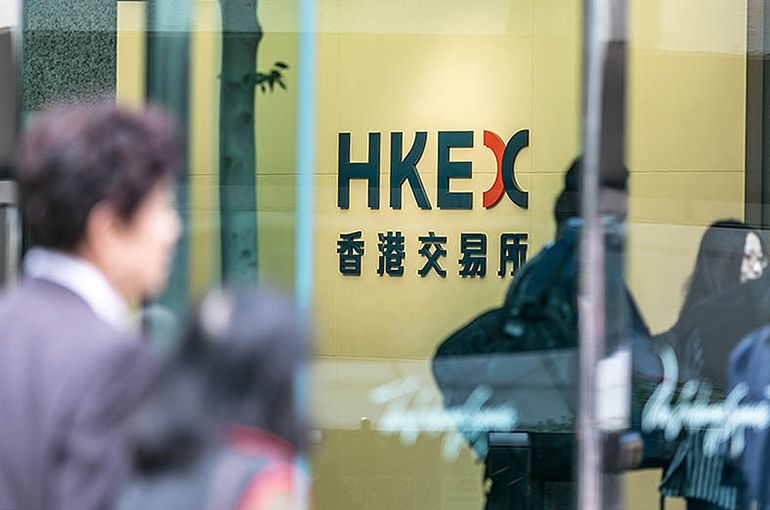
Chinese companies have been the primary drivers behind nearly a 40% increase in stock market listings in Hong Kong this year. The city’s initial public offering activity is at its highest point in nearly a decade.
So far in 2025, about 104 businesses have gone public on the Hong Kong Stock Exchange, based on data from the exchange and Wind Information.
Favorable policies, a rising stock market, and Hong Kong’s reputation as a gateway to global investors and international markets are fueling strong interest from mainland companies seeking to list locally.
One notable example is Novosense Microelectronics, an integrated circuit designer that listed there on December 8. The company aims to leverage Hong Kong as a launchpad to expand its overseas operations, according to its CEO and Chairman, Wang Shengyang.
As China’s first analog chipmaker with dual listings on both the mainland and Hong Kong, the Suzhou-based firm is targeting around 20% of its revenue from international markets by 2029, complementing its domestic business, Wang explained. Novosense plans to establish its Hong Kong office as its overseas sales and operations hub, serving global clients and developing an international supply chain.
Exports of China’s integrated circuits increased by 26% in the first 11 months of 2025 compared to the previous year, according to customs data.
“Going global is a sensitive issue this year,” Wang commented, referring to recent uncertainties highlighted by the Nexperia episode, which shed light on potential risks for Chinese firms operating abroad. “We are aware of these risks.”
Tensions between Nexperia’s Dutch headquarters and its Chinese subsidiary led to a halt in wafer shipments to the company’s Guangdong plant, as reported by Tech in Asia.
Wang pointed to geopolitical tensions as the most immediate threat but emphasized that international expansion remains essential to stay ahead in competitive sectors like automotive and energy industries.
More than 60% of Novosense’s European clients have already begun mass production, with several ordering multiple product types rather than just one. In Japan and South Korea, eight clients in power battery and automotive parts segments are also in mass production stages.
To navigate these challenges, Wang advised mainland firms to prioritize strengthening their compliance systems, such as implementing automated customer screening that clearly defines prohibited parties, to prevent direct or indirect dealings with restricted entities.
He also noted that global-market-aligned strategies are crucial for overseas growth. Novosense is addressing talent acquisition needs through a combination of expatriate assignments and local recruitment efforts.
 ChatGPT
 Perplexity
 Gemini AI
 Grok AI