Select Language:
Sad Cat Studios’ beautiful 2.5D action-platformer, Replaced, is finally available. It lets you experience an intense dystopian story while admiring its stunning, handcrafted pixel art. Each scene and environment will leave you amazed. The game lasts around 13 hours, giving you plenty to explore and enjoy in this cold, bleak world without overstaying its welcome, which is a great feature.
Although Replaced isn’t the most complex or mechanically deep game, it still has moments that require quick thinking. Missing crucial collectibles, upgrades, or getting overwhelmed by enemies is possible if you’re not careful. Once you understand the main gameplay loop and what to watch for, you’ll have a better chance of surviving in Phoenix City.
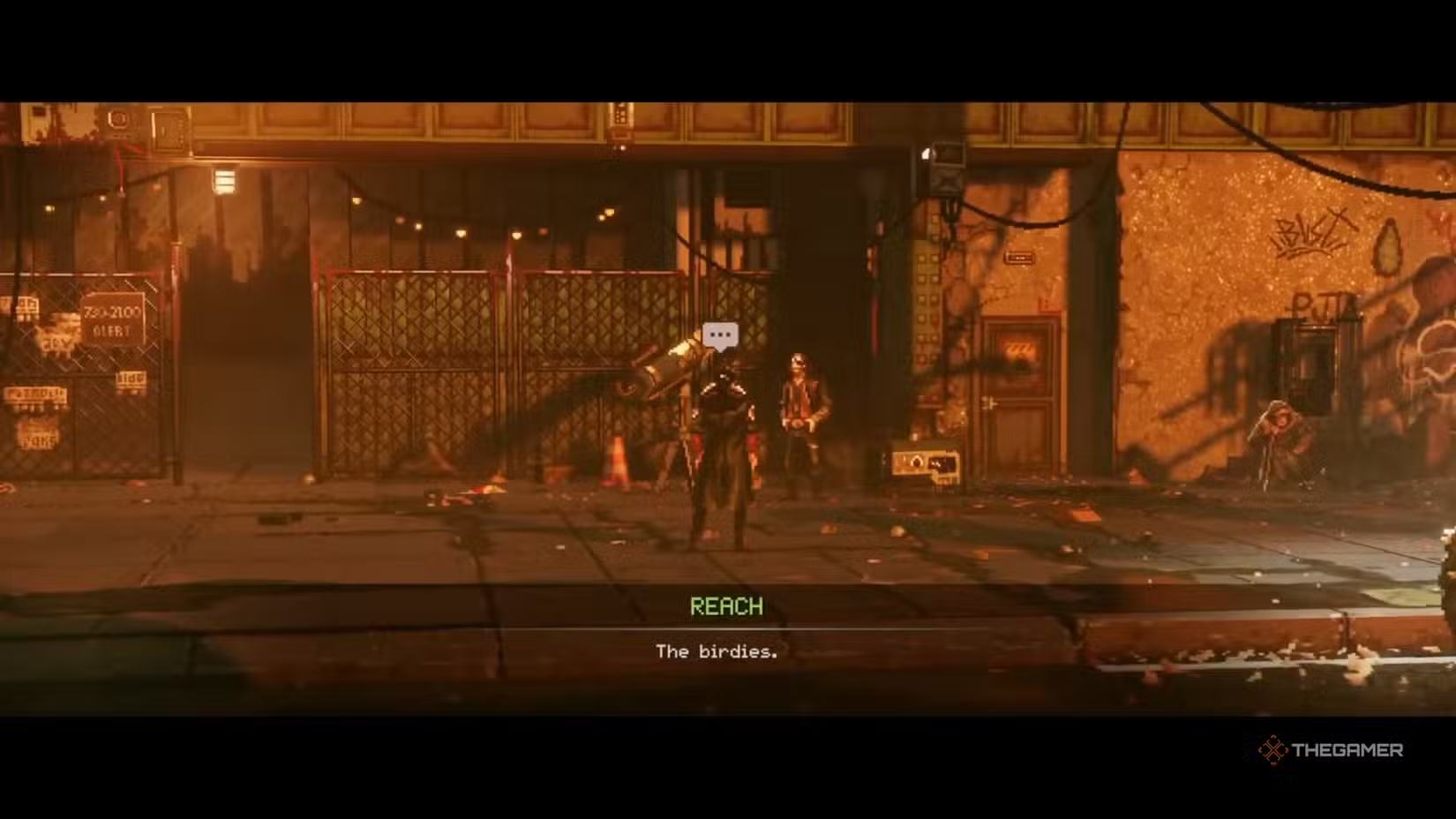
Make side-quests your top priority. As you progress, you’ll find many optional tasks that are worth completing because they reward you with some of the best upgrades. For example, early in the game, a character named David asks you to find a pair of binoculars. Finishing this lengthy quest rewards you with a “Genetic Profile 2” upgrade, which increases your maximum health—very important since you’ll often be fighting. These quest rewards vary from max health, Med-Stim upgrades, to weapon upgrades. Be sure to tackle all side-quests when they become available, as they can disappear after certain chapters, leaving you less prepared for tougher parts of the game.
Exploration is just as important as completing side-quests. You can discover valuable upgrades by exploring every area carefully. Not only does this show off the game’s breathtaking visuals and environment art, but it also helps you find upgrades like increased max health, Med-Stims, and better weapons. Some items are hidden behind puzzles or platforming challenges, and others are tied to side-quests. Exploring thoroughly will give you early advantages to face tougher enemies later on.
Choose the difficulty setting that suits you best. The game’s difficulty options matter more than they might seem. Replaced can be challenging at times, but it can also feel somewhat straightforward or mashed together in combat. Here’s a quick breakdown:
– Easy: Reduces damage taken, lowers enemy health, and gives you more Med-Stims upfront, which are replenished after fights.
– Normal: Standard damage and health for enemies. You start with fewer Med-Stims, which are replenished after combat.
– Hard: Increased damage and larger enemy health pools. You’ll recover only one Med-Stim after fights.
While Normal may feel a bit easy for fans of these games, Hard offers a more tense experience, with tougher encounters suitable for players seeking challenge. If you want combat to feel intense and less predictable, Hard is the way to go. For those more interested in story, visuals, puzzles, and platforming, Normal should be enough.
Master the dodge and counter mechanics to succeed. The combat system is similar to the Rocksteady Batman games but in beautiful 2.5D. When enemies flash red above their heads, Dodge (X/A) to avoid their attack. When they flash yellow, Counter (Triangle/Y) to parry and follow up with stronger attacks. On paper, this is simple, but it becomes harder with many enemies. To prevent being overwhelmed later, practice dodging red signals and countering yellow ones consistently. Building this muscle memory will help you handle tough fights and avoid rushing through encounters by mash-buttoning.
Use your Huxley Gun effectively. Early in the game, you’ll repair and operate the Huxley Gun, which can be used for both ranged and melee attacks. It needs energy to fire, which is replenished by landing melee strikes on enemies. Engaging in close combat charges your weapon, enabling powerful shots at a distance. Balancing offensive ranged fire with melee attacks keeps the energy charged and makes combat more dynamic. Use hit-and-run tactics: fire shots, get close to build energy, then create space for more shots. Combining ranged fire with dodging and countering makes fights exhilarating and efficient.
Your movement is vital. Dodging to the sides allows you to pass through enemies, avoiding damage and creating space for follow-up shots with your Huxley Gun. During combat, focus almost exclusively on dodging when needed. This will help you evade attacks while positioning yourself for attacks. Overusing dodge and shoot tactics early on might seem easy, but mastering them is key for imminent tough battles—your success depends on it.
Chase sequences are highly precise and tense. Many parts of the game involve high-speed chases that require precise platforming. A single misstep means restarting the sequence. To succeed, always perform longer jumps by holding down the jump button (X/A). Jumping too late or short will cause you to trip or be caught. Practice jumping early and holding the button to reach higher distances comfortably. This approach will help you pass these tense sections smoothly.
Scanning files enriches the story and world-building. Throughout Phoenix City, you’ll find scattered files indicated by glowing white orbs. When you approach and scan these, you add info to your Journal. While not affecting gameplay directly, reading these files provides valuable lore and character insights, deepening your immersion. Exploring and collecting these documents also encourages more side-quests and examination of the environment, leading to more rewards and a fuller understanding of the game’s narrative.
 ChatGPT
 Perplexity
 Gemini AI
 Grok AI