
Select Language:
An increasing number of recent college graduates in China are turning to technical schools to improve their employment prospects, with more regions developing policies to promote the creation of specialized programs focused on practical skills.
Official statistics reveal that China continues to produce a record-breaking number of university graduates—around 12.2 million last year and potentially 12.7 million this year—with many of them facing challenges in securing jobs.
In response, Beijing plans to introduce six full-time technical training programs specifically for university graduates, along with 21 skills development courses aimed at facilitating employment through more skill-oriented opportunities. Announced via the city’s human resources and social security department’s official WeChat account on April 16, these initiatives aim to bridge the gap between academic education and practical job skills.
The six technical programs will be two-year full-time courses, combining one year of on-campus study with a year of internships at partner companies. Graduates will receive both a diploma from the technical school and a vocational skill level certification, in addition to job placement assistance.
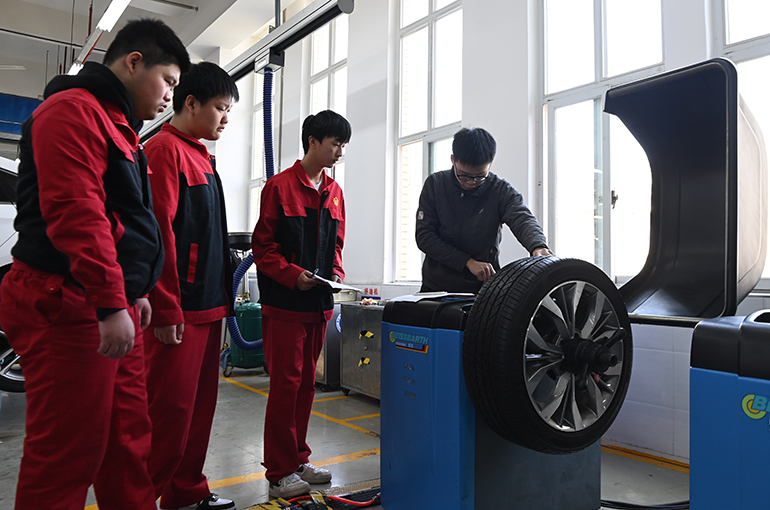
Curriculums include areas such as smart manufacturing technology, biotech pharmaceuticals, electronic technology with a focus on integrated circuit design, auto maintenance—particularly new energy vehicle engineering—and arts and crafts.
Other regions are also exploring the establishment of specialized classes for college graduates. Last year, Guangzhou Public Utility Technician College launched a preparatory program for recent bachelor’s degree holders. According to the school’s vice president, Huang Danfeng, the program will broaden its scope this year and intends to enroll over 100 students.
A recent survey conducted by a career development platform, the 2024 College Graduates Employment Capacity Research Report, indicates that over half of graduates—around 52 percent—believe that returning to school to acquire new skills would increase their chances of employment.
Ding Changfa, an associate economics professor at Xiamen University, commented that the growing trend of graduates seeking vocational courses reflects deficiencies in university curricula that often fail to align with market needs. He also suggested that relaxing policies on major changes or transfers between universities could create more opportunities for students dissatisfied with their original majors, providing pathways to better-suited career options.
 ChatGPT
 Perplexity
 Gemini AI
 Grok AI