Select Language:
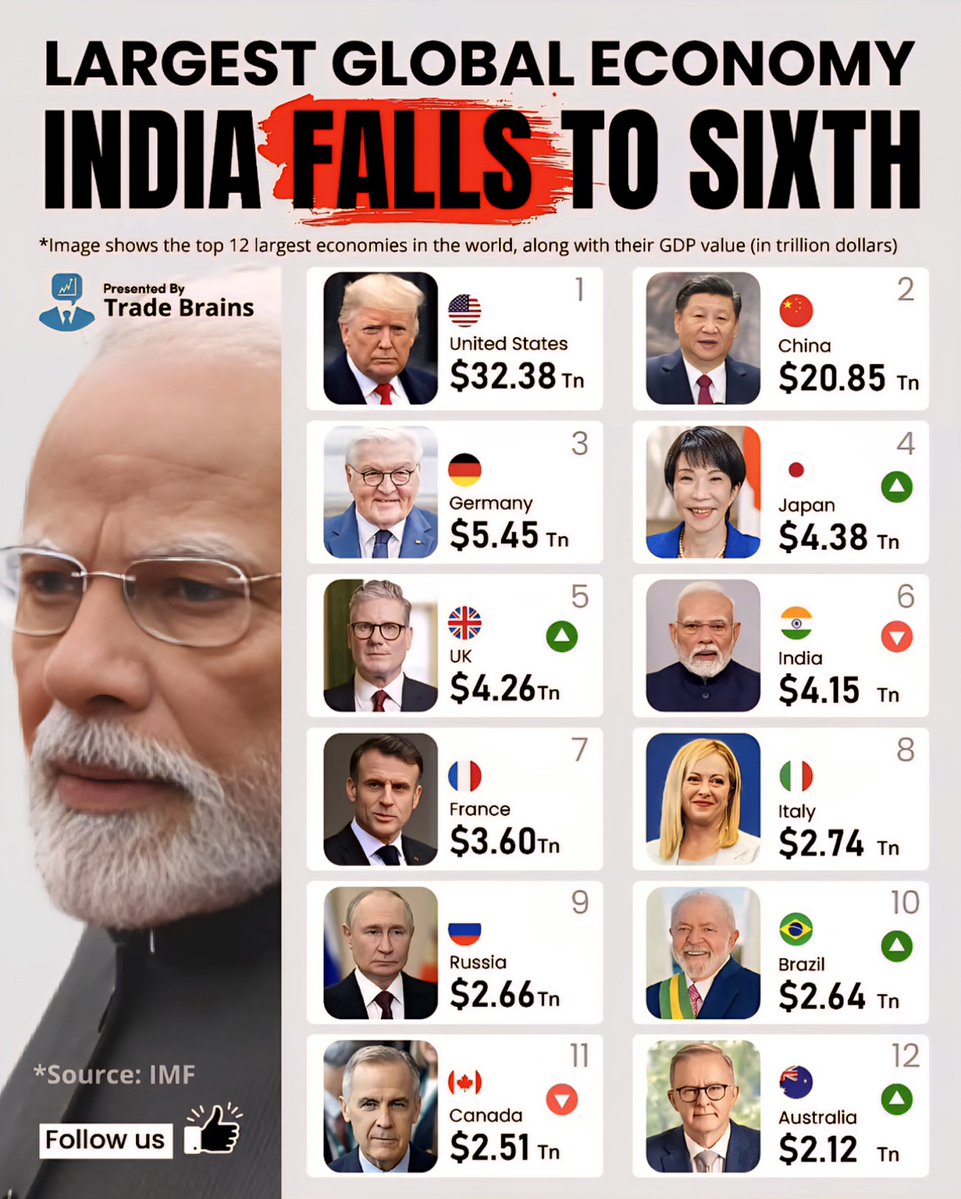
The Global Economic Powerhouses in 2025: A Detailed Breakdown
-
The United States Continues to Lead with a Massive Economy
Topping the list is the United States with a staggering Gross Domestic Product (GDP) of $32.38 trillion. Despite global economic shifts, the US economy remains largely resilient, driven by technological innovation, a vibrant consumer market, and a strong financial sector. The recent investments in AI, renewable energy, and infrastructure are expected to sustain its dominance for the foreseeable future. -
China Holds Its Ground as the Second-Largest Economy
China’s economy, valued at $20.85 trillion, remains a powerhouse despite slowing growth rates. The country’s focus on technological advancement, manufacturing, and expanding middle-class purchasing power has helped maintain its position. Recent efforts to transition toward a more sustainable and high-tech economy are further consolidating its global status. -
Germany Maintains Its Role as Europe’s Economic Backbone
The European giant, Germany, continues to hold the third spot with a GDP of $5.45 trillion. Known for its robust manufacturing and export-driven economy, Germany’s focus on automotive, machinery, and industrial technology exports keeps it competitive. The country’s commitment to renewable energy and digital transformation also positions it well for future growth. -
Japan Continues to Influence Asia’s Economy
With a GDP of $4.38 trillion, Japan remains an influential player in global markets. Its advanced technology sector, automotive industry, and innovative robotics are pivotal. Japan’s investment in biotech and sustainable tech signifies ongoing efforts to adapt to global economic changes. -
The United Kingdom Has Evolved Post-Brexit
Valued at $4.26 trillion, the UK retains its position as a major financial hub and global leader in finance, pharmaceuticals, and creative industries. Recent shifts in trade policies and efforts to bolster domestic manufacturing are part of the country’s strategic economic adjustments. -
India Drops to Sixth Place, but Still a Major Player
With an economy worth $4.15 trillion, India has slipped from its previous higher ranking, but it remains a vital emerging market. Rapid urbanization, technological expansion, and reforms in manufacturing and agriculture continue to energize its growth prospects. -
France’s Economy Remains Resilient
At $3.60 trillion, France’s economy benefits from a strong tourism sector, luxury goods, and a leading aerospace industry. Government initiatives to bolster innovation and renewable energy are anticipated to foster further progress. -
Italy Maintains Its Status as a Key European Economy
Italy’s GDP of $2.74 trillion reflects a balanced economy focused on fashion, design, and manufacturing. Efforts to modernize infrastructure and boost technological sectors are critical to its future growth. -
Russia’s Economy Stabilizes Amid Geopolitical Challenges
Valued at $2.66 trillion, Russia’s economy is heavily reliant on energy exports. Ongoing diversification efforts and sanctions evaluations are shaping its economic trajectory in an uncertain geopolitical environment. -
Brazil’s Economy Remains Latin America’s Largest
With a GDP of $2.64 trillion, Brazil benefits from abundant natural resources, agriculture, and evolving manufacturing sectors. Structural reforms and investment in technology are seen as vital for future expansion. -
Canada Maintains Its Wealth Through Natural Resources and Innovation
Canada’s economy, valued at $2.51 trillion, is driven by energy, mining, and technological innovation. Its skilled workforce and stable political environment make it attractive for foreign investments. -
Australia Rounds Out the Top 12 with a Focus on Minerals and Agriculture
With a GDP of $2.12 trillion, Australia’s economy leverages its rich mineral resources, agricultural exports, and emerging technology sectors, maintaining its position among the world’s largest economies.
Source: IMF via Trade Brains
This year’s economic landscape underscores the shifting dynamics among global powers, with emerging markets demonstrating resilience despite past challenges. The rankings reveal a world where innovation, sustainability, and geopolitical strategies increasingly influence economic dominance.
 ChatGPT
 Perplexity
 Gemini AI
 Grok AI