Select Language:
President Donald Trump’s warnings about attacking Iran lack specifics regarding the long-term U.S. objectives if a conflict occurs, whether prolonged or brief. He has deployed warships and dozens of fighter aircraft to the Middle East, with multiple options that could cause regional instability.
These options include targeted strikes against Iran’s Islamic Revolutionary Guard Corps, which is the regime’s core, potentially targeting its missile program—as Israel has urged—or even initiatives aimed at regime change in Tehran. Iran has warned that it would retaliate severely if attacked.
Trump stated last Thursday that he would make a decision within 10 to 15 days on whether to order strikes if Iran and the U.S. fail to reach a nuclear agreement. Reports from Axios indicate he has been presented with several military options, including a possible direct attack on Iran’s top leader, Ayatollah Ali Khamenei.
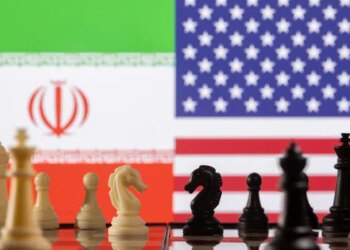
While Trump has expressed a preference for diplomatic solutions that address Iran’s nuclear ambitions, missile capabilities, and support for groups like Hezbollah and Hamas, Iran has refused to make such concessions. Recent indirect talks in Oman and Switzerland have yet to bridge the gap between the two nations, with discussions resuming soon in Switzerland.
His envoy Steve Witkoff has noted Trump’s surprise that Iran has not capitulated amid the significant military buildup by the U.S. military. Analysts like Alex Vatanka believe the goal might be a limited, high-impact military campaign aimed at damaging Iran’s missile infrastructure, diminishing its deterrent, and shifting the regional balance of power—particularly after previous confrontations with Israel.
Trump has maintained that U.S. military operations have crippled Iran’s nuclear efforts, especially through attacks on uranium facilities, and that he has sought to help Iranian protesters during recent unrest. He claims that regime change in Iran could promote regional peace, though Democrats warn that his approach risks escalating violence and call for congressional approval for any military action.
The U.S. currently maintains a substantial naval presence in the Middle East, including the aircraft carrier USS Abraham Lincoln, nine destroyers, and three frigates. Additional ships like the USS Gerald Ford are en route to the Mediterranean, complementing the dozens of warplanes and tens of thousands of troops stationed across the region, all potential targets for Tehran.
Experts like Richard Haas highlight uncertainty about the outcomes of any military engagement, noting it could either strengthen or weaken Iran’s government. Similarly, Secretary of State Marco Rubio emphasized the unpredictability of Iran’s collapse, implying that a transition might eventually lead to better prospects, though the ramifications remain uncertain.
Gulf Arab monarchies, with close ties to Iran, have cautioned Trump against intervention, fearing retaliation and regional destabilization. Mona Yacoubian of the Center for Strategic and International Studies points out that Iran’s complex power structure makes a sudden decapitation strike risky, potentially unleashing chaos inside the country rather than resolving issues.
 ChatGPT
 Perplexity
 Gemini AI
 Grok AI