Select Language:
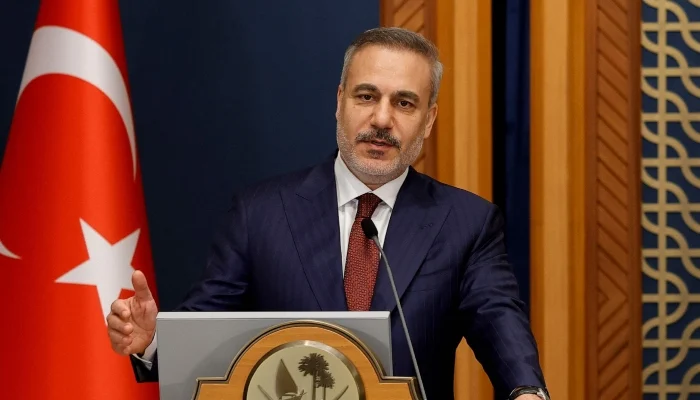
Turkish Foreign Minister Hakan Fidan stated on Monday that Israel “cannot survive without an enemy,” and described the current Israeli government’s actions as adopting a strategy to portray Turkey as one.
“In addition to Iran, Israel cannot exist without an adversary,” Fidan said in a live broadcast with the state news agency Anadolu. “We observe that not only Prime Minister Netanyahu’s government but also some opposition figures—though not all—are aiming to declare Turkey the new enemy.”
He characterized this as a “new development in Israel, turning into a national policy.” Tensions between Turkey and Israel have been rising since conflicts in Gaza erupted after Hamas’s October 7, 2023, attack on Israel.
Over the weekend, the situation escalated further when President Recep Tayyip Erdogan warned U.S. President Donald Trump of potential provocations and sabotage that could threaten an initial ceasefire agreement in the ongoing US-Israel-Iran conflict.
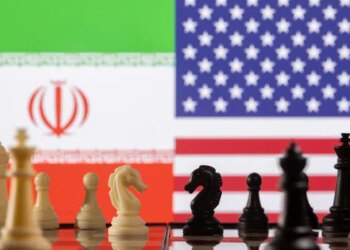
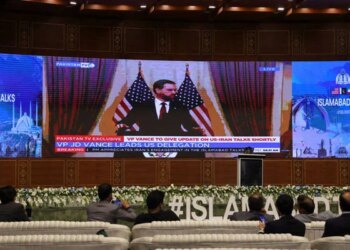
Previously, Prime Minister Shehbaz Sharif announced a two-week ceasefire between Tehran and Washington on April 8, bringing an end to the six-week conflict that started on February 28 when the U.S. and Israel launched a joint bombing campaign against Iran.
Following Erdogan’s warnings about possible disruptions, Israeli Prime Minister Benjamin Netanyahu reaffirmed Israel’s intention to press on with confronting Iran and its regional allies.
In response, Turkey accused Netanyahu of aiming “to undermine ongoing peace negotiations and continue his expansionist regional policies,” adding that the Israeli leader might face trial at home and could be sentenced on corruption charges.
The Turkish Foreign Ministry also referenced an arrest warrant issued by the International Criminal Court against Netanyahu on charges of war crimes and crimes against humanity, describing him as “the Hitler of our time” due to his alleged crimes.
Additionally, Fidan called on NATO allies to use the upcoming summit in Ankara in July as an opportunity to recalibrate their relationship with the U.S. and plan for a possible reduction in American engagement within the alliance.
He expressed confidence that Trump would likely attend the summit because of his personal respect for Erdogan, although he acknowledged Trump’s reluctance. Trump has previously criticized NATO and threatened to withdraw the U.S. from the alliance over European nations’ refusal to send ships to clear the Strait of Hormuz near Iran.
Fidan stressed that NATO nations should consider this summit as a chance to formalize their ties with the U.S. and develop a structured plan should U.S. involvement decrease, so that no member is left unprepared.
NATO Secretary-General Mark Rutte has acknowledged Trump’s frustrations with the alliance but noted that most European countries have supported Washington’s efforts in Iran. A White House official mentioned that Trump has even considered pulling some U.S. troops out of Europe as part of his dissatisfaction with NATO’s current state.
 ChatGPT
 Perplexity
 Gemini AI
 Grok AI