Select Language:
Signatories of the historic nuclear non-proliferation treaty convened Monday at the United Nations as concerns about a renewed arms race grow, with nuclear powers once again at odds over safety measures.
In 2022, during the previous review of the treaty—considered the foundation of non-proliferation efforts—UN Secretary-General Antonio Guterres warned that humanity was “one misunderstanding, one miscalculation away from nuclear annihilation.”
On Monday, he cautioned that “the factors driving” nuclear weapons proliferation are accelerating.
Guterres stated, “For too long, the treaty has been deteriorating. Commitments have gone unmet. Trust and credibility are weakening. The forces promoting proliferation are speeding up. We need to reinvigorate the treaty.”
Amid heightened global geopolitical tensions since the last meeting, it remains uncertain what this gathering at the UN headquarters can accomplish.
France’s Foreign Minister Jean-Noel Barrot told delegates that “never before has the risk of nuclear proliferation been so high, and the threat posed by Iran’s and North Korea’s programs is unacceptable for every member of this treaty.”
Lowering expectations, Do Hung Viet, Vietnam’s UN ambassador and the conference president, said: “We shouldn’t anticipate that this conference will resolve the underlying strategic tensions of our era.”
“But a balanced outcome that reaffirms essential commitments and outlines practical steps forward could enhance the integrity of the NPT,” he added.
“The success or failure of this gathering will have impacts far beyond these walls,” Viet warned. “The threat of a new nuclear arms race looms over us.”
The nuclear non-proliferation treaty (NPT), signed by nearly every nation except Israel, India, and Pakistan, seeks to prevent the spread of nuclear weapons, promote disarmament, and foster cooperation on civilian nuclear technology.
As of January 2025, the nine nuclear-armed states—Russia, the United States, France, the United Kingdom, China, India, Pakistan, Israel, and North Korea—held a combined total of 12,241 nuclear warheads, according to the Stockholm International Peace Research Institute (SIPRI).
The U.S. and Russia possession accounts for roughly 90% of the world’s nuclear arsenals, with both countries investing heavily in modernization efforts in recent years, SIPRI reports.
China has also rapidly expanded its nuclear stockpile, prompting G7 nations to voice alarm over Moscow and Beijing boosting their nuclear capacities.
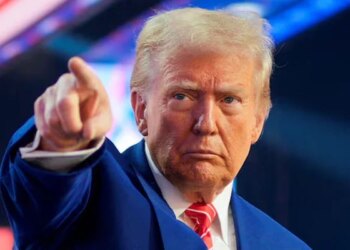
President Donald Trump indicated plans for new nuclear tests, accusing others of secretly conducting theirs.
In March, French President Emmanuel Macron announced a significant shift in nuclear deterrence strategy, including an increase in France’s nuclear arsenal, which currently stands at 290 warheads.
An “affront” to the NPT, according to Seth Shelden of the International Campaign to Abolish Nuclear Weapons—a Nobel Peace Prize laureate—stated that “trust is eroding both inside and outside the treaty.”
He expressed doubts about the summit’s potential outcomes, noting that decisions require consensus, and previous conferences failed to pass final political statements.
Historically, deadlocks have resulted from disagreements over regional issues, such as Israel’s opposition to a nuclear-weapon-free zone in the Middle East and Russia’s objections related to Ukraine’s Zaporizhzhia nuclear plant.
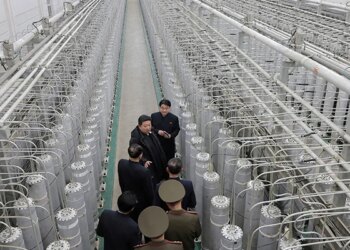
This year’s summit faces numerous potential obstacles, including the ongoing conflict in Ukraine, Iran’s nuclear program, proliferation fears, and North Korea’s advancing nuclear capability.
The U.S., along with Britain, the UAE, and Australia, criticized Iran’s appointment as a conference vice president, calling it an “affront” to nations that take the NPT seriously.
Additionally, artificial intelligence is emerging as a prominent issue, with some nations advocating for strict human control over nuclear weapons.
 ChatGPT
 Perplexity
 Gemini AI
 Grok AI