
Select Language:
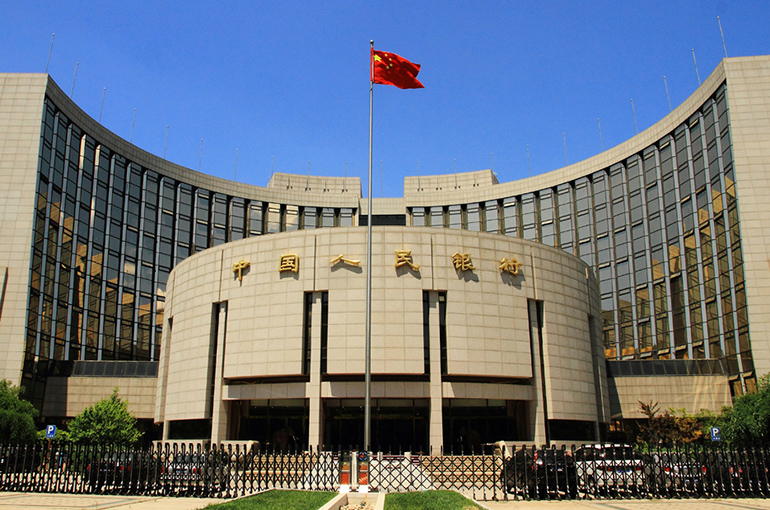
China’s central bank has been drawing funds from the banking system for three consecutive months through a three-month outright reverse repurchase operation. However, analysts view this move as a liquidity stabilization effort rather than a shift away from its “moderately loose” monetary policy stance.
To ensure sufficient liquidity, the People’s Bank of China announced it will carry out a CNY300 billion (USD44 billion) three-month outright reverse repo today, using an interest-rate bidding process with multiple winning prices, according to a notice released on April 30.
With CNY800 billion of similar maturities scheduled to mature this month, this operation results in a net withdrawal of CNY500 billion, marking the largest net drain via this method since May of last year.
The open market faces increasing pressure from maturing medium- and long-term funds in May. A total of CNY2.1 trillion (USD308 billion) will come due this month, the second-highest monthly figure this year, predominantly concentrated in the latter half of May, based on public data.
Most analysts agree that the central bank’s operations now focus on maintaining stability. They anticipate liquidity moving out of an extremely loose phase this month, remaining overall neutral or slightly accommodative.
The net withdrawals for three consecutive months, and the larger amount this time, mainly reflect ongoing easing of market liquidity since April, said Wang Qing, chief macro analyst at Orient Credit Rating.
Wang noted that recent operations indicate a desire to keep liquidity stable and prevent key market rates from falling too far below policy rates, thus helping stabilize expectations. He emphasized that this does not signify a change in monetary policy but is part of a smoothing process.
Dong Ximiao, chief economist at Zhaolian Consumer Finance, explained that the central bank is increasingly relying on a range of monetary tools to adjust liquidity efficiently while targeting specific sectors like technological innovation, consumption, and small and micro enterprises, instead of broad liquidity injections.
Dong affirmed that the “moderately loose” policy remains in place. If market rates rise back toward policy rates, tools like outright reverse repos, medium-term lending facilities, and others could shift to net injections to support government bond issuance, he added.
Although funding conditions in May may return to a more normal, albeit unusually loose seasonal level, they are expected to stay neutral or slightly accommodative. The reason, according to Tan Yiming, chief fixed-income analyst at Tianfeng Securities, is that liquidity in the interbank market may be difficult to unwind quickly, and the central bank lacks the basis for a sharp tightening of liquidity.
 ChatGPT
 Perplexity
 Gemini AI
 Grok AI