

Select Language:
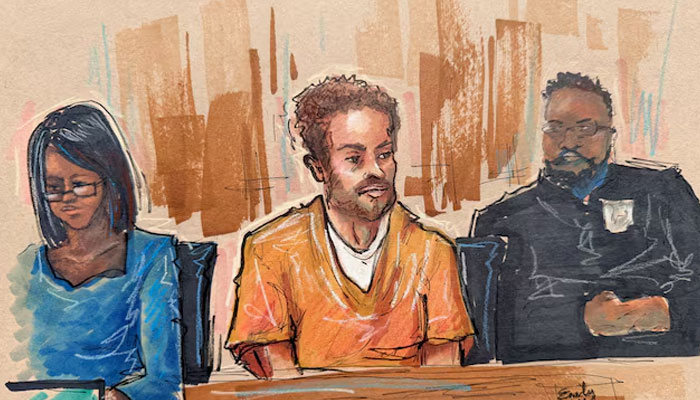
The Department of Homeland Security has identified the ongoing US-Israeli conflict with Iran as a possible reason behind the man accused of trying to assassinate President Donald Trump and high-ranking officials at a White House reporters’ event last month. This assessment was shared with law enforcement agencies across the country and other federal entities via an intelligence report.
An early analysis from DHS’s Office of Intelligence and Analysis, dated April 27, suggests that Cole Allen harbored numerous social and political frustrations. The report indicates that the Iran conflict “may have influenced his decision to carry out the attack,” supported by Allen’s social media posts criticizing US involvement in the war.
This new insight adds context to the investigation into the attempted attack on the White House Correspondents’ Dinner on April 25. While still in preliminary stages, the findings provide the strongest evidence yet linking the Iran conflict— which has caused thousands of deaths in the Middle East and impacted the global economy—as a potential trigger.
The document, labeled as a “Critical Incident Note,” was retrieved through public records requests by the nonprofit organization Property of the People and has been shared with Reuters.
A DHS spokesperson declined to comment on the report’s specifics.
“These reports keep our partners informed with the latest intelligence after significant incidents that could impact homeland security,” the spokesperson stated.
The FBI has also chosen not to comment, and the Justice Department did not respond to requests for further information.
On Tuesday, the Justice Department announced an additional charge against Allen for assaulting a federal officer. This charge stems from him allegedly firing at a U.S. Secret Service agent at a security checkpoint, on top of charges of attempted murder, discharging a firearm during a violent crime, and illegally transporting firearms and ammunition across state lines. Allen has not yet entered a plea.
Investigation of Social Media Activity
U.S. officials have yet to reveal much about Allen’s motivations, apart from an email he sent to relatives on the night of the assault. The message, reportedly a manifesto, expressed anger towards the administration and mentioned his intention to target the “traitor” giving a speech—without explicitly naming Trump.
Prosecutors allege that Allen disagreed politically with Trump and wanted to oppose government actions he deemed morally wrong. The FBI is thoroughly examining Allen’s social media presence and digital footprint to uncover additional motives, according to an anonymous law enforcement official.
This review includes posts on a Bluesky account connected to Allen, where he shared several anti-Trump messages leading up to the incident. These posts also criticized U.S. actions in Iran, the Trump administration’s immigration policies, Elon Musk, and Russia’s conflict in Ukraine.
For example, the account called for Trump’s impeachment after his threat to “destroy Iranian civilization” on April 7—just hours before Trump announced a ceasefire. It also criticized reporters attending the dinner.
Additionally, a 2024 post quoting a Bible verse included a comment labeling Trump as “the devil” in response to a message from Trump’s daughter, Tiffany.
The focus on Allen’s online activity aims to dispel conspiracy theories suggesting his motives. Such theories proliferated around the online activity of a man who fired at Trump during a campaign rally in Pennsylvania last year.
 ChatGPT
 Perplexity
 Gemini AI
 Grok AI

