Select Language:
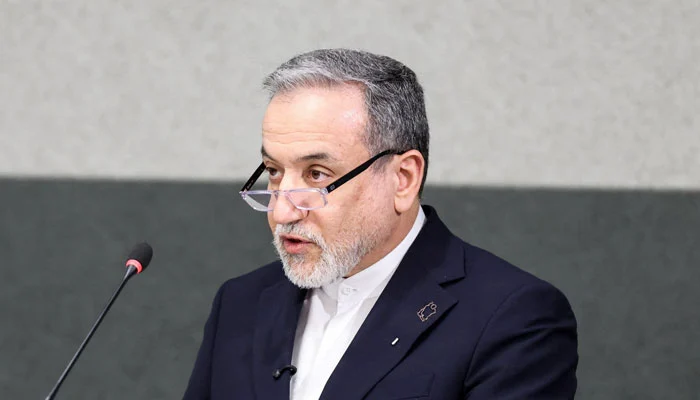
Iran’s Foreign Minister Abbas Araghchi stated that progress has been made on the core guiding principles during a second round of nuclear negotiations in Geneva. He urged the United States to cease threatening the use of force against Iran, expressing hope that these talks will eventually lead to a sustainable, negotiated resolution.
Following the discussions, Araghchi told Iranian media that while an agreement isn’t imminent, the process has officially begun. Earlier reports indicated Iran planned to temporarily block a section of the Strait of Hormuz—a critical global oil route—during the negotiations, amid U.S. military efforts pressing Iran for concessions.
U.S. President Donald Trump has mentioned that “regime change” in Tehran might be the best outcome, whereas Iran’s Supreme Leader Ayatollah Ali Khamenei emphasized that any U.S. attempts to overthrow his government would fail. As Geneva talks commenced, Iranian state media announced a brief closure of parts of the Strait of Hormuz for “security reasons” during military exercises by Iran’s Revolutionary Guards. Iran has previously threatened to shut down the strait in response to attacks, which would significantly disrupt global oil supplies and hike crude prices.
In the negotiations, U.S. envoy Steve Witkoff and Jared Kushner participated alongside Araghchi, with Oman serving as mediator, according to a source familiar with the matter. During a disarmament conference in Geneva, Araghchi called on the U.S. to immediately stop threats of force against Iran, asserting that any enduring agreement must acknowledge Iran’s legitimate rights. He expressed optimism, stating, “A new window of opportunity has opened, and we are hopeful negotiations will lead to a sustainable, negotiated solution.”
 ChatGPT
 Perplexity
 Gemini AI
 Grok AI