Select Language:
Iran issued a warning last week regarding the vulnerability of submarine cables in the Strait of Hormuz, emphasizing their importance to the region’s digital economy and raising alarms about potential targeted attacks on critical infrastructure.
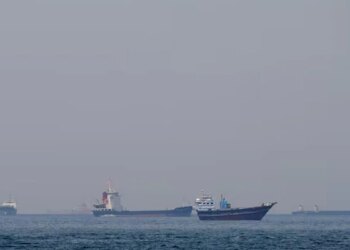
This strategic waterway, already recognized as a major choke point for global oil shipments, is also crucial for digital connectivity. Multiple fiber-optic cables run beneath the seabed of the strait, linking countries from India and Southeast Asia to Europe through Gulf states and Egypt.
Why are undersea cables vital?
Subsea cables, which are fiber-optic or electrical lines laid on the ocean floor, facilitate the transmission of data and electricity. They handle approximately 99% of global internet traffic, as stated by the International Telecommunication Union (ITU), a UN agency dedicated to digital technologies.
Beyond internet data, these cables support international telecommunications and power transfers, underpinning cloud services and online communications worldwide.
“Any damage to these cables can lead to slower internet speeds or outages, disrupt e-commerce, delay financial transactions, resulting in considerable economic impacts,” explained Masha Kotkin, a geopolitical and energy analyst.
Gulf nations like the UAE and Saudi Arabia have invested heavily in artificial intelligence and digital infrastructure, aiming to diversify their economies beyond oil. Their national AI companies depend on these underwater cables to transfer vast amounts of data at rapid speeds.
Key cables passing through the Strait include the Asia-Africa-Europe 1 (AAE-1), linking Southeast Asia to Europe via Egypt with GTF landing points in the UAE, Oman, Qatar, and Saudi Arabia; the FALCON network connecting India and Sri Lanka to Gulf countries, Sudan, and Egypt; and the Gulf Bridge International Cable System, which connects all Gulf countries, including Iran.
Ongoing projects include a system spearheaded by Qatar’s Ooredoo.
What are the main risks?
Despite the rapid expansion of submarine cable networks from 2014 to 2025, the annual fault rate remains steady at about 150 to 200 incidents, according to the ICPC. While state-backed sabotage is a concern, most faults—70 to 80%—are accidental, caused by fishing activities or ships dropping anchors.
Other hazards include undersea currents, earthquakes, submarine volcanoes, and typhoons. Industry experts like Alan Mauldin say companies mitigate these risks by burying cables, reinforcing them with armor, and choosing safer routes.
The ongoing conflict between the US, Israel, and Iran, now nearing two months, has led to significant disruptions across regional infrastructure and the global energy supply, including attacks on data centers in Bahrain and the UAE. Fortunately, subsea cables have remained unscathed so far.
However, there’s an added danger from vessels inadvertently damaging cables during military operations by dragging anchors. As Masha Kotkin notes, “With active hostilities continuing, the risk of unintentional damage increases, especially the longer the conflict persists.” A previous incident in 2024 involved a vessel attacked by Iran-backed Houthis that drifted in the Red Sea and severed cables with its anchor.
The extent of connectivity disruption for Gulf countries will largely depend on how heavily individual networks rely on these cables and whether alternative routes exist.
Challenges in repair
Restoring damaged cables, especially in conflict zones, presents numerous challenges. While physically repairing the cables isn’t overly complicated, factors such as security concerns, the risk of fighting, mines, or the presence of wreckage can complicate access. Obtaining permits to enter territorial waters can also cause delays; Mauldin explains this process can sometimes be time-consuming and problematic.
Post-conflict, companies will need to re-examine the seabed to update safe cable routes and steer clear of wreckage or other hazards left behind during hostilities.
What if subsea cables are compromised?
While land-based links ensure that total internet shutdowns are improbable, experts agree that satellite systems cannot fully substitute for undersea cables, primarily because they lack the capacity to handle heavy data loads and are more costly.
Mauldin emphasizes, “Switching completely to satellites isn’t a practical option,” noting that satellites work better for mobile or moving platforms like airplanes and ships.
Low-Earth orbit networks such as Starlink currently serve as niche solutions, limited in scalability to serve millions of users, according to Kotkin.
 ChatGPT
 Perplexity
 Gemini AI
 Grok AI