Select Language:
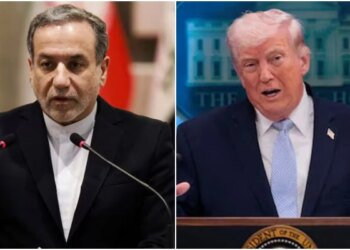
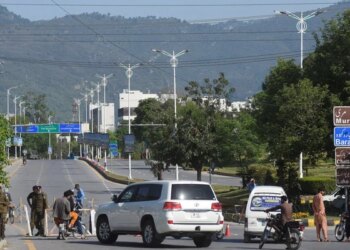
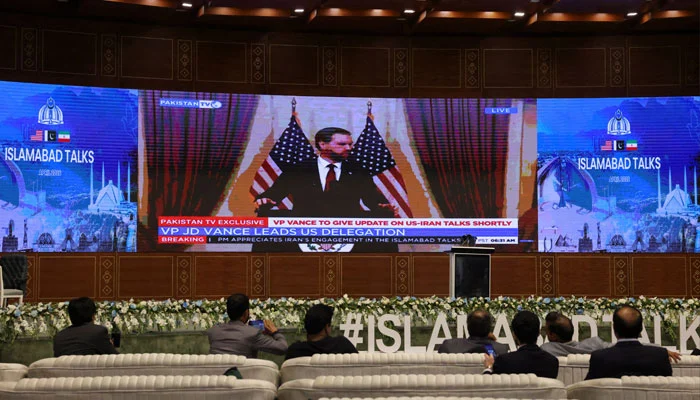
Iran and the United States did not reach an agreement during Sunday’s peace talks in Islamabad, but no immediate hostilities occurred, with global leaders calling for continued diplomacy. US Vice President JD Vance, leading the delegation, departed Pakistan after what was the highest-level meeting between the two nations since 1979. He stated that Washington had presented Tehran with its “final and best offer” and indicated that the decision now depended on Iran’s response. “We leave here with a straightforward proposal,” Vance said. “It’s up to the Iranians to accept it.”
Iran’s parliamentary speaker, Mohammad Bagher Ghalibaf, mentioned that his team had made “constructive proposals,” but ultimately, the Iranian delegation’s trust was not secured by the other side. Reports indicated that the key issues—who would control the Strait of Hormuz and whether Iran would be able to enrich uranium—remained unresolved. As the talks concluded without an agreement, world leaders urged both nations to keep negotiating to avoid further escalation.
Pakistan’s Foreign Minister Ishaq Dar, who hosted the talks and acted as facilitator, emphasized the importance of maintaining the ceasefire and continuing diplomatic efforts. “Pakistan remains committed to facilitating engagement and dialogue between Iran and the U.S. in the coming days,” he said in a statement aired by state media.
A European Union spokesperson highlighted diplomacy’s critical role, acknowledging the failed negotiations but expressing support for Pakistan’s mediating efforts. Brussels pledged to contribute further to find a lasting solution in collaboration with international partners.
Meanwhile, Russian President Vladimir Putin offered to assist Iran by mediating efforts to restore peace in the Middle East, according to the Kremlin. “Putin underscored his willingness to support political and diplomatic solutions, seeking a just and enduring peace in the region,” the Kremlin announced after a phone call with Iran’s Masoud Pezeshkian.
In the UK, Health Minister Wes Streeting voiced disappointment over the missed opportunity for breakthrough negotiations, emphasizing that failure is part of the diplomatic process. “While these talks didn’t result in success, continuing efforts are still worthwhile,” he said.
Australian Foreign Minister Penny Wong stressed that the priority remains to sustain the ceasefire and resume talks, expressing regret that the Islamabad negotiations did not yield an agreement.
 ChatGPT
 Perplexity
 Gemini AI
 Grok AI