
Select Language:
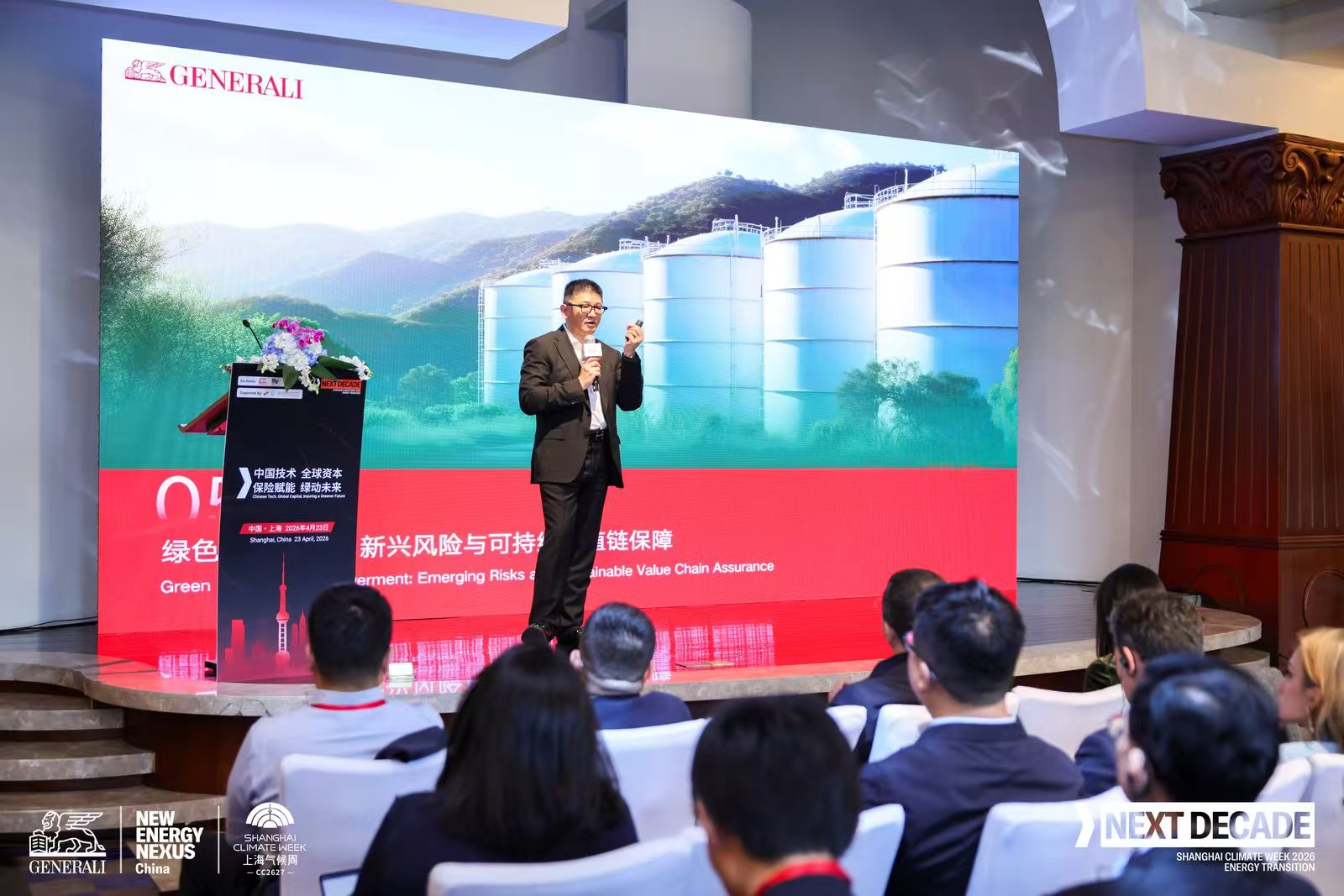
The growth of China’s renewable energy sector is rapid, with solar, wind, and energy storage projects ranking among the world’s leading. However, many of these major green energy assets remain underinsured or uninsured, according to experts participating in Shanghai Climate Week.
“The transition to green energy fundamentally hinges on substantial financial investment,” said the CEO of a leading insurance firm specializing in China. “A key factor is bankability, and insurability plays a critical role in that.”
More than 270 billion yuan (approximately $37 billion) worth of China’s high-risk energy storage assets currently lack adequate insurance coverage, as revealed in a joint white paper by a major insurance provider and a prominent university. The total amount of uninsured assets is increasing by over 160 billion yuan annually.
While the insurance market for renewable energy in China is sizable, it suffers from a lack of technological innovation—particularly among local insurers hesitant to cover risks where reinsurers are reluctant to participate, according to a managing director at a Shanghai-based brokerage firm.
Data Challenges
Insurers are not averse to the idea but face hurdles due to a lack of pricing tools, especially regarding data, explained the industry expert. “There’s market demand and a notable gap in risk coverage, but the shortage of reliable data hampers progress,” he added.
Technological advances in energy storage over the past five years have seen multiple iterations, rendering historical claims data—on which traditional insurance models depend—less relevant for current technologies, the expert noted. Additionally, China has yet to implement mandatory energy storage insurance regulations at the national level, leaving the market still in its exploratory phase.
Another significant obstacle is the sheer volume of data generated in energy storage operations. For instance, a mid-sized storage facility can produce several terabytes of data daily—comparable to fifty years’ worth of historical records for conventional insurers.
This is where artificial intelligence can make a difference. “Instead of solely looking backward, we need to project risks dynamically and price them in real time,” the expert emphasized. “This is where real opportunity lies.”
Green insurance now makes up approximately 15% of the portfolio for the leading global insurer in China, a substantial increase from 3% five years ago. Industry forecasts predict that green insurance could constitute 42% of China’s property and casualty insurance market by 2030.
China added 373 gigawatts of renewable energy capacity in 2024—a 23% rise from the previous year—accounting for over 60% of global additions, per the National Energy Administration.
The renewable energy industry is trending toward a Risk-as-a-Service model, where clients purchase outcomes with clear financial backing, such as a guaranteed lifetime energy throughput. The white paper projects that the global market for energy storage Risk-as-a-Service will grow from approximately $11 billion last year to about $178 billion by 2035.
Transforming this sector requires collaboration; no single entity can do it alone. “We see ourselves as explorers,” the expert stated. “More broadly, we aim to build an ecosystem and expand our network of partners within that ecosystem.”
International Expansion
The insurance coverage gap widens as Chinese renewable energy companies expand abroad. Eight of the top ten energy storage system suppliers worldwide are Chinese, according to the white paper.
Operational risks—such as underestimating local regulatory requirements or labor challenges—are often more underestimated than technical risks, the expert explained.
He highlighted that insurers’ value extends beyond just indemnification after a loss. “Our hope is that nothing goes wrong,” he said. “Insurance companies should deploy technology not only for pricing and risk assessment but also for preventing losses and reducing risks, minimizing the likelihood of claims.”
Many countries require insurance policies to be issued locally, posing a real challenge for Chinese insurers without an established local presence. “This is a primary reason why many businesses turn to overseas insurers,” he noted.
As a globally operating company, the insurance provider leverages its international network and local expertise to help clients bridge this gap through its Chinese arm, the expert added.
 ChatGPT
 Perplexity
 Gemini AI
 Grok AI