Select Language:
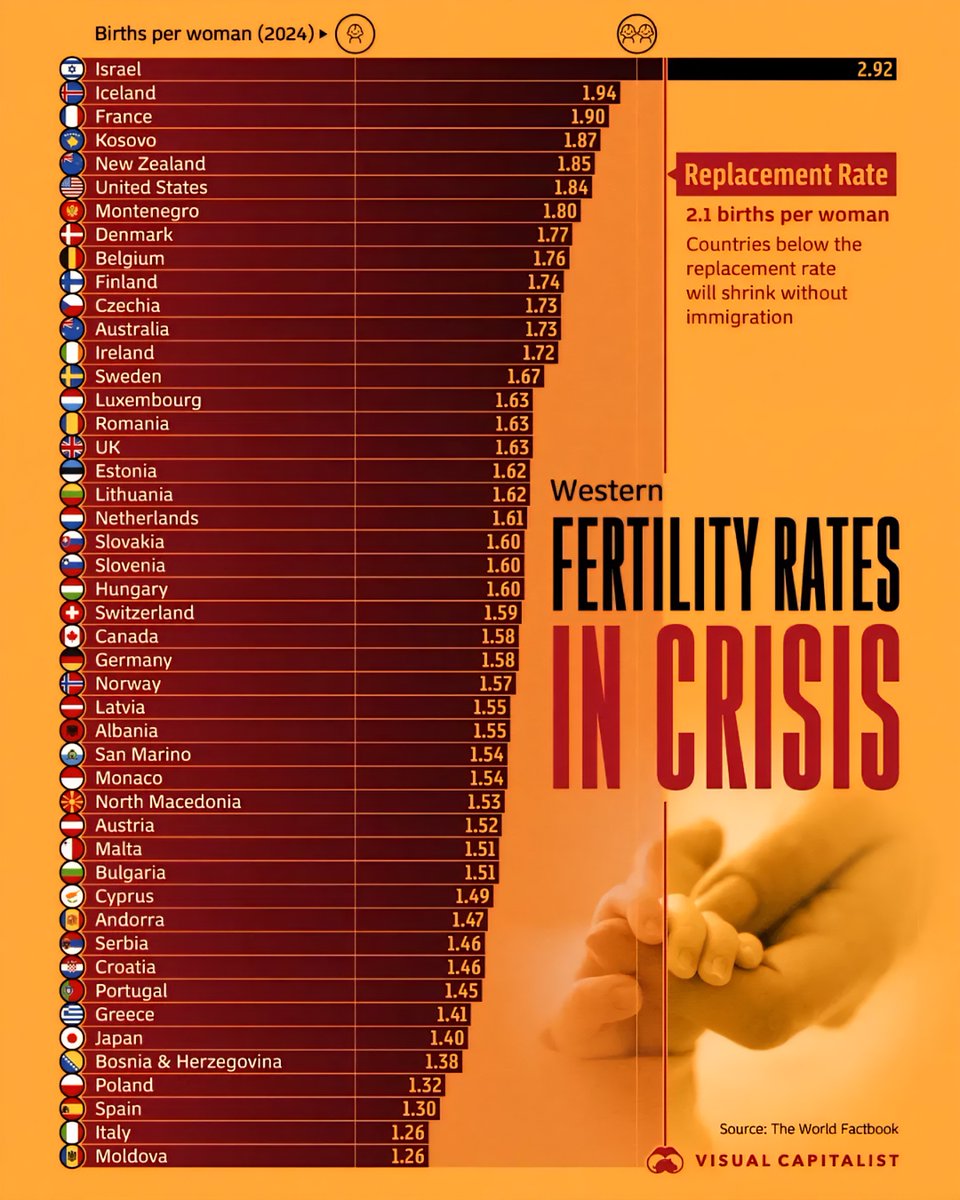
Top Countries Experiencing Fertility Rate Decline in 2025: A Closer Look
Israel Leads with the Highest Fertility Rate Among Western Nations
At 2.92 births per woman, Israel remains the standout among Western countries, surpassing the replacement rate of 2.1. Despite ongoing demographic concerns worldwide, Israel’s relatively high fertility rate reflects unique cultural and policy factors that support family growth.
Iceland and France: Navigating Low Birth Rates
Iceland is experiencing a fertility rate of 1.94, maintaining a relatively stable position in Europe. France follows closely with a rate of 1.90, despite historical efforts to bolster reproductive health and family support programs. Both nations face demographic challenges but are still managing to sustain population growth to some extent.
The United States Faces an Aging Population
With a fertility rate of 1.84, the U.S. continues to experience below-replacement fertility. This trend signals future demographic shifts, including aging populations and potential workforce shortages, prompting discussions about policy adjustments to encourage higher birth rates.
Europe’s Declining Numbers: A Worrying Trend
Most European nations record fertility rates below 1.75, with some near 1.30. Notably, the United Kingdom sits at a rate of 1.63, along with Estonia and Romania. This decline intensifies concerns about dwindling populations and economic sustainability, leading governments to explore innovative solutions such as family incentives and immigration policies.
Nordic Countries: Slightly Higher but Still Below Replacement
Norway (1.57), Sweden (1.67), and Finland (1.74) are slightly better positioned but still fall short of sustaining population numbers without external support. These countries are actively engaging in policies to bolster birth rates amid rising concerns over long-term demographic impacts.
Eastern and Southern European Nations: Facing Critical Challenges
Countries like Poland (1.32), Spain (1.30), and Italy (1.26) are among the lowest fertility rates in Europe, highlighting profound demographic crises. These nations are implementing various strategies to reverse declining fertility, including parental leave reforms and financial incentives.
Global Perspective: Japan’s Aging Crisis
Japan’s fertility rate remains at 1.40, one of the lowest among developed countries. The nation continues to grapple with an aging population, with population decline threatening economic stability unless significant policy reforms are enacted.
Countries with Slightly Better Prospects
Some nations, such as Luxembourg (1.63), Malta (1.51), and North Macedonia (1.53), are experiencing marginally higher fertility rates but still face critical challenges in reaching replacement levels. The global trend underscores the importance of comprehensive family and social policies.
The Urgency for Policy Intervention
A fertility rate of 2.1 births per woman is essential for maintaining balanced population levels. The current global average among Western nations falls significantly below this benchmark, signaling a possible demographic crisis in the years ahead. Governments worldwide are under increasing pressure to implement policies that support family growth, including childcare assistance, housing incentives, and flexible employment options.
The Future Looks Uncertain
The ongoing decline in fertility rates across Western nations could have profound implications on economic growth, social services, and cultural dynamics. Without proactive measures, many countries may face shrinking populations and demographic shifts that could alter their societal fabric fundamentally.
Image source: Twitter
Data Source: The World Factbook, 2024; Visual Capitalist
 ChatGPT
 Perplexity
 Gemini AI
 Grok AI