Select Language:
The World’s Most Populated Countries in 2025: A Detailed Look
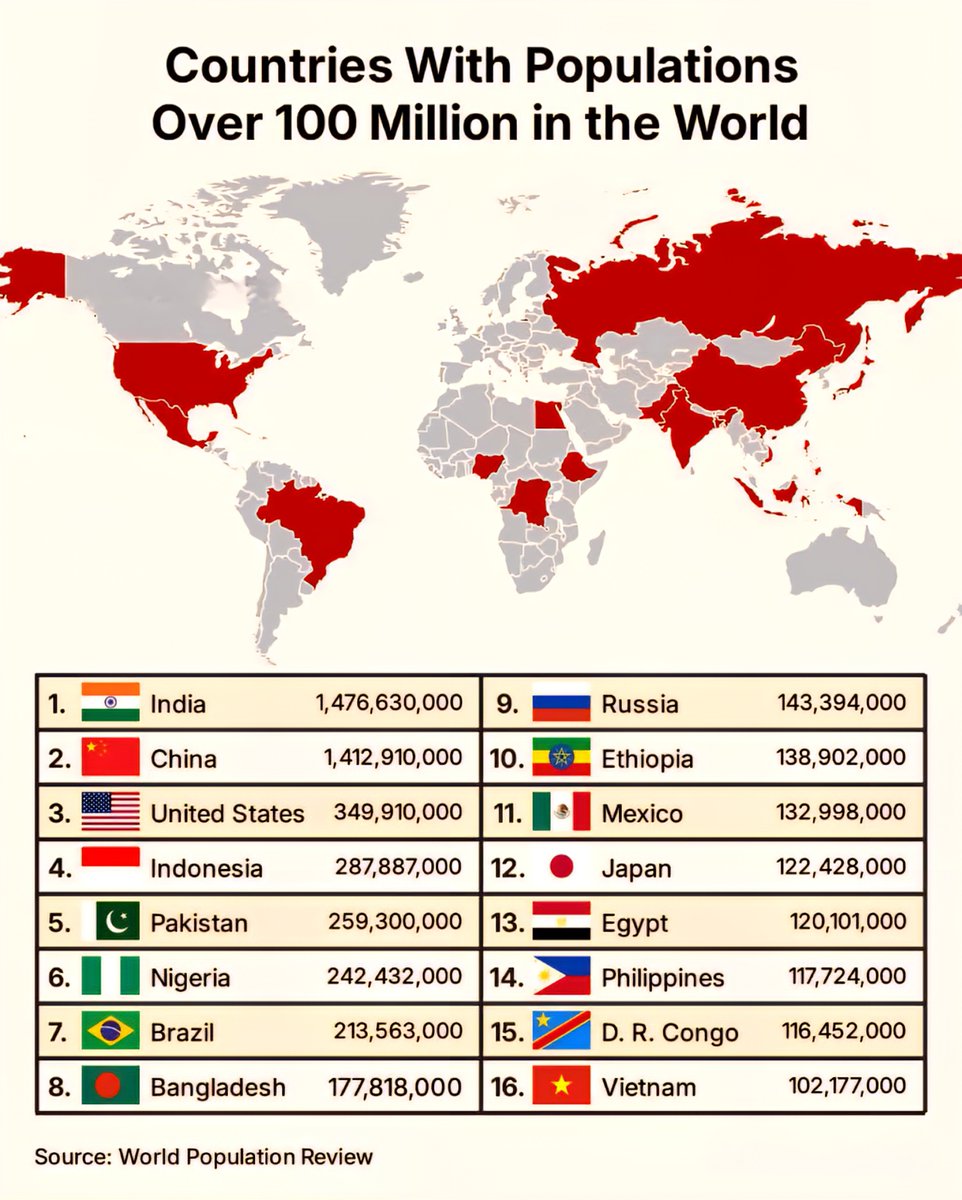
India Continues to Lead with Over 1.47 Billion People
India remains the most populous country globally, with its population surpassing 1.47 billion in 2025. Its staggering numbers are driven by high birth rates and decreasing mortality rates. Despite the challenges associated with such a large population, India is experiencing significant urbanization and economic growth, which could influence future demographic trends. The country’s diversity, spanning numerous cultures and languages, continues to shape its societal fabric.
China Still Holds the Second Spot, Approaching 1.41 Billion
China, with an estimated population of nearly 1.41 billion, continues to be a major demographic force. Despite its long-standing population control policies, its numbers remain high—though they are beginning to stabilize and slowly decline due to aging populations and lower fertility rates. The country’s rapid economic development has played a key role in shaping its population dynamics, including increased urbanization and migration to cities.
United States Tops 350 Million, Cementing Its Position as a Global Powerhouse
With a population nearing 350.9 million, the United States maintains its seat as the third most populous country. The U.S. continues to attract immigrants from around the world, fueling its demographic growth. Its diverse population has a significant impact on the country’s culture, economy, and politics, making it a vibrant and constantly evolving society.
Indonesia Surpasses 287 Million, Leading Southeast Asia
Indonesia, with approximately 287.9 million residents, remains Southeast Asia’s most populous nation. Its youthful demographic presents both opportunities and challenges, including demands for education, healthcare, and sustainable development. Indonesia’s growing middle class and expanding cities signal its rising influence in regional and global affairs.
Pakistan’s Population Nears 260 Million
Pakistan, with a population of roughly 259.3 million, continues to grow rapidly. High fertility rates and improved health services contribute to this growth. Urban centers like Karachi and Lahore are experiencing significant expansion, accompanied by increased infrastructure development to meet the needs of its expanding population.
Nigeria Takes the Sixth Spot with Over 242 Million People
With over 242.4 million people, Nigeria ranks as Africa’s most populous country. Its rapidly growing population fuels both economic potential and social strains, including unemployment and housing shortages. Nigeria’s youthful demographic—most of its population is under 30—poses both challenges and opportunities for the nation’s future.
Brazil’s Population Closes in on 214 Million
Brazil has a population of approximately 213.6 million, making it the largest country in South America. While the growth rate has slowed, urban centers like São Paulo and Rio de Janeiro continue to expand, contributing to Brazil’s vibrant culture and economy. The country’s demographic trends are vital in shaping its social policies and development strategies.
Bangladesh Approaches 178 Million, Signaling Continued Growth
With about 177.8 million inhabitants, Bangladesh remains one of the most densely populated countries worldwide. Its rapid population increase emphasizes the need for sustainable development, education, and healthcare infrastructure. Rural to urban migration is accelerating, changing the country’s demographic landscape.
Russia Maintains a Population of Around 143 Million
Russia, with an estimated 143.4 million citizens, faces demographic challenges such as declining birth rates and aging populations. However, government initiatives aim to boost population growth through family support programs and migration incentives. Urban areas like Moscow experience consistent growth, while rural regions face population decline.
Ethiopia Continues to Grow with Over 138.9 Million People
Ethiopia’s population surpasses 138.9 million, positioning it as Africa’s second most populous nation. Its rapid demographic growth fosters economic development but also demands investments in education, healthcare, and infrastructure. The country’s youthful population provides a potential demographic dividend in the coming decades.
Mexico, With a Population Close to 133 Million
Mexico’s current population stands at approximately 132.998 million. Urbanization continues to rise, especially in Mexico City, which remains one of the largest metropolitan areas globally. Demographic shifts are impacting social services, labor markets, and political policies across the nation.
Japan Faces Population Decline with Around 122.4 Million Residents
Japan’s population has decreased to about 122.4 million, highlighting ongoing aging and low birth rates. The country is grappling with declining workforce numbers, prompting innovation in automation and social policies aimed at increasing birth rates and supporting the elderly.
Egypt’s Population Exceeds 120 Million
Egypt’s population is estimated at 120.1 million, with continual growth driven by high fertility rates. The expanding urban centers in Cairo and Alexandria demand expanded infrastructure, healthcare, and education services to accommodate the growth.
Philippines Nearing 118 Million, Driven by Young Demographics
The Philippines’ population hovers around 117.7 million. Its youthful demographic continues to propel growth, necessitating investments in education and employment opportunities. Urban areas are expanding rapidly, leading to increased demand for housing and social services.
Democratic Republic of Congo Surpasses 116 Million
The DRC’s population exceeds 116.5 million, making it one of Africa’s fastest-growing nations. The country faces significant challenges in providing basic services but also holds immense potential for economic development, given its abundant natural resources and youthful population.
Vietnam Grows to About 102.2 Million
Vietnam’s population has reached approximately 102.2 million. Its rapid economic growth and urbanization are central to its demographic trend; rural-to-urban migration continues, shaping the country’s future development policies.
Source: World Population Review, 2025
 ChatGPT
 Perplexity
 Gemini AI
 Grok AI