Select Language:
The World’s Population by Continent in 2025: Key Insights
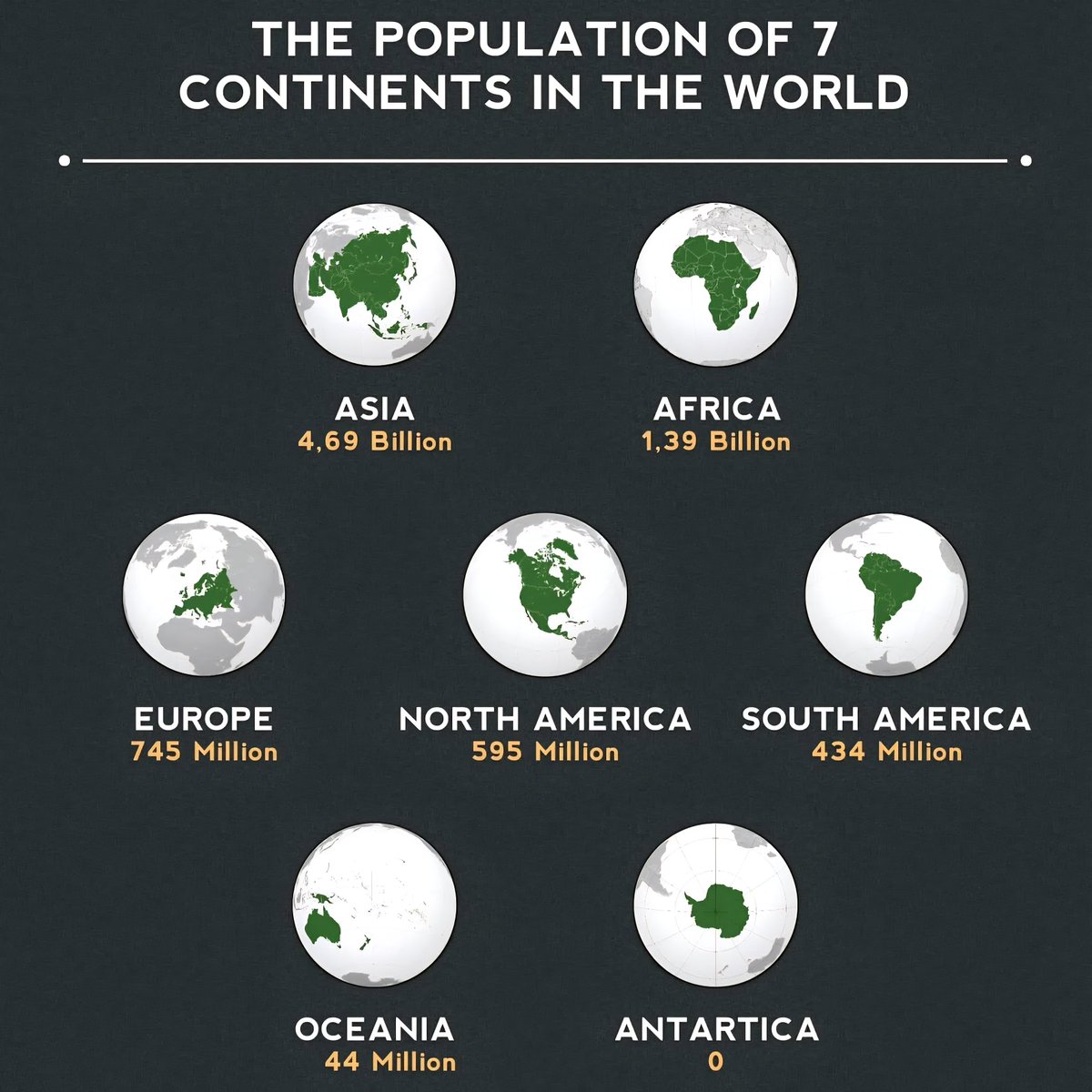
1. Asia Continues to Lead with Over 4.7 Billion Residents
Asia remains the most populous continent, hosting approximately 4.69 billion people in 2025. This staggering number accounts for nearly 60% of the global population. Countries like China and India still dominate, but rapid urbanization and demographic shifts are occurring across Southeast Asia and parts of Central Asia. The continent is known for its cultural diversity, economic growth, and ongoing urban development projects that influence population trends.
2. Africa’s Population Surges Past 1.39 Billion
Africa’s population has experienced remarkable growth over the past few decades and now totals around 1.39 billion in 2025. The continent’s high birth rates and improving healthcare systems contribute to this rapid increase. Countries such as Nigeria, Ethiopia, and the Democratic Republic of Congo are among the fastest-growing populations worldwide. This growth presents both opportunities for economic development and challenges regarding resource management, education, and infrastructure.
3. Europe Stabilizes with 745 Million Inhabitants
Europe’s population growth has noticeably slowed, with current estimates placing it at approximately 745 million. Many European countries are experiencing population declines due to low birth rates and aging populations, leading to workforce shortages and increased demand for healthcare services. Efforts to attract immigrants and implement family-friendly policies are ongoing to counteract demographic decline.
4. North America’s Population Approaches 600 Million
The population of North America, including the United States, Canada, Mexico, and Central American countries, is roughly 595 million. The United States continues to be the most populous nation, with notable growth driven by immigration and natural increase. Technological innovation, economic opportunities, and a relatively high quality of life attract migrants, ensuring steady population growth in the region.
5. South America Reaches 434 Million Residents
South America’s population hovers around 434 million. Countries like Brazil, Colombia, and Argentina contribute significantly to the continent’s demographic profile. Although growth has slowed compared to previous decades, urbanization continues at a rapid pace, especially in Brazilian cities like São Paulo and Rio de Janeiro. Population shifts are influencing regional policies around infrastructure, health, and social services.
6. Oceania and Australia Keep Growing with 44 Million People
Oceania’s total population is approximately 44 million, with Australia and New Zealand being the primary population centers. Australia remains one of the fastest-growing developed nations, thanks to immigration and natural increase. Indigenous populations and rural communities face unique challenges, but overall, Oceania remains a dynamic and increasingly diverse region.
7. Antarctica: The Only Continent Without a Permanent Population
Antarctica has no permanent residents, only seasonal researchers and scientists who flock to research stations for limited periods. Its population fluctuates based on scientific missions, but it remains uninhabited in the traditional sense and plays a crucial role in global climate research.
The Total Global Population in 2025
All these figures contribute to a total world population of roughly 7.9 billion in 2025. This growth trend underscores ongoing demographic shifts, urbanization, and challenges related to sustainability, infrastructure, and resource management worldwide. As the pandemic’s effects continue to fade and technological innovations advance, nations worldwide are adapting to these demographic realities.
Sources: World Population Review, 2025.
Note: Data are estimates based on current demographic patterns and projections for 2025.
 ChatGPT
 Perplexity
 Gemini AI
 Grok AI