Select Language:
Countries Spanning Two Continents: A Closer Look for 2025
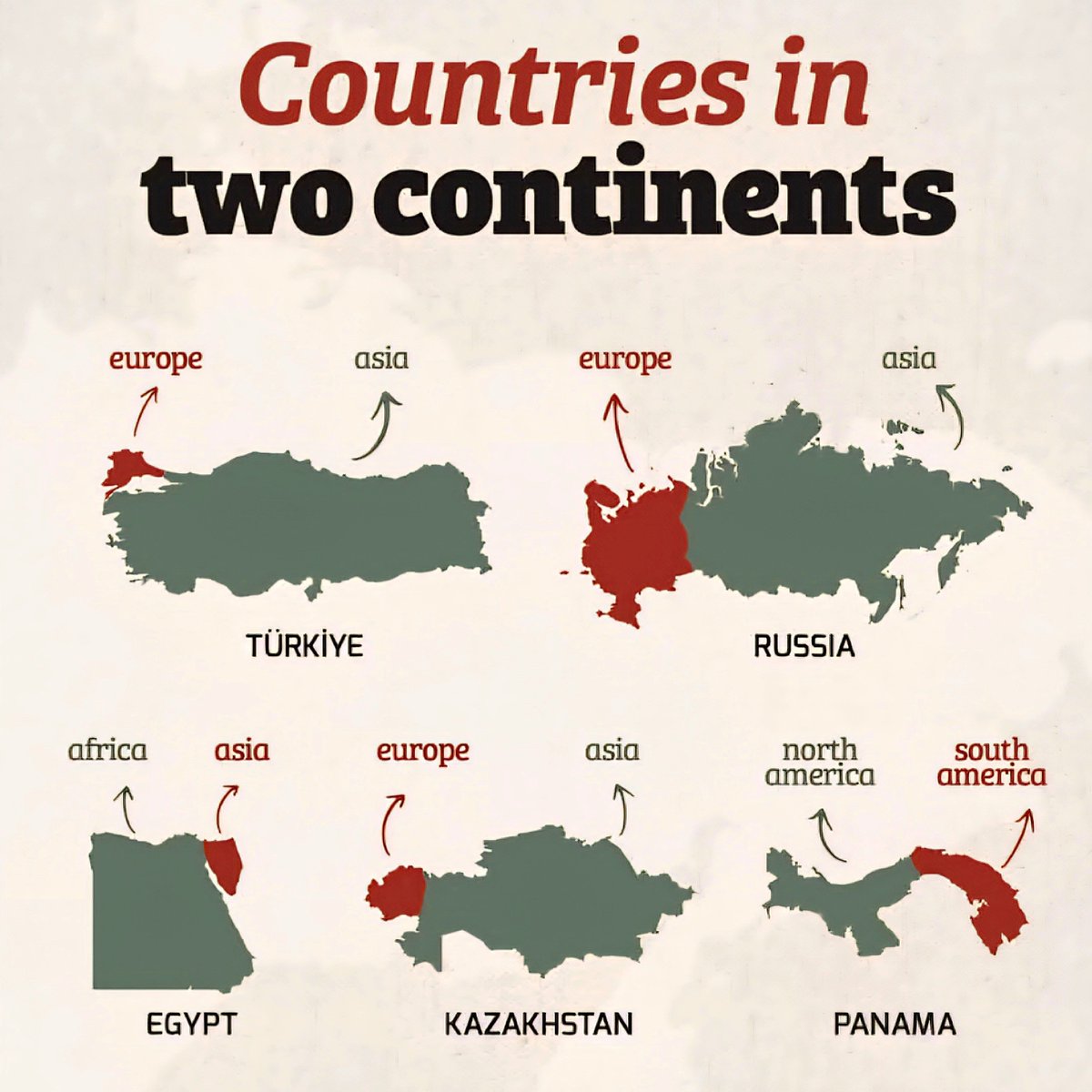
Turkey: Bridging Europe and Asia
Turkey remains the most prominent example of a country situated across two continents. Its landmass straddles southeastern Europe and western Asia, with the city of Istanbul serving as a cosmopolitan hub linking the two regions. Istanbul’s unique position between the Bosporus Strait allows it to seamlessly blend European and Asian cultures, architectures, and traditions. As of 2025, Turkey plays a strategic geopolitical role due to its geographical location, serving as a bridge for trade routes and diplomatic relations between the West and the Middle East. The country’s dual-continent status also influences its diverse demographic makeup, with influences from both European and Asian heritage shaping its cultural landscape.
Russia: Expanses Across Eurasia
Russia is a vast nation stretching across Eastern Europe and northern Asia, making it a significant transcontinental country. The Ural Mountains traditionally serve as the dividing line, separating the European and Asian parts of Russia. Despite its enormous land area in Asia, much of Russia’s political and cultural influence is rooted in its European segment, including its capital, Moscow. In recent years, Russia’s Eurasian positioning continues to affect its international diplomacy, energy policies, and cultural exchanges, particularly as it seeks stronger ties with nations across both continents. Its extensive natural resources further bolster its importance as a global player spanning two continents.
Kazakhstan: Central Asia’s Transcontinental Powerhouse
Kazakhstan is often overlooked but stands out as a key transcontinental country, situated at the crossroads of Europe and Asia. Its largest cities, including Almaty and Nur-Sultan, straddle the boundary that separates the two continents. The country’s strategic location makes it a vital player in regional geopolitics, especially within initiatives like China’s Belt and Road and Russia’s Eurasian Economic Union. Kazakhstan’s cultural diversity reflects its position at the confluence of different civilizations, blending Turkic, Russian, and Middle Eastern influences. As of 2025, Kazakhstan is focused on leveraging its geographic positioning to foster economic development and strengthen regional partnerships.
Georgia: A Crossroads of Cultures
Georgia, nestled in the South Caucasus region, is another example of a country that spans Europe and Asia. While often considered part of Eastern Europe or Western Asia depending on the context, Georgia’s location at the intersection of Eastern Europe and Western Asia adds to its strategic significance. The country boasts ancient traditions, modern cities like Tbilisi, and a rich cultural tapestry influenced by its position connecting Russia, Turkey, and the Middle East. Ongoing efforts to integrate with European institutions, alongside close ties with neighboring Asian economies, emphasize Georgia’s role as a regional connector in 2025.
Azerbaijan: The Transcaucasian Country
Azerbaijan, located on the Caspian Sea’s western coast, is often classified as a Transcaucasian country bridging Eastern Europe and Western Asia. Its capital, Baku, is a vibrant city that exemplifies modern development amid a backdrop of ancient traditions. Azerbaijan’s key position along energy corridors makes it a strategic player in regional politics, especially concerning oil and natural gas exports. Its cultural diversity includes a mix of Turkic, Persian, and Russian influences, reflecting its multi-continental identity. As of 2025, Azerbaijan continues to pursue economic growth and regional diplomacy, leveraging its unique position between Europe and Asia.
United Nations and Transcontinental Countries
The presence of countries spanning two continents challenges global organizations like the United Nations to adapt their geopolitical frameworks. Recognizing these nations’ strategic importance ensures balanced representation and cooperation across both European and Asian sectors. In 2025, diplomatic efforts continue to emphasize multilateral engagement, focusing on economic cooperation, security, and cultural exchange, especially with transcontinental nations that serve as bridges between worlds.
In conclusion, countries like Turkey, Russia, Kazakhstan, Georgia, and Azerbaijan exemplify the world’s geographical and cultural complexity in 2025. Their unique positioning across two continents fosters diverse identities, regional influence, and strategic importance—shaping global geopolitics and economics for years to come.
 ChatGPT
 Perplexity
 Gemini AI
 Grok AI