Select Language:
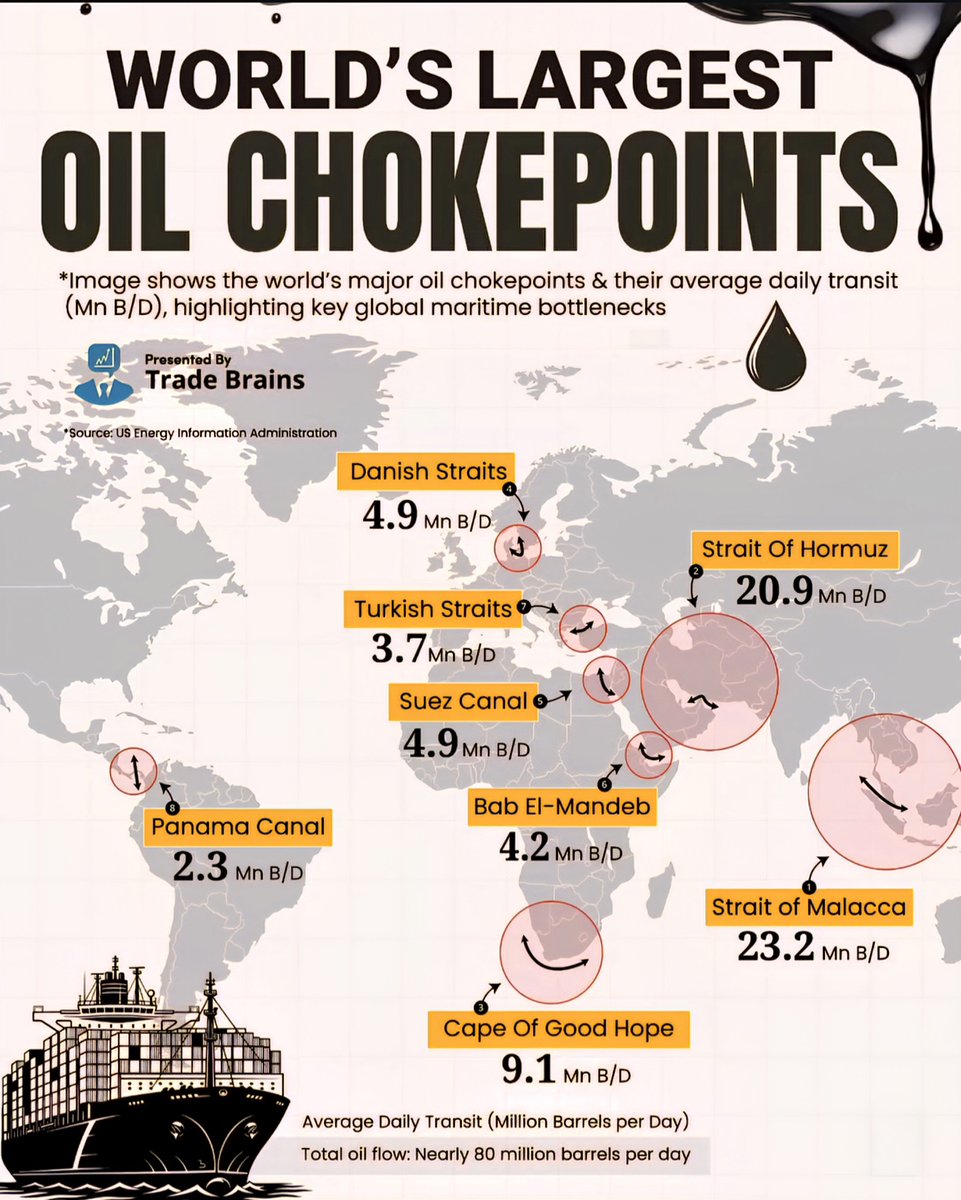
7 Major Oil Transit Routes That Shape the Global Energy Market in 2025
1. Strait of Malacca: The Vital Gateway Connecting Asia and the World
The Strait of Malacca remains the world’s busiest maritime chokepoint, handling approximately 23.2 million barrels of oil daily. Located between the Malay Peninsula and the Indonesian island of Sumatra, this narrow waterway is the primary maritime route for energy shipments moving from the Middle East and Africa toward East Asia, particularly China and Japan. Its strategic significance has grown in recent years amid rising regional energy demands, making it a focal point for geopolitical stability and security discussions. Disruptions here could ripple across global oil markets, emphasizing the need for robust maritime security measures and diplomatic negotiations.
2. Strait of Hormuz: The Middle East’s Oil Superhighway
Despite geopolitical tensions, the Strait of Hormuz in the Persian Gulf remains crucial, with an estimated 20.9 million barrels of oil passing through each day. This narrow passage connects the Gulf region—home to some of the world’s largest oil producers—to international markets via the Arabian Sea. Any conflict or blockage here could have profound impacts on global oil prices, given its role as a primary conduit for Middle Eastern crude exports. Countries worldwide closely monitor developments in this corridor to mitigate potential supply disruptions and maintain steady oil flow.
3. Cape of Good Hope: Africa’s Critical Maritime Corridor
The southern tip of Africa, the Cape of Good Hope, accounts for around 9.1 million barrels of oil transiting daily. While often viewed as a longer route compared to the Suez Canal, ships reroute around Africa to avoid congested or politically unstable regions. Its importance has grown in light of diversifying global supply routes and alternative pathways amidst geopolitical unrest elsewhere. The Cape also acts as a backup route when other transit points face disruptions, underscoring its strategic endurance in global energy logistics.
4. Danish Straits: The Nordic Passage in the Baltic Sea
The Danish Straits—comprising the Kattegat and Skagerrak—serve as a key connection between the North Sea and the Baltic Sea, managing approximately 4.9 million barrels of oil daily. This route is vital for European energy supplies, particularly from Russia and the North Sea oil fields. As Europe continues its push toward energy diversification and renewable sources, control over strategic passages like these remains critical for energy security, especially during seasonal or geopolitical tensions.
5. Suez Canal: Egypt’s Critical Link Between Continents
Handling 4.9 million barrels each day, the Suez Canal is a vital artery connecting the Red Sea to the Mediterranean. This short but strategic route dramatically shortens maritime journeys between Asia and Europe, making it a linchpin for international oil trade. In 2025, the canal remains a focal point of geopolitical stability, with debates ongoing around expansion projects and security enhancements to ensure safe, uninterrupted passage amid increasing global demand and regional tensions.
6. Bab el-Mandeb Strait: The Crossroads at Africa’s Crossroads
Roughly 4.2 million barrels of oil traverse Bab el-Mandeb daily, nestled between the Arabian Peninsula and the Horn of Africa. This chokepoint links the Red Sea to the Gulf of Aden and, ultimately, the Arabian Sea. Given its proximity to turbulent regions and piracy hotspots, its security measures are continually being strengthened. Its importance is magnified in 2025 as global energy trade continues to depend on this narrow channel for swift access from the Middle East to Africa and beyond.
7. Turkish Straits: Connecting the Black Sea to the Mediterranean
The Turkish Straits, including the Bosporus and Dardanelles, facilitate approximately 3.7 million barrels of oil daily between the Black Sea region and the Mediterranean. Turkey’s strategic control over these waterways makes it a pivotal player in regional geopolitics and energy security. Ongoing negotiations over transit rights, security arrangements, and territorial sovereignty are critical to ensuring steady flow, especially amid rising tensions in adjacent regions.
8. Panama Canal: The Shortcut for Americas and Global Markets
Although not as large as other routes, the Panama Canal still handles around 2.3 million barrels per day, serving as a crucial link between the Pacific and Atlantic Oceans. Its importance has increased with the expansion projects completed in 2016, allowing larger vessels to pass through. While less significant in volume compared to Asian or Middle Eastern routes, the Panama Canal remains a vital alternative pathway, especially for North and South American energy shipments seeking to bypass longer or congested routes.
Global Oil Flow Even in 2025
Collectively, these strategic chokepoints manage approximately 80 million barrels of oil daily—about 40% of the global daily oil flow, which hovers around 80 million barrels. Any geopolitical tensions, security threats, or infrastructure disruptions at these critical passageways could send ripples through the entire world economy, impacting prices, supply stability, and energy security.
Source: US Energy Information Administration via Trade Brains
Understanding the strategic significance of these vital transit routes helps policymakers, industry leaders, and security forces anticipate and manage potential disruptions, ensuring the resilience of the global energy infrastructure.
 ChatGPT
 Perplexity
 Gemini AI
 Grok AI