Select Language:
Outbound doesn’t come with a long tutorial or many in-game tips. All you need to do is finish a small introductory prologue before you’re free to explore the world in your camper van.
Because there aren’t many early tips provided in the game, you might not know a lot at first. There are several important things to keep in mind to get the most from Outbound. Here’s a list of helpful tips for new players.
Never Stray Too Far From The Van
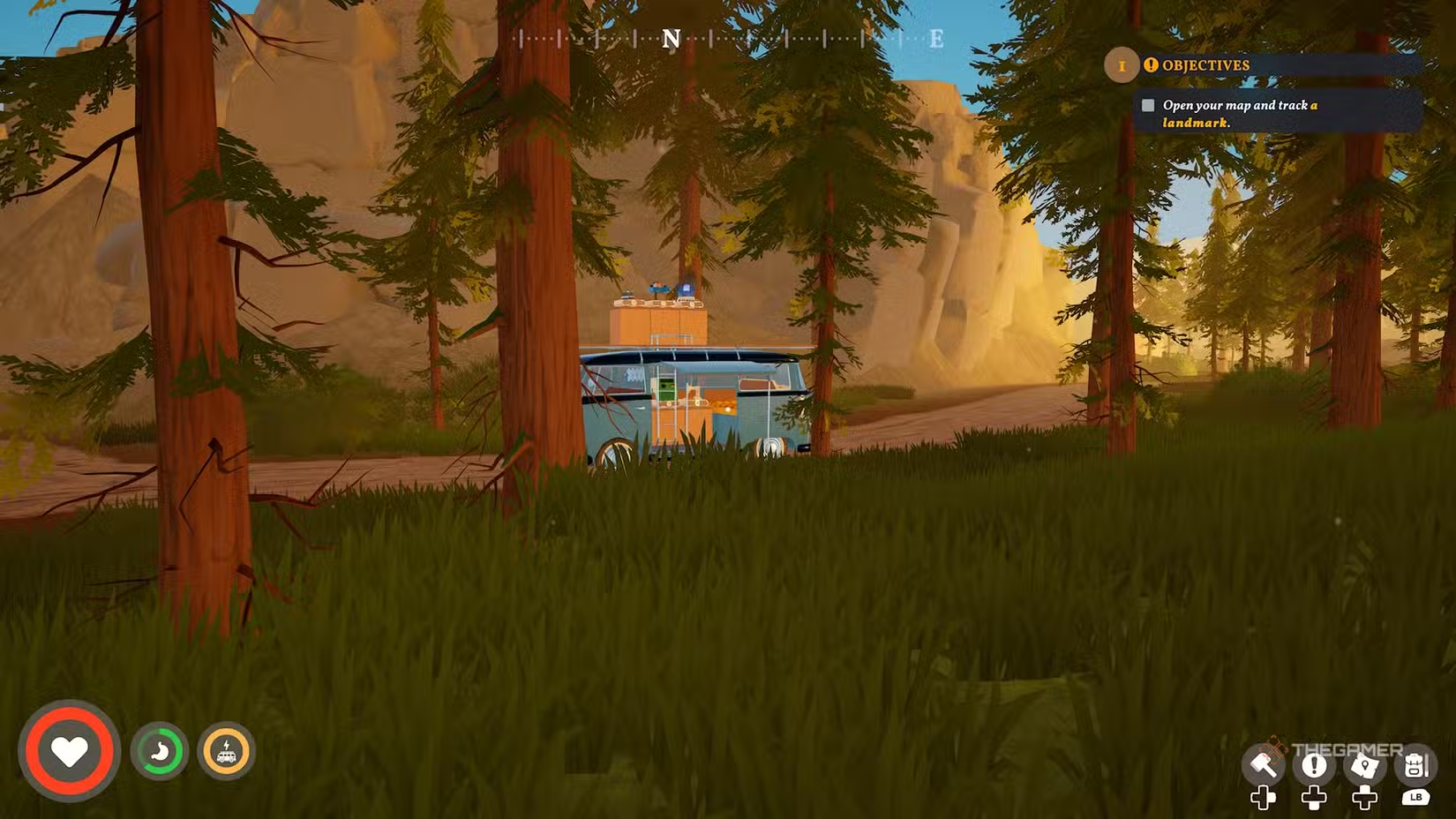
In most open-world games with vehicles, the vehicle is just a way to get around. You can often leave it behind and walk on foot whenever you want. But in Outbound, things are different. Your van isn’t just a way to travel—it’s your entire storage space. It holds most of your items and all the machines you craft. Plus, moving on foot isn’t very fast, which makes walking around a hassle.
Because of this, it’s best to stay close to your van at all times to avoid having to run back frequently to store or retrieve items.
Upgrade Your Backpack As Quickly As Possible
Your backpack acts as your inventory. When you find items, they go into your backpack first. You can store stuff in your van, but your backpack is the first place items go when you pick them up. Early in the game, your backpack has limited space, so it fills up fast.
It’s smart to build a sewing machine early on to upgrade your backpack. Doing so will let you carry more, reducing the number of trips you need to make back to your van to unload resources like wood, fiber, and rocks.
Charge Your Van While Sleeping
You’ll frequently need to recharge your van’s battery. You can’t recharge it while driving, though, even if you load the back with wood to generate power—it stops once you start moving. Standing still and charging can be inconvenient, especially if you need a quick boost.
To avoid this, put some wood in the back and start charging overnight before you go to sleep. Then, sleep until morning. Your vehicle will have fully charged by the time you wake up.
Lock Download Vouchers And Food In Your Inventory
When you hover over items in your backpack, you’ll see an option to “lock” them. This keeps those items in your inventory even when you deposit other things into the van. Most basic resources like wood, fiber, and rocks don’t need to be locked because they’re not always needed in your inventory.
However, locking Download Vouchers and food can be useful. Vouchers allow you to download blueprints from Signal Towers, and food keeps hunger at bay. Since you need these items in your inventory to use them, locking them ensures they stay with you at all times.
Playing With A Third-Person Driving Camera Makes Things Easier
You can change your driving camera in the game settings. You have the choice between “Dashboard” (first-person view) and “Behind vehicle” (third-person view). Everyone has their preferred view, but the third-person camera generally makes driving easier.
When the camera is on the dashboard, it’s harder to see nearby resources. This might make gathering supplies more time-consuming because you have to stop and look more carefully. With the third-person view behind the vehicle, it’s much faster to spot what’s around you.
Make Sure You Don’t Weigh Down Your Car Too Much
You can customize the top of your van by building a base with structures like floors and walls. However, these structural elements add weight. If you put on more than your van can handle, you’ll start to weigh it down.
You can check how well your vehicle handles the weight by interacting with the motor at the back. Look at the “Energy Use Rating”; if it’s low, your van may be sluggish and drain its charge faster. To keep your vehicle running smoothly, avoid overloading it.
You can upgrade your van’s weight capacity by using a Vehicle Research Station.
You Can Make Things While Driving
Many craft machines, such as the recycler, sawmill, or sewing machine, can be placed on or inside your van. Items on top are stored when you close up the vehicle and drive away, while machines inside are still operational during transit.
For example, you can fill your recycler with trash, start it, and then begin driving — it will continue converting waste into vouchers even as you move. This saves you from waiting around while machines finish their work.
Don’t Rely Only on Wood to Charge Your Van
You need to charge your van often, but you can’t do it by driving when it’s already low. You can put wood in the back to generate power, but this process stops once you start moving.
A better method is to use firewood as fuel overnight. Before sleeping, load some wood into the van and begin charging. Then, sleep through the night. When you wake up, your vehicle will be fully charged.
As you progress, you can install solar panels on your van to produce power more sustainably. Additionally, there are charging stations on the map you can use. Once you discover these options, try to rely less on burning wood and save it for crafting.
Lock Download Vouchers And Food Items In Your Inventory
When you hover over items in your backpack, you can “lock” certain ones so they don’t get deposited when you store belongings in the van. Items like vouchers and food are best kept in your inventory, and locking them ensures they stay with you. These items are essential for downloading blueprints and managing hunger, so it’s useful to keep them always with you.
Playing with a Third-Person Driving Camera Makes Things Easier
Adjust your camera to behind-the-vehicle view for easier driving. This perspective makes it simpler to spot resources and navigate. First-person camera (dashboard view) can make resource collection more difficult, as it blocks your view of the surroundings, especially when trying to gather supplies efficiently.
Make Sure You Don’t Weigh Down Your Car Too Much
Avoid overloading your van with structures and equipment, which can hinder performance. Check the motor’s “Energy Use Rating” to ensure your setup isn’t too heavy. An overloaded vehicle will be sluggish and drain power faster, so build within the van’s weight limits to keep movement smooth.
You Can Make Things While Driving
Machines placed inside or on top of your van stay operational during travel. For example, an active recycler will continue processing trash into vouchers as you drive, allowing you to gather resources and advance without waiting for machines to finish.
Don’t Solely Rely On Wood To Charge Your Van
While wood can be used to charge your vehicle, it’s not the most efficient method long-term. Instead, consider installing solar panels or using designated charging stations around the map. Relying solely on wood is limiting, especially as you need it for crafting, so transition to sustainable options when possible.
 ChatGPT
 Perplexity
 Gemini AI
 Grok AI