Select Language:
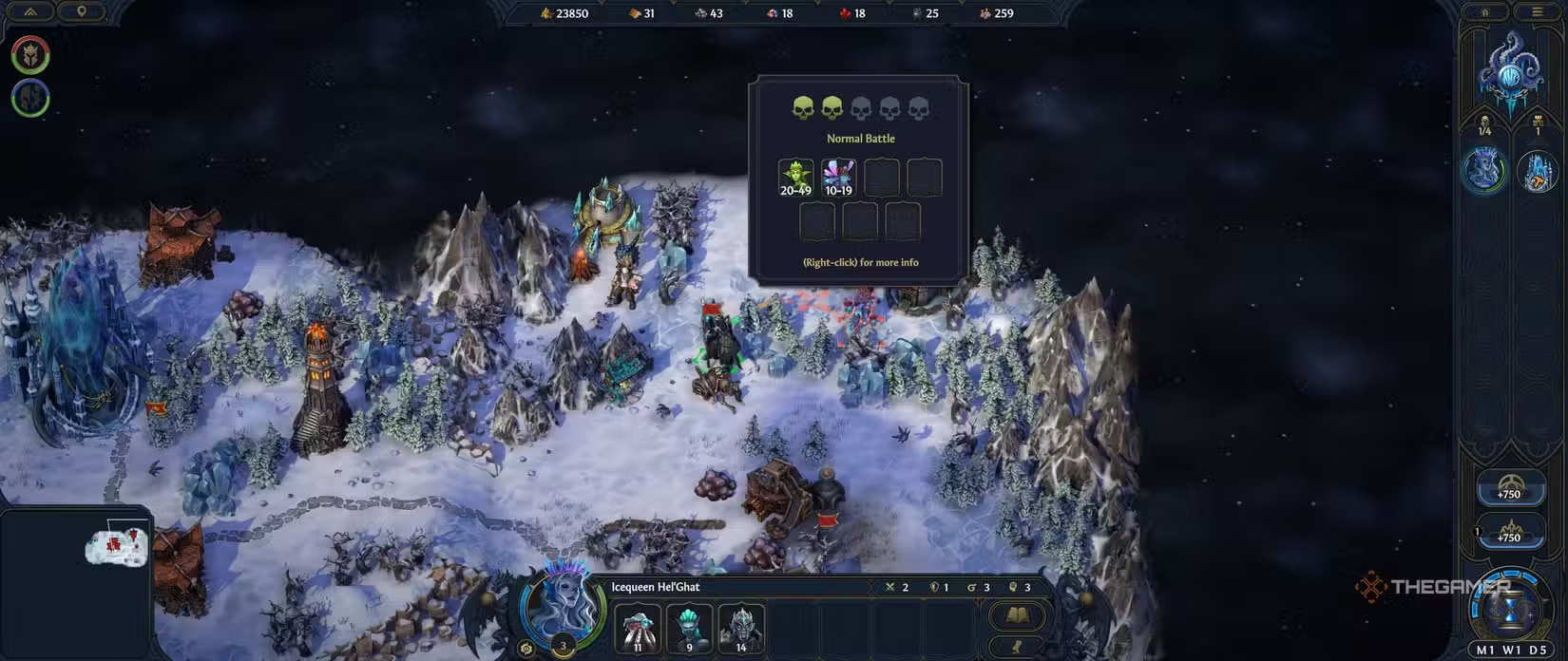
In Heroes of Might and Magic: Olden Era, the Schism faction is best suited for players who prefer earning their army through continuous combat rather than building it slowly. This faction is made up of a group of Alvari Elves that broke apart after creating a Rift to the Abyss. They use altered cultists and summon strange creatures from other planes for battle.
Each hero has a ‘Communion’ level that increases with consecutive wins and resets halfway through each day. A higher Communion level provides temporary reinforcements during fights, which can turn the tide of battle. Without constant streaks of wins, the army is weak. Managing this momentum—keeping the win streak alive—is the main focus of playing this faction. Everything else depends on how well you maintain that streak.
Currently, Heroes of Might and Magic: Olden Era is in Early Access. The game’s updates may adjust the faction’s strength and balance over time.
Overall Strategy Tips
On suitable maps, terrain advantage plays a major role, especially in late-game scenarios where the Law “The World Is Ours” helps even the odds. Prioritize resources like Gems and Crystal early on because they’re needed for higher-tier buildings and units. Building up your economy and army is key, but managing your win streak is crucial since each victory boosts your army temporarily. Plan your sessions so your hero fights at least once each day, choosing battles based on difficulty to maintain the streak without suffering heavy losses. Remember, every hero has their own Communion level, so even secondary heroes contributing daily counts toward your overall strength.
Best Laws
The Laws tree in Schism pushes to develop a magical build early. Two Laws stand out: Depths of Mind, which grants extra mana every morning, and Ice Power, which increases Spell Power. Depths of Mind is more important because it allows sustained spellcasting needed for the Communion cycle. Early on, avoid investing in economic Laws unless necessary, and aim to reach the law “The Abyss Staes Back” which locks your Communion at max level for the late game.
First Week Strategy
Days 1–2 are the most challenging, as your starting units—Ra’Shoth, Cultists, Aga’Shoth Riders—are fragile. Focus on easy battles first to build momentum. Cultists can be valuable early for their ranged attacks, so position them to deal damage while tougher units absorb hits. Days 3–4 should see you investing in the Mage Guild and Marketplace—getting access to Primal spells and trading resources like Gems and Crystal. By Days 5–7, aim to have the Arbitrators’ dwelling available by the start of Week 2, as rushing the Abyssal Envoy building too early strains your economy. When choosing between building and recruiting, prioritize recruiting units because a stronger army makes your demonology summons more effective.
Army Composition Tips
Grand Shoths are central to your strategy. Their Summoning Rite replaces a destroyed stack with a new one at half health, permanently surviving battles. Use this ability on Grand Shoths rather than Ra’Shoth units for better returns. The key mid-game units are Arbitrators—ranged units that counteract your lower-tier units’ fragility—and Abyssal Envoys, which are immune to magic and support powerful spell strategies like Armageddon. Early, Cultists serve as ranged damage dealers, and in mid-game, Concubus units can fill gaps but should be less prioritized than Grand Shoths.
Single Hero Tips
Playing with a single hero is tougher because every idle day halves your crucial resource pool. Consistent daily combat is mandatory. Focusing on one hero allows you to optimize their Communion and reinforcement levels more efficiently. Strong magic progression, especially Primal Magic, is essential since your hero will handle map clearing alone. Sister Keiri is particularly effective because her spells help thin your army and reduce losses early on, keeping the streak alive during the critical initial phase.
 ChatGPT
 Perplexity
 Gemini AI
 Grok AI