Select Language:
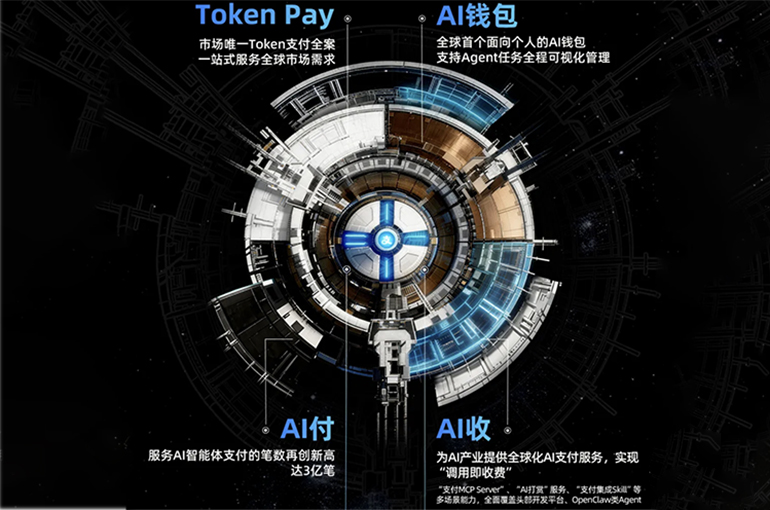
Alipay, the mobile payment platform developed by a major Chinese fintech company, has launched the world’s first Artificial Intelligence Wallet, allowing users to manage and oversee purchases made by AI agents.
The AI Wallet enables users to review and authorize “agent tasks” before and during transactions, as well as access detailed transaction histories. Additionally, the company introduced Token Pay, a service designed to accommodate various token payment needs and assist AI firms in simplifying user subscriptions and quick in-app token top-ups.
Furthermore, the platform announced that AI Pay, which allows users to execute secure transactions through voice commands with AI agents, supports 95% of common agent frameworks, including Qwen, JVS Claw, Claude Code, and Hermes Agent. It is compatible with smart devices such as Qwen AI Glasses, Rokid, and Future Intelligence AI Headphones, as well as intelligent cockpit systems for automakers like Li Auto, Chery, Geely, and Dongfeng. Leading AI tool platforms such as Trae Ssolo, Qoder, and Kouzi are also supported.
An official from the company explained at yesterday’s AI Payment Ecosystem Summit that users can control agent-initiated payments through the AI Wallet. They can choose to approve each transaction manually or set a small spending limit for automatic processing by the AI agent.
AI-powered payments have become a significant growth driver, with the number of agent payments reaching 300 million as of yesterday — a notable increase from 120 million in February.
Building secure agent payment systems rests on three core levels of trust: Identity Trust (verifying legitimate agents), Intent Trust (confirming genuine user intent), and Execution Trust (ensuring secure and reliable transaction execution), explained Jiang Xinghao, a vice president at Shanghai Jiao Tong University.
One of the biggest challenges in AI payments today is accurately identifying users’ purchase intent. According to Li Jiajia, co-president of the Digital Payment Business Group, privacy restrictions and data boundaries limit providers’ ability to fully understand user intentions. However, verifying real-user scenarios is essential for maintaining security and convenience, emphasizing the need for technological advancements and ecosystem collaborations.
Li emphasized that delivering effective AI payment solutions requires extensive partnership efforts across the industry. “We must collaborate beyond our own capabilities to strengthen security controls,” he stated. “AI payments represent a shared challenge involving users, platform providers, developers, and service providers alike.”
 ChatGPT
 Perplexity
 Gemini AI
 Grok AI